
There’s nothing better than taking a dip in the pool on a hot summer’s day. Your pool should be a place where you splash and play – not a place where you panic. As parents, we must take steps to ensure our swimming pools are safe and secure. Pool safety is crucial for families with children, and fortunately, most pool-related accidents are entirely preventable.
Learning how to secure your pool is one of the most empowering things a parent can do. To guide you on your journey, we’ve created a checklist that can keep your pool safe, covering everything from the best pool fencing to swimming lessons.
Pool fencing as your first line of defence
Pool fencing is legally required in Australia, and glass pool fencing is a superb option for many reasons. First, glass pool fencing is made of toughened safety glass and has no gaps, meaning no children can break through or sneak through. Glass pool fencing also has no footholds that children can use to climb over it. What’s more, this pool fencing offers the ultimate visibility for watchful parents, allowing you to supervise from all angles.
When choosing your pool fencing, ensure that the height and strength meet the requirements of your local regulations. Regardless of the type of pool fencing you choose, look for one that is self-closing or self-latching to minimise the risk of accidents. All pool fencing must be certified before use to ensure it meets safety standards.
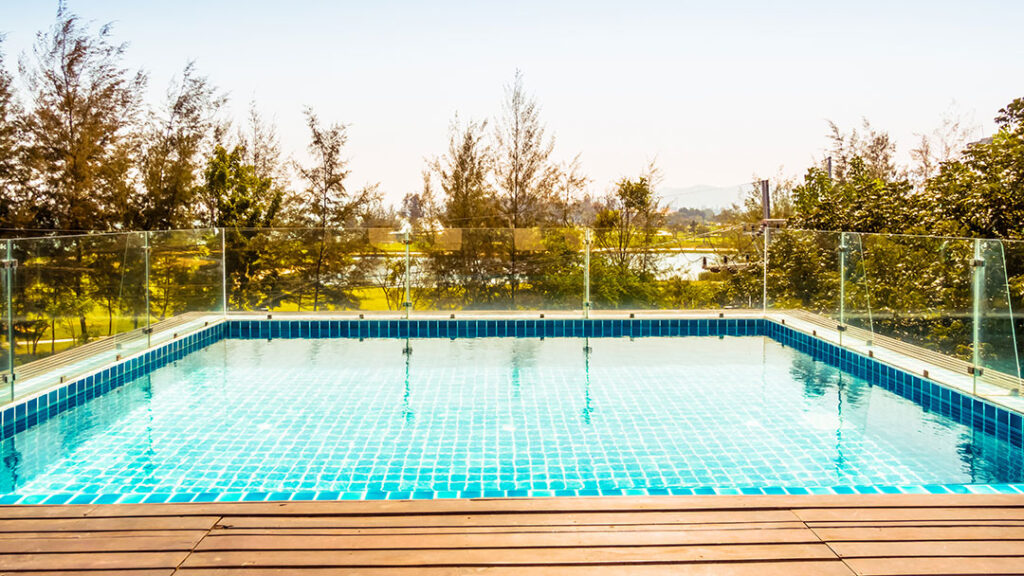
Backyard pool with glass fencing
Gate and access control
The gate latch of your pool fencing must be out of reach for children. Access to the pool should be extremely limited. There should be no direct access to the pool from any angle; therefore, all entry points must include a barrier to prevent unauthorised access. If possible, consider installing an alarm system on pool gates that can alert you if any kids try to sneak in to swim unattended. This will serve as a literal barrier, but also as a psychological deterrent, discouraging children from attempting to enter the pool without an adult.
You can also install latch locks on your pool fence as an extra safeguard for kids approaching a height where they could reach the latch. This is also a great idea for when you take extended holidays – you can lock the pool fence to prevent anyone, from intruders to pet sitters, from entering the pool area.
Pool area maintenance and visibility
Keeping your pool clean and well-maintained is a crucial aspect of pool safety. The pool water must be clear and clean to ensure optimal visibility for swimmers. In addition to visibility issues, untreated pool water can quickly become hazardous, as your pool is a closed system, meaning there’s nowhere for the algae to escape. So left untreated, it continues to breed and grow throughout the pool. Algae-infested pools are teeming with bacteria, which can lead to various health issues.
Once playtime is over, remove all pool toys from the water for two reasons: pool toys limit visibility in the water and may attract curious children. Always remove objects, such as furniture or tall plant pots, from around the pool fencing, as children may use them to climb over the fence. Overall, ensure you have an open line of sight from all possible angles.
Emergency readiness
Safety fencing gives you time to prevent accidents, but preparedness saves lives when accidents occur. All adults – including parents, grandparents, and babysitters – should take a first aid or CPR course annually. An instructional CPR sign should be clearly displayed near the pool and kept up to date. Additionally, safety equipment such as a pool hook and life ring should be readily available, as well as an emergency contact list for babysitters.
Supervision and swimming skills
Parents should always be within arm’s reach of children at all times when in and around water. According to Surf Life Saving Queensland, “Effective swim supervision is crucial for water safety, especially for children. It involves constant, undivided attention from a designated supervisor, who should be within arm’s reach of the child at all times. This means no distractions like phones or conversations, as even a brief lapse in attention can lead to serious accidents.”
To maximise safety, consider enrolling your children in swimming lessons from infancy until they are strong and competent swimmers.
Remember, inflatables do not replace adult supervision and swimming lessons.
Regular inspections and upgrades
Conduct a monthly inspection of your swimming pool and pool fencing, checking for any wear and tear, the integrity of latches, and the clarity of the water. Perform a thorough walk-around safety check of the pool fence every month, inspecting for loose panels or fixtures. If something doesn’t seem right or doesn’t comply with relevant safety standards, make the investment to upgrade. You can’t put a price on safety and peace of mind.
Key takeaways
Backyard safety — especially around water — relies on parents and carers being vigilant, both when designing the pool and outdoor area and during busy times. Because child safety involves many layers, use this checklist to stay prepared and aware. Remember:
- Pool fencing is your first line of defence, and glass pool fencing offers a sense of security and visibility that is unmatched.
- Access points of the pool must be tightly secured with out-of-reach latches and, ideally, alarm systems to discourage sneaky children.
- Pool maintenance is crucial to pool safety – keep the water clean and free from pool toys at all times.
- Emergency readiness saves lives, so stay prepared for accidents by pursuing CPR and first aid certification and keeping safety tools on hand.
- Nothing can replace adult supervision and swimming lessons when it comes to pool safety.
- Routine inspections and upgrades may take time and money, but they help you maintain your peace of mind.