
Bedtime in many households can feel like a nightly marathon. Teeth brushed, books read, lights off… and yet somehow, little people are still wide awake. For busy Australian families juggling school, activities and screen time, it’s a familiar frustration.
What if the problem isn’t the routine itself, but what’s happening before it?
A growing body of research suggests that children aren’t struggling to sleep because they’re not tired enough, but because they’re not calm enough.
The shift from “routine” to regulation
Sleep experts are increasingly reframing the conversation around children’s sleep wellbeing. Instead of focusing purely on structure and discipline, the emphasis is moving toward emotional regulation and nervous system support.
Children today often go from one stimulating activity to the next — school, sport, screens, homework — without a proper transition to wind down. By the time bedtime rolls around, they can be what experts call “tired but wired.”
As Woven Woven founder Joey Chang explains, “If a child’s nervous system is still activated, even the best routine can struggle to work.”
This shift in thinking is changing how families approach evenings. Rather than trying to force sleep, parents are looking at how to create the right conditions for it to happen naturally.
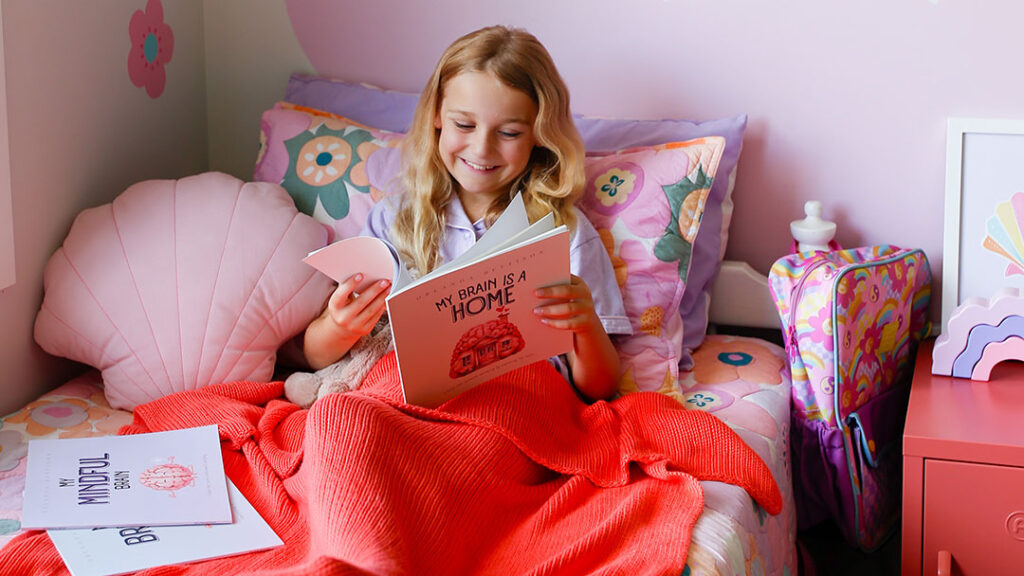
Girl reading book on bed under a woven woven children’s weighted blanket
Why calm matters for sleep
Sleep isn’t something we can make happen on demand. It’s something the body allows when it feels safe and settled.
That’s why calming, sensory-based bedtime rituals are gaining traction. These might include dimming lights, reading together, gentle music, or quiet connection time. The goal is simple: signal to the body that it’s time to slow down.
One approach that’s been getting particular attention is deep pressure stimulation — a technique that uses gentle, evenly distributed pressure to help the body relax.
Research has shown that this type of sensory input can reduce anxiety and support a calmer physiological state in children, particularly those with sensory sensitivities or big emotions at the end of the day.
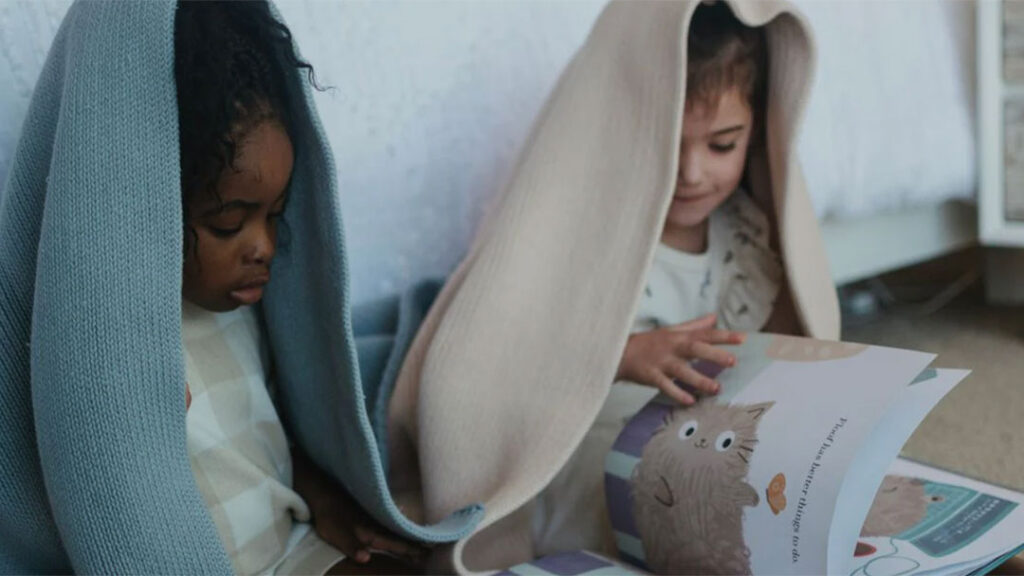
Kids reading books under a Woven Woven weighted blanket
Where weighted blankets can help
Weighted blankets have become a popular tool in this space, offering that same calming pressure in a simple, practical way.
But not all weighted blankets are created equal. Especially when it comes to children.
Traditional designs often rely on small glass or plastic beads stitched into pockets to create weight. While effective in theory, these can shift around, creating uneven pressure. For younger children, this type of weighted blanket can also feel lumpy, noisy or even uncomfortable, particularly if they’re sensitive to textures or sound.
Some blankets also use synthetic fabrics, which can trap heat and lead to discomfort, especially for kids prone to overheating, allergies or skin irritation.

Sleep happens naturally when a child is calm
A different approach to comfort
Woven Woven has taken a different path — one that’s quickly earned global recognition, including being named one of the best weighted blankets for kids by leading international publications.
Their blankets are specifically designed for children aged around 3 – 10, with both size and weight carefully considered for smaller bodies.
Instead of beads or inserts, the weight is woven directly into the fabric itself. This creates a smooth, even distribution of pressure: no lumps, no shifting, and no distracting noise.
It’s a subtle difference, but one that can make a big impact on how a child experiences the blanket.
As Chang puts it, “Bedtime behaviour is often a signal, not a problem. Children don’t need to be pushed into sleep, they need to be supported into a state where sleep can happen naturally.”
Designed with real families in mind
Another standout feature is the use of 100% natural fibres, including certified organic cotton and bamboo.
For children who sleep hot or are prone to heat rashes and allergies, this breathability can be a game-changer. Unlike heavier synthetic blankets, these materials help regulate temperature, keeping kids comfortable throughout the night.
There’s also a practical side parents will appreciate: the blankets are fully machine-washable (because life with kids is always messy) and durable enough for everyday use.
And while functionality is key, aesthetics haven’t been overlooked. The colours and textures are intentionally designed to suit both children’s preferences and the home, meaning they’re just as likely to be carried from bed to couch for quiet time.
Naturally supporting sleep, not forcing it
It’s important to note that no single solution works for every child. Sleep is complex, and what helps one child settle may not work for another. But what’s becoming increasingly clear is that how a child feels at bedtime matters just as much as what they do.
Families are starting to embrace slower evenings, more intentional wind-down routines, and tools that support emotional calm. Not just compliance.
For some children, that might be a favourite book or a cuddle. For others, it could be the gentle, grounding pressure of a thoughtfully designed weighted blanket.
Either way, the goal is the same: helping children feel safe, settled, and ready to drift off… naturally.
Because when it comes to sleep, calm isn’t just helpful, it might just be the missing link.
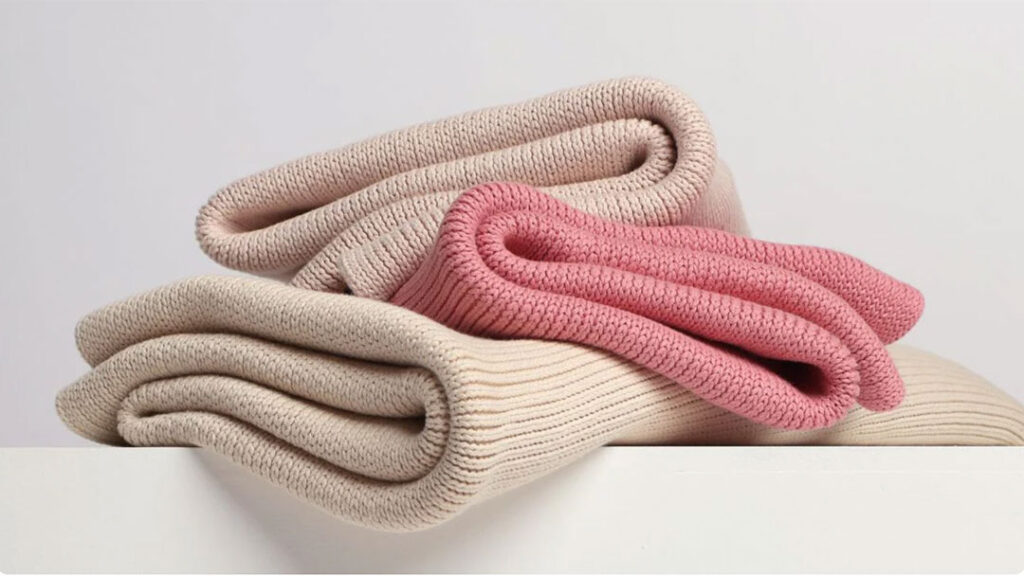
Woven Woven has a range of children’s weighted blankets
How to choose the right-sized weighted blanket for your child
It’s easy to assume a weighted blanket should cover the whole bed like a regular doona. But that’s not how they’re designed to work. For a weighted blanket to be effective, the pressure needs to sit on your child’s body, not be spread out across the mattress.
A good rule of thumb is to choose a blanket that’s around 10% of your child’s body weight, and appropriately sized for their frame. If the blanket is too large, even if the total weight seems right, the pressure becomes diluted as it drapes off the sides. That means less of the calming, deep pressure effect that makes these blankets so helpful in the first place.
There’s also a safety element to consider. A properly sized blanket should feel comforting, not restrictive. Your child should always be able to move freely and lift it off themselves with ease.
In short, it’s not just about choosing a heavier blanket; it’s about choosing one that’s proportionate to your child, so they get the full benefit in a safe and supportive way.
Visit the Woven Woven website for the full range of cotton, bamboo and merino wool children’s weighted blankets today!