In the bustling classrooms of Australia, a silent struggle often goes unnoticed. A child sits at their desk, staring at a worksheet that feels like a coded puzzle. They watch their peers pick up pencils and start writing, while they are still processing the third step of the teacher’s instructions. To the casual observer, this child might seem ‘distracted’ or ‘disengaged’. In reality, they are navigating a world where the primary tool for human connection — language — is a constant barrier.
Language Disorder is one of the most common neurodevelopmental conditions in Australia, yet it remains significantly misunderstood. Affecting approximately 10 per cent of the population, it is a persistent, lifelong condition that impacts how a person thinks about, understands, and uses language.
Under this broad umbrella sits Developmental Language Disorder (DLD) — a condition affecting about 1 in 14 children. DLD is a neurodevelopmental condition characterised by persistent difficulties with language that cannot be explained by a known biomedical condition, such as autism or intellectual disability. Athena Panagopoulos from Language Disorder Australia explains that DLD can often be hidden in plain sight despite a significant impact on language development.
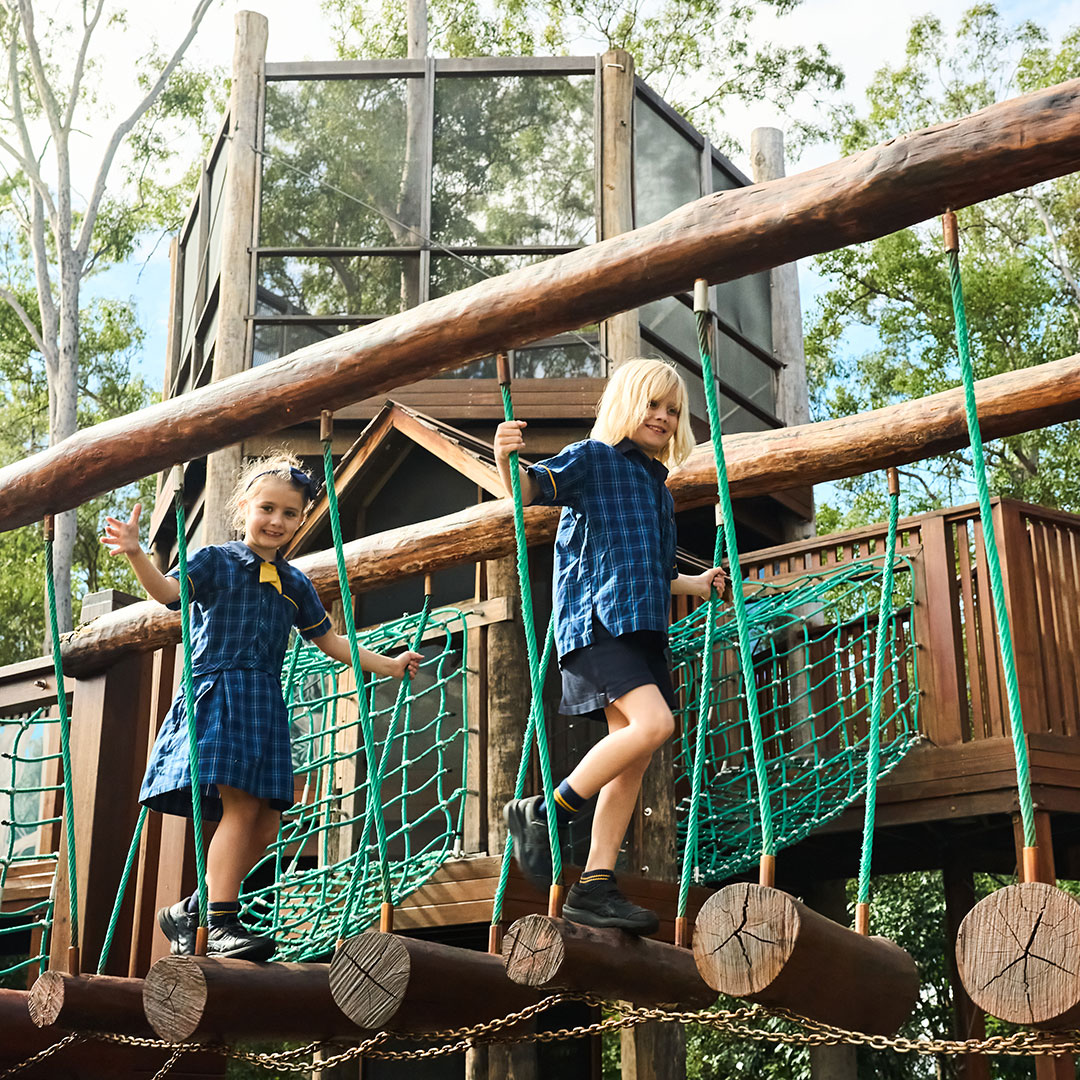
Primary students climbing on the Mancel College playground
So, how does Language Disorder show up day-to-day?
Language Disorder isn’t just about a ‘speech delay’ or ‘mispronouncing words’. It deeply affects how a child learns and interacts.
- Comprehension: Children may struggle to follow multi-step instructions; a child with Language Disorder might only catch the first part.
- Expression: Parents might notice their child struggling to find the right words, using vague language such as “that thing over there”, making grammatical errors (e.g., Her catched the mices), or having difficulty retelling stories in a logical order.
- Learning: Literacy is a major hurdle; in Year 3, students can become overwhelmed by complex vocabulary and abstract concepts as they shift from ‘learning to read’ to ‘reading to learn’.
- Social and emotional wellbeing: Language is the currency of friendship. Difficulty understanding social nuances, predicting social outcomes, or expressing feelings can lead to isolation.
As the curriculum progresses, children with Language Disorder can quickly disengage, says Jodi Dew, Deputy Head at Mancel College. “They’re unhappy; they experience school can’t (refusal), anxiety, and frustration.”
Why early identification of Language Disorder matters
Without identification and the right support, the stakes are high. Research suggests that between 60 to 90 per cent of children and young people in youth justice settings present with communication difficulties (including a high proportion of Developmental Language Disorder). Oftentimes, their difficulties have not been identified or effectively supported. Jodi explains that as students progress towards graduation and employment, mainstream schools often assume students have these basic language skills. Still, for children with Language Disorder, these skills aren’t necessarily innate.
“There are a lot of assumptions made that teenagers will just be able to go off and get a part-time job and then get into university or TAFE and start a career,” says Jodi, “but that’s not often the case for students with Language Disorder.”
However, there is immense hope. When a child is identified early, the narrative changes from frustration to empowerment. Support isn’t just about ‘fixing’ a deficit; it’s about providing the tools to navigate a language-heavy world.
However, emotional wellbeing is the foundation — once a child feels safe and understood, the academic progress follows.
“Our main focus is all around relationships, and that social and emotional safety space first,” says Jodi. “It doesn’t matter how great our programs are… if they’re (students are) not feeling connected and they’re not understood… then learning doesn’t happen.”
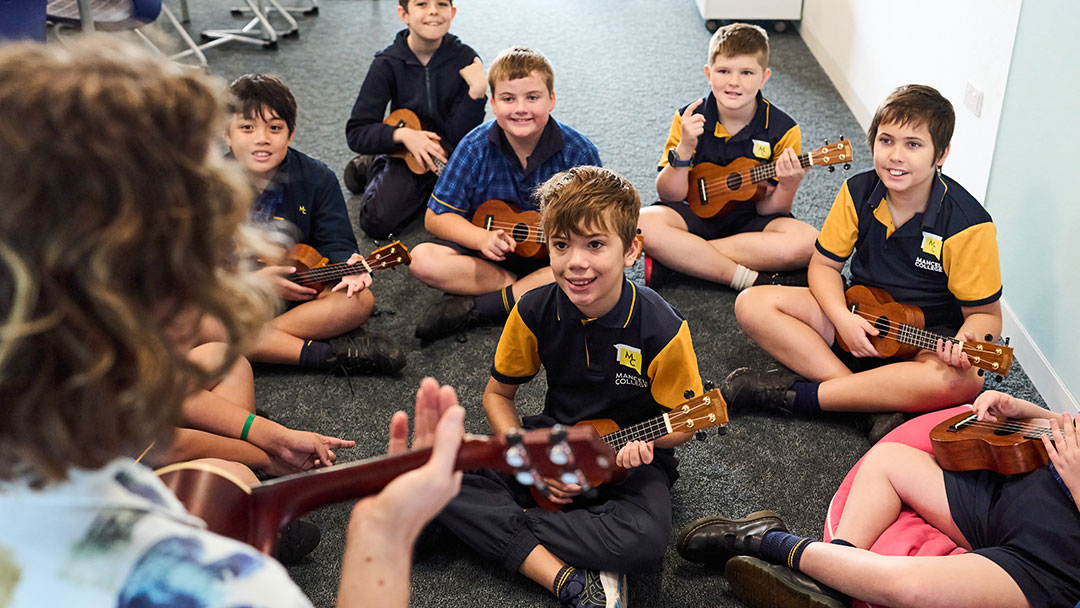
Primary students at Mancel College in a specialised music class
Inside Mancel College: A different way of learning language
Mancel College is the only school of its kind in Australia that delivers the Australian Curriculum through a specialised lens for students with Language Disorder.
The secret lies in the multidisciplinary model. Every classroom is a partnership between teachers and allied health professionals — speech pathologists, occupational therapists, physiotherapists and music therapists.
“We prefer a push-in model rather than a pull-out model,” Jodi explains. “Therapists physically work in the classroom… helping the teachers make adjustments and use evidence-based strategies that are good for all.”
The staff-to-student ratios in classrooms are intentionally high to ensure every child is catered for:
- Prep: Up to 10 children
- Years 1–2: Up to 12 children
- Years 3–6: Up to 13 children
- Years 7–12: Up to 15 students
“We often hear from our Prep parents that their child will now try certain foods at home, because our OTs have brought in all the cooking skills and the food exploration unit that they do,” adds Jodi. “Kids are getting into routines around self-care. For our families, that is extraordinary.”
From a bespoke driver’s education course using simulators to mock interviews and work experience, the goal is to prepare students for life beyond the gates. “A lot of our students are exceptional; they’re gifted,” Jodi says. “We’ve just got to do something different to make their success happen.”
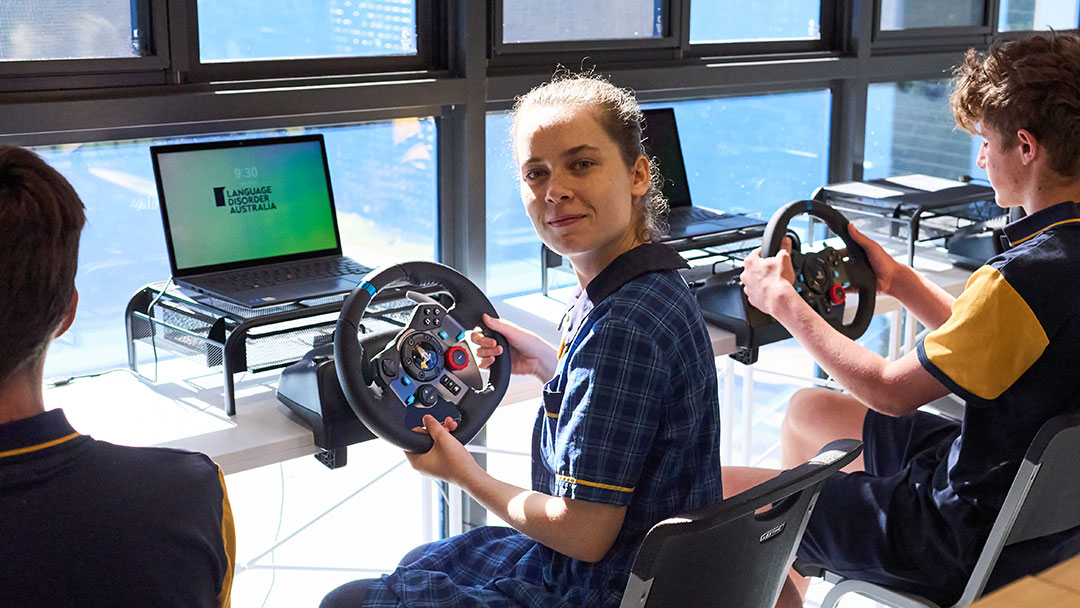
Mancel College students learning to drive on the driving simulator
The Language Disorder Australia ecosystem
Mancel College is part of a wider ecosystem of support and advocacy for children with Language Disorder. Together, these units form a wraparound system designed to ensure no child falls through the cracks.
Language Disorder Academy: A training hub dedicated to delivering high-quality educational services and resources tailored for educators and therapists, with a specific focus on improving outcomes for students with Language Disorder.
Bright Door: A multidisciplinary therapy team of allied health professionals that provides support for children with language, learning and developmental difficulties.
School Support Services: A multidisciplinary team that works with schools across Queensland to develop individualised approaches to support students with, or suspected of having, Language Disorder. The program is fully funded and delivered at no cost to schools.
Could it be Language Disorder? Signs to look out for:
-
- Difficulty understanding or using spoken and written language
- Limited vocabulary or trouble forming sentences
- Using short, simple sentences with little detail
- Mixing up words or word order
- Ongoing grammar difficulties (e.g. tense, pronouns)
- Struggling to follow multi-step instructions
- Trouble organising thoughts before speaking or writing
- Difficulty retelling events or telling stories clearly
- Challenges with reading, spelling and writing
- Social struggles, including making and keeping friends
- Difficulty understanding social rules (e.g. turn-taking, game rules, conversations)
- Difficulties with expressing thoughts, feelings and ideas
- Appearing to underperform academically despite effort
- Increased frustration, anxiety, or fatigue related to communication or school tasks
When should families seek help?
If you are a parent or teacher reading this and recognising these signs, Athena recommends that you act early. “Trust your intuition. If a child seems to be underperforming despite their abilities, or if they are becoming increasingly anxious about school, it may be time to seek an assessment.”
“Language Disorder is not something families need to navigate alone,” adds Jodi. “Our role is to remove barriers… and to ensure Language Disorder is not a limit on what a child can achieve.”
Find your tribe
For many students, arriving at Mancel is the first time they feel they belong. Jodi recalls a Senior School student who had struggled with severe school can’t (refusal) for years. “After two weeks here, his mum said he hadn’t been to school for more than four days in a row since Year 5. Now he was in uniform at 4 a.m., ready to go.”
And this much-needed connection applies to the parents, too, says Jodi.
“All of a sudden, parents who have felt quite alone are part of an amazing community of parents on a similar journey, for them to seek support from and for them to become their village.”
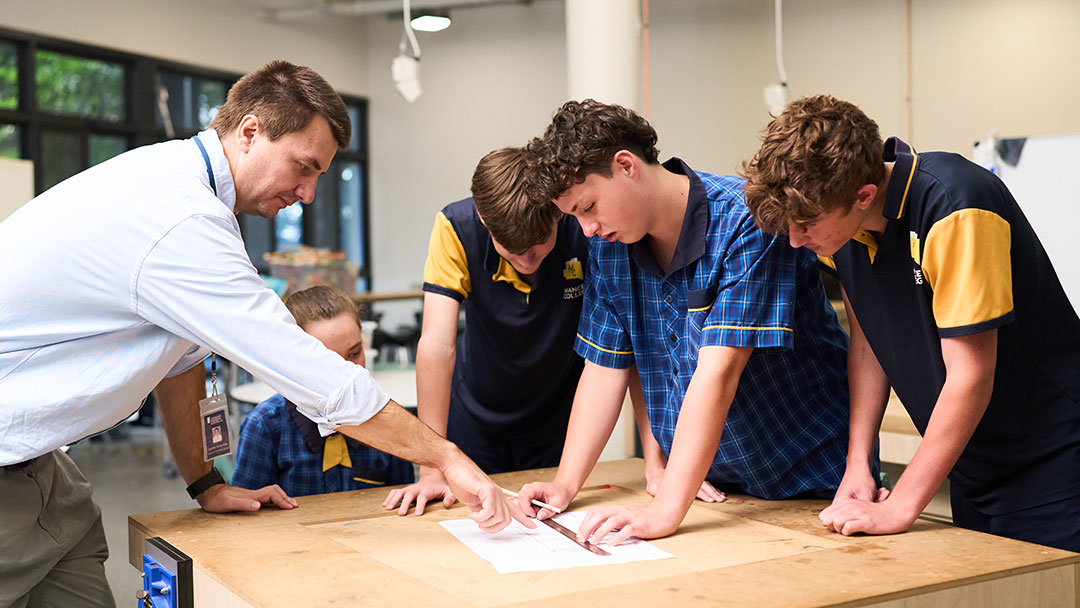
Students at Mancel College learning a trader in the College workshop
Reframing the narrative: From limitation to potential
Jodi believes it’s time to rethink how we discuss Language Disorder, because it’s not due to a lack of ability or effort, but rather a communication difference that requires specific understanding.
“Believe in your kids. Yes, advocate for them, but don’t lower that bar. They can achieve great things. We just need to find different ways for them to demonstrate their knowledge, which is why our partnership between parents and the College is so important. We raise that bar, keep it high, and do it together.”
In the end, the goal for every child at Mancel College is the same: to connect, understand, belong and achieve. With the right support, the hidden 10 per cent aren’t just found, they are empowered to thrive.
Mancel College | 33 Cubberla Street, Fig Tree Pocket, QLD 4069 | (07) 3378 8625
Mancel College holds regular Personal Tours and Open Days, providing families with the opportunity to learn more about the specialist programme, facilities and pathways on offer. Bookings can be made via the Mancel College website.
Read More