Let’s be honest: travelling with kids sounds amazing in theory, but the reality is usually a lot more chaotic than the postcards look. Between the endless packing lists, the paperwork, and that creeping pre-trip anxiety, just getting out the front door is a massive win.
The good news is that you don’t need luck to survive the journey, you just need a solid plan.
If you want to reach the boarding gate feeling relaxed and ready, it all comes down to sorting out the tricky bits before you leave. Here are five practical, tried-and-tested ways to get organised for your next trip.
1. Sort out paperwork early
Getting all your documents, visas, and passport checks sorted in advance is a massive chore. But there is one specific task that every parent dreads: getting a compliant passport photo of a toddler or a baby. Taking a young child to a post office booth or a busy photo studio is a recipe for tears. The bright lights, the weird environment, and the strict rules about not smiling while a queue forms behind you will instantly trigger a tantrum.
Save yourself the stress and just take the photos at home. Find a plain, bright wall in your living room where your child feels comfortable. Checking this complex task off your list early establishes a relaxed momentum for the rest of your holiday preparations.
Take control of the photos at home
You don’t need to be a professional photographer to pull this off. You can use handy passport photo maker software to crop and format the image to match official government guidelines. This method completely changes the game for families:
- No Shot Limits: Snap 50 variations while your child plays comfortably in a familiar environment until you catch the right expression.
- Automatic Layout Matching: The system instantly detects facial features , crops the image to the exact legal dimensions required by Australian and international authorities, and cleans up the background automatically.
- Fraction of the Price: Instead of shelling out high retail fees for every family member, you generate a print-ready file to process at home or a local print shop for next to nothing.
2. Slow down your travel schedule
Back when you traveled solo or as a couple, having every minute planned out was something to boast about. You could easily rush between galleries and historic landmarks, hitting 20,000 steps before dinner. Try that with a preschooler, and you will quickly see why parents championed the “slow travel” movement.
Smart Rule: Look at your old travel pace and cut it directly in half, and leave the remaining hours wide open.
Overstuffing your day is a one-way ticket to a toddler meltdown. Kids don’t care about famous landmarks; they want to stop and look at a bug on the path, spend two hours at a local playground, or take a massive snack break. Work around their usual nap times and cut your checklist in half. Lowering your expectations is the easiest way to make sure everyone actually has a good time.
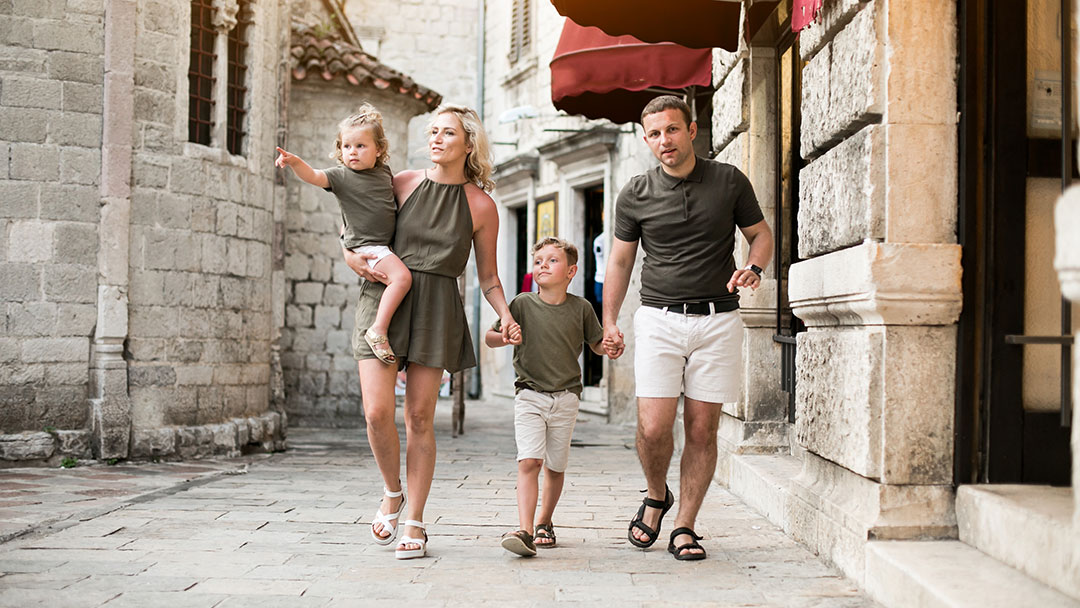
Keep your schedule slow to allow for breaks and avoid meltdowns.
3. Book ahead and prep your devices
You can’t just turn up in a new city and look for a hotel or museum tickets when you have kids with you. Forcing a tired child to stand in a 45-minute queue in the midday sun just to buy admission tickets will almost certainly cause a behavioural storm.
Lock in every detail ahead of time: secure airport shuttles (remember to request the correct child car seats), reserve specific museum entrance times, and book tables for dinner before you leave home.
Build a digital backup plan
Before stepping out the front door, ensure your digital devices are packed with the right resources:
Save offline regional maps directly to your smartphone so you can find your way without relying on cellular networks.
Load tablets with your kids’ favorite animated shows, audiobooks, and games before the trip. Plane and airport wireless connections are notoriously unstable and will likely fail right when a distraction is needed most.
Upload secure digital duplicates of every passport, travel insurance policy, and reservation receipt to a cloud storage account.
Pro-tip: For real-time alerts on international safety, entry visas, and regional health warnings, check the Australian Government’s Smartraveller site during your planning phase.
4. Keep your packing tight and organised
Organising luggage for multiple people can feel so overwhelming that parents often pack double what they need out of pure worry. To keep your bags light and organized, skip the old habit of folding random columns of trousers and shirts into your luggage. Instead, switch to the bundle packing system.
Assemble complete daily outfits — including matching underwear and socks — and roll them tightly into single packages. Slide these packages into individual packing cubes. When you arrive at your accommodation, you won’t need to dig through a chaotic suitcase; you simply grab one neat bundle for the day ahead.
Take the emergency entertainment toy
Hide a brand-new, unseen toy or activity book deep inside your hand luggage. Keep it completely hidden until you reach the most exhausting part of the journey, such as an extended flight delay, a bumper-to-bumper traffic jam, or a slow-moving customs queue. A fresh set of stickers, a toy vehicle, or an unread puzzle book can provide a welcome break of focused quiet time when you need it most.
5. Pack smart snacks and a first aid kit
An empty stomach quickly leads to volatile behaviour. Sudden drops in blood sugar trigger the majority of travel tantrums, and you cannot count on finding kid-friendly meals the moment a train schedule shifts or a flight is delayed.
Never start a car trip or board a flight without a diverse supply of food. Stay away from sugary treats that trigger a brief energy spike followed by an emotional crash. Instead, focus on low-mess, protein-rich items like whole-wheat crackers, cheese sticks, fruit purees, and assorted nuts. A helpful trick is filling a multi-compartment craft box or tackle tray with small portions of different foods; picking through the different slots doubles as a brilliant boredom buster for toddlers.
The home-to-hotel first aid kit
True peace of mind also means traveling with a fully prepared medical kit. You do not want to scour an unfamiliar neighborhood for an open pharmacy at 2:00 AM because your child suddenly feels burning hot. Your portable kit needs to contain:
- Children’s pain and fever relief
- A reliable digital thermometer
- Kid-safe antihistamines
- Adhesive bandages, sterile wipes, and blister treatments
- Hydration or electrolyte sachets
Enjoy the journey
Let’s face it: family trips always come with missed connections and messy spills, and you just have to roll with it. The magic lies in handling the heavy logistics ahead of time. Taking care of your travel documentation and building a balanced daily schedule at home will help to eliminate underlying tension.
Now that the foundational details are in place, you can stop managing crises and focus on the real reward: sharing a wonderful journey with your loved ones. Safe travels!