Feeding a crowd of hungry kids and relatives can turn a relaxed weekend into a juggling act. A spit rotisserie takes some pressure off because it turns slowly on its own while you chat, refill drinks and keep an eye on the little ones.
For family barbecue ideas that keep everyone fed, a spit rotisserie is a practical option. This guide covers fuel, size, portability and safety so you can choose a setup that suits your yard, your family and local park rules in Southeast Queensland.
How a spit rotisserie fits family life
The main appeal is steady rotation. Once the meat is balanced and spinning, it bastes in its own juices and cooks evenly with less hands-on attention than a standard barbecue.
Choose your fuel and format
Fuel choice affects flavour, convenience and where you can legally cook. Charcoal and wood give a smoky taste, but they need more setup and careful ember disposal. Gas is quicker to light and easier to control, which suits busy evenings. Dual fuel units give you both options.
Outdoor Living Abode lists spit rotisserie options across charcoal and wood, dual fuel and portable formats. Its dual fuel 1500 mm model lists LPG gas, charcoal, wood and heat beads as compatible fuels, which is useful if you want one unit for home and occasional park cooking.
Fire bans matter too. In Queensland parks, gas and electric barbecues can generally be used during a declared fire ban if safety conditions are met, while solid fuels such as charcoal and wood are usually restricted. Always check current local rules before you light anything.
If you want to compare charcoal, dual fuel and portable models, review spit rotisseries in Australia by fuel type, cooking area and motor rating rather than price alone.
Size and capacity made simple
Start with your usual group size rather than the biggest unit you can find. A small family roast, such as a single chicken or modest beef cut, needs far less capacity than an extended family lamb feast. Match the machine to how you cook most weekends, then allow a little extra room for birthdays and school holidays.
Motors are rated by the weight they can turn. A compact extendable spit from Outdoor Living Abode offers motors rated at 20 kg, 30 kg and 60 kg. A dual fuel 1500 mm unit offers motors rated at 30 kg, 60 kg or 120 kg.
As a plain rule, the motor rating should comfortably exceed the total weight of your balanced load, including the skewer and any basket. Leaving headroom helps the motor cope, though no rating guarantees performance in every setup.
Portability and storage
For parks or camping trips, look for fold-away designs that pack down small. The compact extendable spit mentioned above has a maximum length of 1380 mm and weighs 29 kg, which gives you a practical sense of boot space and storage needs. A folding frame or removable legs can also make shed or garage storage easier.
Local outings are a good reason to choose a portable model. If you are planning a day out, some family-friendly outdoor picnic areas pair well with a simple park cook, as long as park rules and fire conditions allow it.
Safety and compliance in Australia
Gas safety starts at the connection. From 1 April 2022, new BBQs and outdoor gas appliances sold in Australia must use the LCC27 hose connection, a gas bottle connection designed to reduce leak risks. Energy Safe Victoria advises against adaptors from old POL cylinders to new LCC27 appliance connectors. In Western Australia, LCC27 valves replaced POL valves from 2021, and POL to LCC27 adaptors are prohibited.
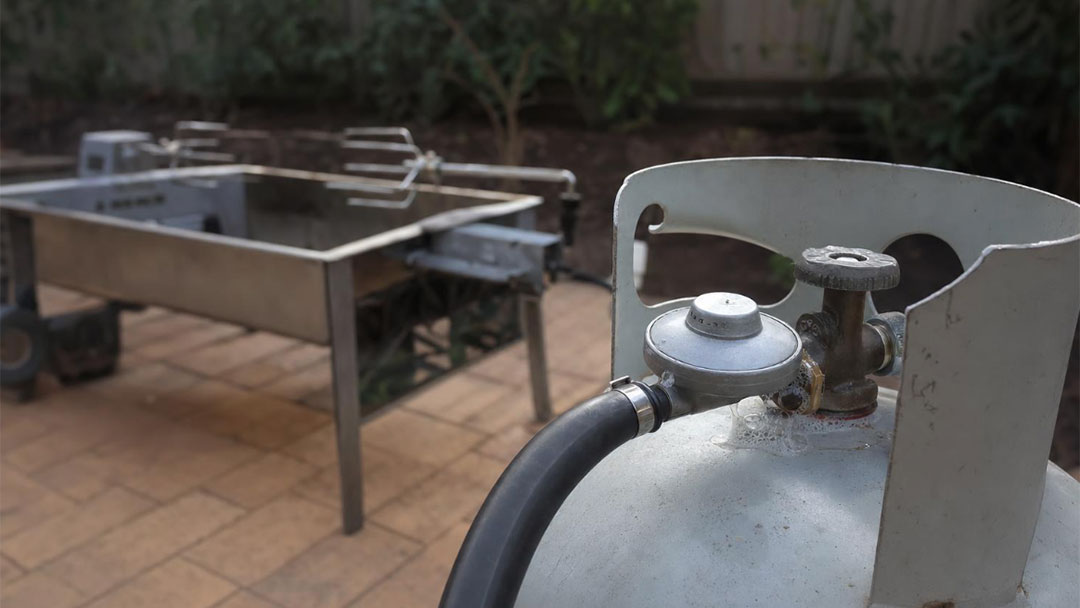
Spit rotisserie with gas bottle in a backyard in Australia
Before each cook, brush connections with soapy water and watch for bubbles. Keep children away from heat, sharp skewers and moving parts. Check strata rules, park signage and current fire bans. Queensland guidance says charcoal embers can stay hot for up to two days, so cool and dispose of them carefully. For park days, check picnic spots and site rules before packing a gas bottle or solid fuel.
Food safety for families
A thermometer takes the guesswork out of feeding kids. Food Standards Australia New Zealand recommends cooking poultry and mince to at least 75°C in the centre. Cross-contamination is easy to overlook at a busy table, and the NSW Food Authority warns against returning cooked meat to a plate that holds raw juices.
Use separate trays for raw and cooked meat, swap to clean utensils once cooking is done and rest the roast before carving.
Resting also makes carving easier and keeps the meat juicy, which matters when you are slicing for a queue of hungry kids. Give a large roast 15 to 20 minutes under loose foil while you finish the sides.
Conclusion
Choosing a spit rotisserie comes down to matching fuel, size and portability to how your family actually cooks. Start with your usual group size, pick a fuel that suits your yard and local rules, then check the motor rating and length against the roasts you have in mind.
Before the big day, confirm your gas connection meets the LCC27 standard and check any park or fire ban rules. With those basics sorted, a slow-turning roast is one of the easier ways to feed a hungry family.
Frequently asked questions
What size spit rotisserie do I need for a family?
Match the motor and bar length to your usual group. A single chicken or modest roast suits a compact 20 kg to 30 kg motor, while a large lamb or several cuts for an extended family are better on a 60 kg or higher rating with a longer bar.
Can I use a spit rotisserie in a Queensland park during a fire ban?
Often yes for gas and electric models if safety conditions are met, while charcoal and wood are usually restricted during a declared fire ban. Always check the current local rules and park signage before you light anything.
Is gas or charcoal better for a family BBQ?
Gas is quicker to light and easier to control, which suits busy evenings, while charcoal and wood add a smoky flavour for weekend roasts. A dual fuel unit lets you switch depending on the day.
What temperature should I cook poultry to?
Food Standards Australia New Zealand recommends cooking poultry and mince to at least 75°C in the centre. A meat thermometer takes the guesswork out, especially when you are feeding kids.