Whale watching season in Moreton Bay is entering one of its most exciting periods, with the annual humpback migration now at the point where northbound whales are crossing paths with mothers and their newborn calves beginning the long journey south to Antarctica.
Known as the migration “crossover”, August marks the transition between the two legs of the humpbacks’ annual journey. While some whales are still travelling north towards warmer breeding grounds, increasing numbers of mothers and calves are now heading south after giving birth.
For Moreton Bay, the changeover means whale watchers can encounter a mix of migrating whales, including some of the season’s newest arrivals.
What is the whale migration “crossover”?
Brisbane Whale Watching founder Captain Kerry Lopez, who is celebrating 30 years of operating whale watching tours from Redcliffe this season, said the coming weeks were a particularly special time to be on the water.
“This is when the migration really starts to change. We still have whales making their way north, but we’re increasingly seeing mothers travelling south with these tiny calves alongside them.”
“Moreton Bay gives these mothers and their young an important place to move through on their journey south. The waters inside the bay are more protected than the open ocean, and seeing a newborn calf alongside its mother is one of the most special encounters we have each season.”
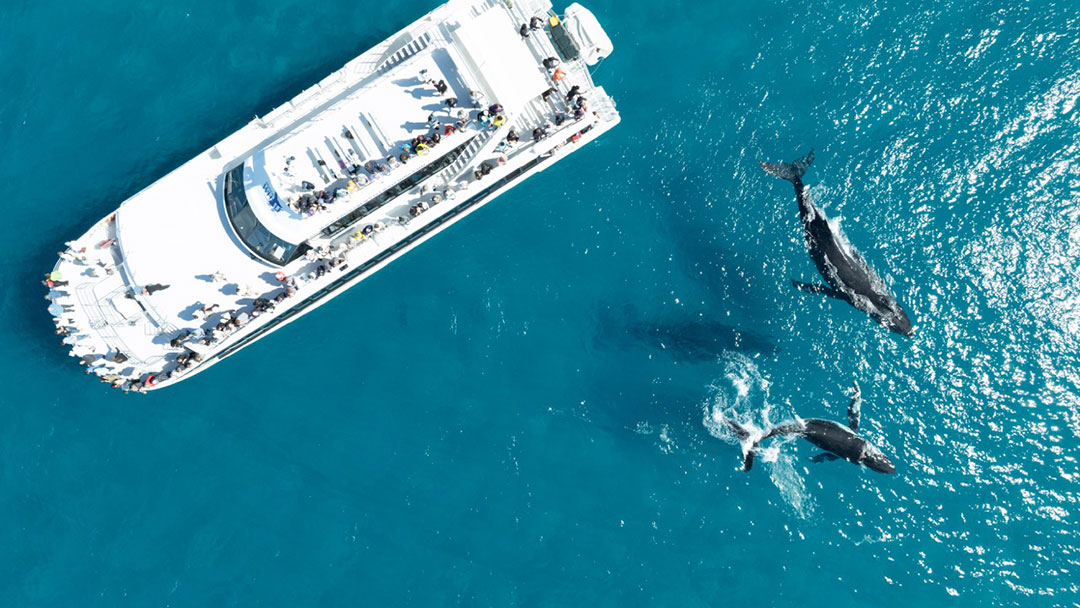
Mothers and baby whales entertain people onboard Brisbane whale watching
A safe haven for tiny calves
The crossover also strengthens Captain Lopez’s call for greater recognition and long-term protection of Moreton Bay.
Earlier this season, Brisbane Whale Watching used its 30th anniversary to advocate for stronger protection of the region’s marine environment and to progress discussions around Moreton Bay’s potential for World Heritage recognition.
“After 30 years watching these animals return, you understand just how significant this environment is and why we need to protect it for generations to come.”
“We have whales, dolphins, dugongs, turtles and an extraordinary marine environment right on the doorstep of one of Australia’s largest cities. Moreton Bay deserves to be recognised and protected for what it is.”
Tourism and Events Moreton Bay CEO Luke Edwards said the crossover period provided visitors with another reason to experience the region during winter.
“Seeing a humpback whale is extraordinary. Seeing a mother travelling with a newborn calf against the backdrop of Moreton Bay is something people remember for the rest of their lives.”
“This period of the migration showcases exactly why Moreton Bay’s natural environment is so important. Visitors can leave Redcliffe and within a short time be experiencing one of the world’s great wildlife migrations.”
Planning a family whale-watching day out
Brisbane Whale Watching operates from Redcliffe throughout the migration season and brings more than 12,000 visitors to the peninsula each year.
The annual east coast humpback migration sees tens of thousands of whales make the journey from Antarctic feeding grounds to warmer northern waters and back again, with the southbound migration continuing through spring.
Wrap up warm, pack a camera, and keep your eyes on the horizon — Moreton Bay’s newest little ocean residents are officially here to put on a show!
Related Reads
Five family-friendly adventures in Moreton Bay these school holidays
Wildlife sanctuaries and places to see animals in Brisbane