
For families with a dog or cat at home, tick season is one of those things that creeps up fast — and this year, it’s arriving early. A new landmark study has revealed exactly where paralysis ticks like to attach on our pets, and the results include some hiding spots most parents and pet owners would never think to check.
The findings are being shared as part of National Tick Awareness Month for Pets, running from 1–30 September 2026, an annual campaign designed to help households understand the risks and keep their pets safe.
Why this matters for your family
Paralysis ticks are a serious, potentially fatal threat to dogs and cats, and they’re not just a “summer problem” anymore. Vets at SASH, one of Australia’s leading specialist and 24/7 emergency veterinary hospital networks, treated over 780 dogs and cats for tick paralysis across its hospitals in the space of just one year (1 May 2025 – 30 April 2026).
On the Sunshine Coast, one of the country’s highest-risk paralysis tick regions, cases have been showing up throughout winter, well ahead of the usual spring peak. And it’s not only families living in known tick areas who need to be vigilant. Pets travelling with their owners to tick-prone regions are also turning up in emergency rooms, which is why vets are urging households everywhere to keep pets on effective tick control all year round, not just during “tick season.”
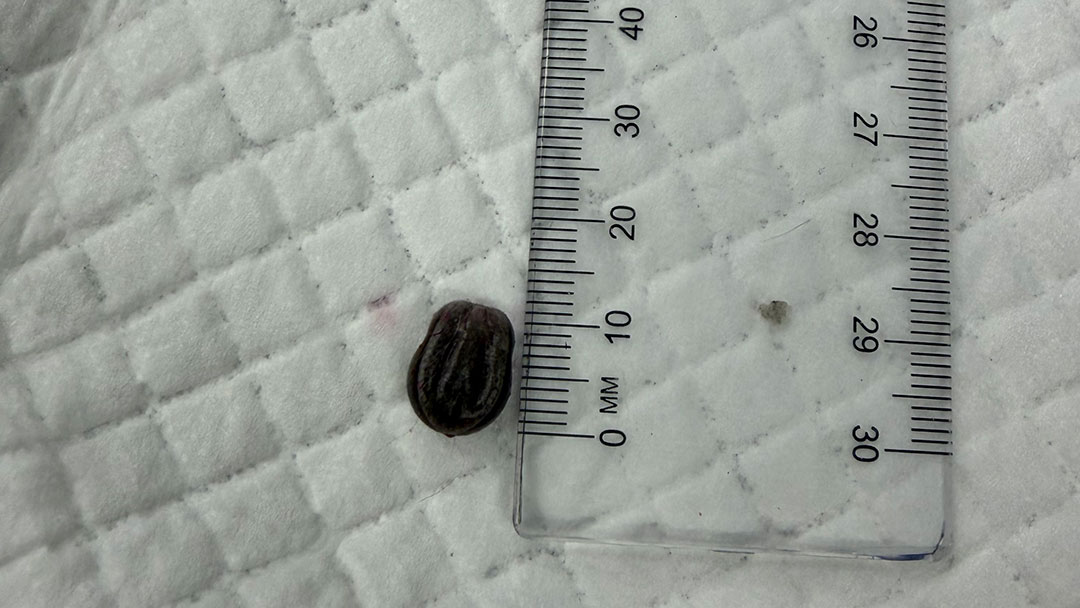
A tick next to a ruler illustrates the size of deadly parasite ticks
Where do ticks actually attach? The study’s findings
This is the largest study of its kind, analysing tick attachment sites from more than 10,000 tick paralysis cases across veterinary hospitals in Brisbane, the Gold Coast, the Sunshine Coast and Sydney’s northern beaches.
The headline takeaway for families: start your tick search at your pet’s head and front end. Ticks were found on the head, neck or ears in 73% of dogs and 63% of cats. Interestingly, the study also found a difference between species — the head was the most common site for dogs, while the neck was the most common site for cats.
But researchers also found ticks in far less obvious places, including inside the mouth (on the gums and tongue), in the nostrils, in the external ear canals, and even around the genitalia. These hidden spots can easily be missed during a quick, at-home check.
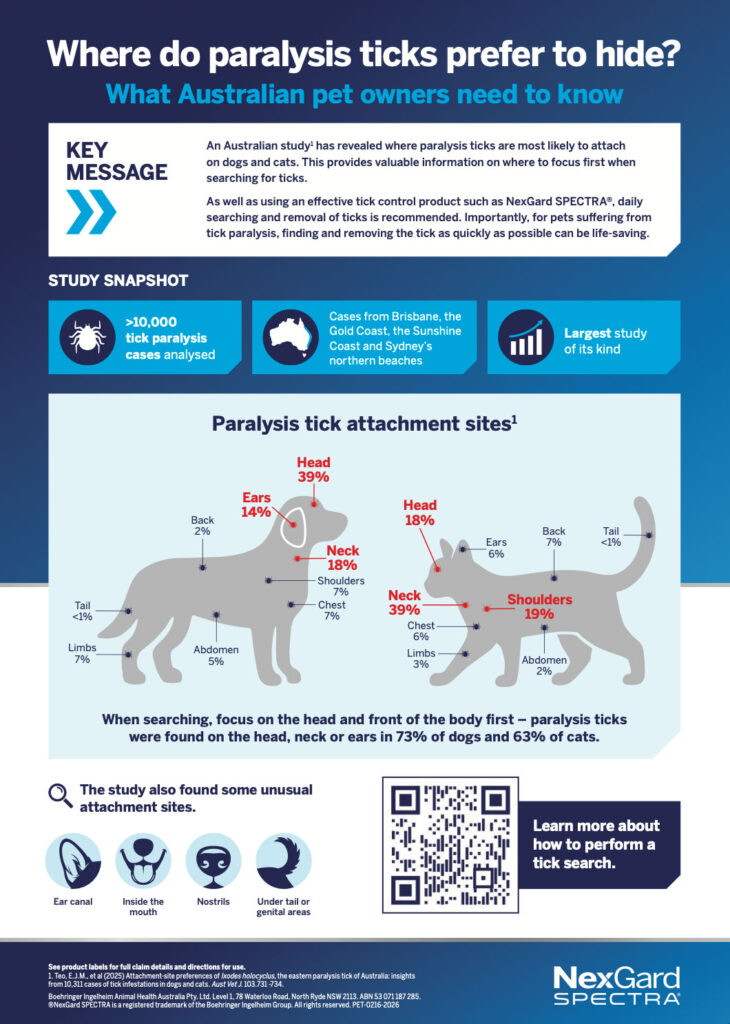
Paralysis tick attachment sites infographic
Dr Theresa Bülger, Emergency Veterinarian at SASH Sunshine Coast, says complacency is the biggest risk factor. “Finding and removing the tick quickly is critical. Many people check the obvious places but don’t realise ticks can also attach inside the mouth or ear canals, hidden sites that can delay detection and increase the risk of severe illness.”
Pumpkin’s story: A reminder for every household
Sometimes a real-life story makes the risk click for families in a way statistics can’t. Pumpkin the cat disappeared for three days before returning home unable to stand. His worried owners rushed him to SASH Sunshine Coast, where vets discovered he was suffering from severe tick paralysis, with a significantly reduced gag reflex and difficulty breathing.
After clipping his fur, the veterinary team found a large paralysis tick hidden at the base of his tail — an unusual site rarely checked by owners — along with a crater-like wound on his neck from an earlier tick attachment. Pumpkin spent four days in intensive care before making a full recovery.

Pumpkin made a full recovery after having a deadly parasite tick on his tail
“Many people focus on checking around the head, neck and ears, but Pumpkin’s paralysis tick was hidden on his tail,” Dr Bülger said. “It’s a timely reminder that paralysis ticks can attach in unusual places, so pet owners need to check every part of their pet, especially if they’ve been outdoors. Early treatment is critical and can be lifesaving.”
A family tick-check routine you can actually stick to
Making tick searches part of the daily routine — like brushing teeth or feeding the dog — is the best defence. Vets recommend:
- Gently move your fingertips (‘finger walk’ them) through the coat at the level of the skin, over every aspect of your pet feeling for any bumps.
- Start at the head and neck – check the mouth and ears.
- Continue down the front legs to the paws, checking between the toes and underneath the paws.
- Search the chest, belly, back, tail and hind legs.
- Remove the collar and check underneath it.
- If your pet has a long coat, consider clipping the coat (including the head and tail) during periods of increased risk (particularly spring and summer) to make searching for ticks easier.
Alongside daily searching, vets recommend using an effective, vet-approved tick control product such as NexGard SPECTRA® to help protect pets year-round.

Little boy sitting reading a book to his cat
Keep your family protected — What to do next
Tick prevention works best when it’s consistent, and life gets busy. Want a simple way to stay on top of your pet’s monthly protection?
Sign up here to get a monthly reminder to dose your pet — a quick SMS nudge so a busy family calendar never gets in the way of protecting your pet.
For more information on protecting your pet, check out the following:
How to remove ticks from your dog
How to remove ticks from your cat
This article is based on veterinary research and expert commentary from SASH (Sydney Animal Specialist Hospital) and is intended for general information. Always consult your veterinarian if you suspect your pet has been affected by a tick.
Related Reads
Teaching responsible pet ownership to the next generation
Gold Coast therapy dog changing kids’ lives