
Newly laid turf needs careful attention while its roots establish in the soil. The first few weeks are particularly important because the turf does not yet have an established root system and relies on consistent moisture to begin rooting.
This is especially important when caring for a new roll-on lawn in Perth, where sandy soils, warm weather and irrigation requirements can affect establishment. Watering, foot traffic, mowing and fertilising all need to be managed carefully during this stage.
What should you do immediately after laying roll-on grass?
Water newly laid turf as soon as installation is complete. Water should pass through the turf and reach the soil beneath it rather than only wetting the grass blades.
Newly installed turf also needs good contact with the soil. Rolling the lawn after installation can help remove air pockets and improve contact between the turf and its growing surface. Fresh turf is perishable, so install it promptly after delivery and avoid leaving rolls exposed to heat or direct sunlight.
How often should you water newly laid turf?
New turf needs consistent moisture while its roots begin developing. Instead of following one fixed watering schedule, check the condition of both the turf and soil and adjust watering according to the weather. During establishment:
- Keep the turf moist.
- Check that water is reaching the soil below.
- Pay attention to edges and joins, which can dry out faster.
- Make sure irrigation covers the lawn evenly.
- Adjust watering as conditions change.
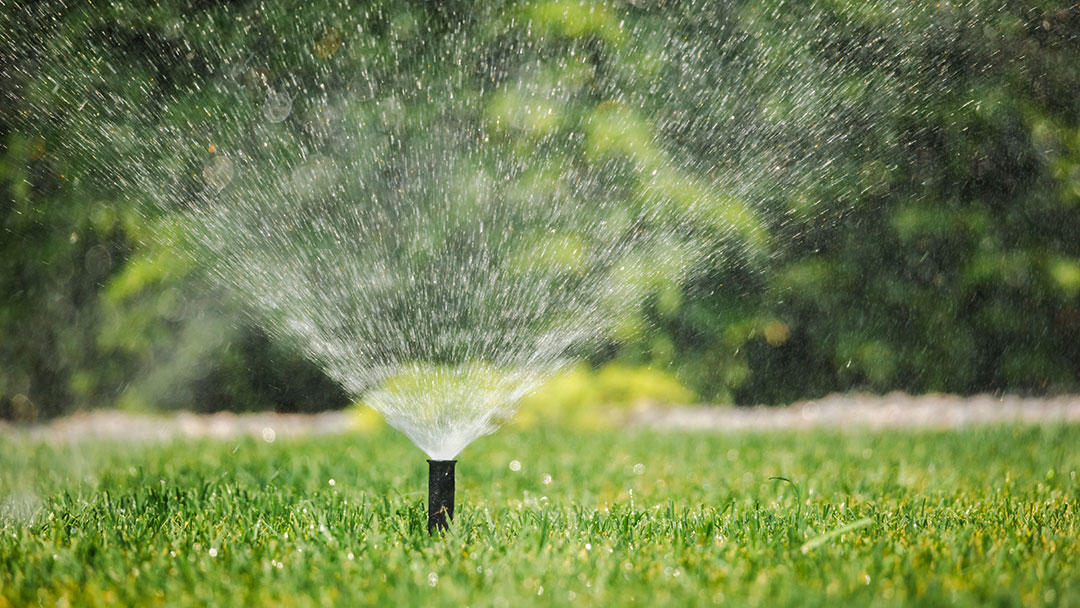
Sprinkler watering newly laid turf
Water Corporation recommends frequent watering during the initial establishment period before gradually reducing the frequency as roots develop.
How can you tell if your new turf is rooting?
A gentle pull test can help determine whether the turf has started to anchor into the soil. Carefully pull upwards on a section of turf. If it lifts easily, the roots may need more time to establish. If there is resistance, the roots are beginning to anchor.
Avoid repeatedly lifting the turf or disturbing joins. The test only needs to be performed occasionally. Uneven growth, loose sections and persistently dry areas can also indicate that parts of the lawn need closer attention.
When can you walk on newly laid turf?
Keep foot traffic to a minimum while the lawn establishes. Unnecessary walking, playing or moving equipment across the surface can disturb the turf before its roots have anchored securely.
Rather than following an arbitrary number of days, use the condition of the lawn as a guide. Once the turf resists the gentle pull test and has established, normal use can gradually increase.
When should you mow newly laid roll-on grass?
The first mow should be based on growth and rooting rather than a fixed calendar date. Check that the turf resists movement before mowing. Once it is ready:
- Use sharp mower blades.
- Start with a higher mowing setting.
- Avoid removing too much leaf material.
- Gradually return to a regular mowing routine.
When should you fertilise new turf?
Avoid adding fertiliser simply to encourage faster growth. Newly laid turf needs time to establish before additional nutrients are applied.
A granular slow-release NPK fertiliser can generally be applied around 4–6 weeks after installation, following the product label. Apply it to a dry lawn and water thoroughly afterwards to help move the nutrients into the soil. Applying more fertiliser than recommended will not necessarily produce faster establishment and may create additional lawn-care problems.
What soil conditions can affect new turf establishment?
The soil beneath the turf plays an important role in establishment. Perth’s sandy soils can sometimes have poor water absorption, making it difficult for moisture to move evenly through the root zone.
Proper soil preparation before laying turf can help provide a better growing surface. Where necessary, a suitable soil wetting agent can also help improve water penetration.
If water begins running off rather than soaking into the soil, check the soil condition and irrigation coverage rather than simply increasing watering.
What problems should you watch for?
Regularly inspect the lawn during its establishment period. Look out for:
- Dry or brown patches: These may indicate uneven irrigation or poor water penetration.
- Yellowing: Check moisture levels and overall lawn conditions before adding fertiliser.
- Lifting turf: Loose sections may not have rooted sufficiently.
- Runoff: Water running off the surface may indicate poor absorption or uneven irrigation.
- Uneven growth: Differences in sunlight, moisture and soil conditions can cause patchy development.
Addressing these issues early can prevent small establishment problems from becoming larger lawn-care concerns.
How does Perth weather affect newly laid turf?
Warm, dry conditions can increase moisture loss from newly laid turf, while sandy soils may drain quickly. Monitor the lawn more closely during hot or windy weather and adjust watering when necessary.
Local watering requirements should also be considered. Perth’s annual Sprinkler Switch-off runs from 1 June to 31 August, and new lawns may require an approved watering exemption if sprinklers are needed during this period. (Water Corporation)
The goal is to maintain sufficient moisture without creating prolonged waterlogging.
How can you help new roll-on grass establish successfully?
The key steps are simple:
- Prepare the soil properly before installation.
- Water immediately after laying the turf.
- Maintain consistent moisture while roots develop.
- Limit foot traffic until the turf is firmly anchored.
- Check rooting with a gentle pull test.
- Mow carefully once the turf is established enough.
- Fertilise at the appropriate stage and follow the product instructions.
- Monitor problem areas such as dry patches, runoff and lifting turf.
Closing thoughts
Caring for newly laid roll-on grass is mainly about supporting the turf while its roots establish. Consistent moisture, good soil contact, limited traffic and correct mowing and fertilising practices can help the lawn develop evenly.
For Perth properties, soil and irrigation conditions deserve particular attention. Sandy or water-repellent soil can affect moisture penetration, while warm weather can increase water loss.
Once the turf has rooted firmly, its watering, mowing and maintenance routine can gradually shift towards the needs of an established lawn.
Related Reads
How Can You Design a Custom Home Without Compromising Your Budget?
Mount Alvernia College garden cultivates wellbeing and learning