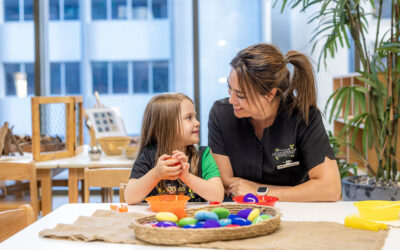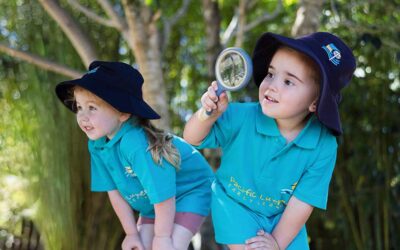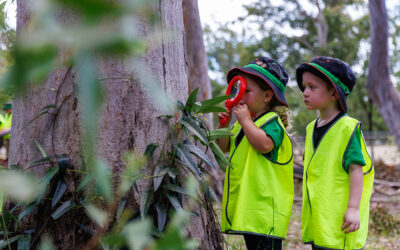
Walk past a high-quality early childhood room at 10:00 AM and you will see four-year-olds measuring water with plastic jugs, negotiating who builds the bridge across the sandpit, and sounding out letters on handmade shop signs. To an untrained eye, it looks like free play. Under Australia’s Early Years Learning Framework (EYLF V2.0), every piece of that morning is deliberate educational design.
Many parents worry that a play-based program means children miss out on real school readiness. In reality, young brains do not absorb abstract concepts through worksheets or passive instruction. Children under five build foundational literacy, numeracy, and emotional regulation by testing ideas with their hands, collaborating with peers, and following their own curiosity with skilled educator guidance.
What play-based learning actually means under the EYLF V2.0
Australia’s national curriculum standard for children aged birth to five—Belonging, Being and Becoming: The Early Years Learning Framework (EYLF V2.0)—places play-based learning with intentionality at the centre of every accredited early learning service.
Intentionality is the piece that separates structured early education from unstructured babysitting. Educators observe what fascinates each child, set up open-ended materials that stretch their thinking, and ask timely questions that deepen the inquiry without taking over the game.
“Play-based learning capitalises on children’s natural inclination to be curious, explore and learn. Children actively construct their own understandings that contribute to their own learning.” — Australian Government Department of Education, Early Years Learning Framework V2.0
Rather than ticking off isolated subject blocks, educators weave five core EYLF Learning Outcomes into everyday play:
- Children build a strong sense of identity as they make choices, manage frustration, and gain confidence in group settings.
- Children connect with and contribute to their world by sharing resources, caring for gardens, and respecting diverse perspectives.
- Children develop a strong sense of wellbeing through active outdoor movement, healthy eating routines, and emotional safety.
- Children become confident and involved learners who ask questions, test hypotheses, and transfer ideas from one activity to another.
- Children grow into effective communicators by telling stories, negotiating roles in dramatic play, and recognising symbols, letters, and number patterns.
5 ways play-based learning comes to life across Australian early education
Across Queensland and coastal communities, leading early childhood services and parenting resources bring the EYLF to life through distinct, complementary approaches. Here is how five standout models turn everyday play into measurable developmental progress:
1. Reggio Emilia-inspired inquiry studios
Some early learning centres treat the physical classroom itself as a “third teacher,” replacing noisy plastic toys with natural timber, clay, mirrors, and open-ended loose parts. Families exploring a childcare centre Capalaba option can see this approach in action at Kids Early Learning Centre, where 10 purpose-built studios and outdoor spaces support children from six weeks to kindy age. Educators pair EYLF V2.0 outcomes with Reggio Emilia-inspired inquiry, letting children’s real interests guide long-term projects in STEM, art, and emergent literacy.
2. Bush Kinder and coastal nature immersion
Outdoor learning is a cornerstone of Queensland early childhood programs. Weekly Bush Kinder sessions take toddlers and kindergarten children beyond playground fences to climb fallen logs, inspect insects, track weather changes, and build shelters from branches. Navigating uneven ground sharpens gross motor coordination and risk assessment in ways flat rubber surfacing never can.
3. Dramatic role-play corners for social and language growth
When three-year-olds turn a corner of the room into a vet clinic, bakery, or post office, they practice executive function in real time. Writing pretend prescriptions introduces emergent literacy, counting play coins builds early numeracy, and taking turns as customer and shopkeeper teaches empathy and impulse control.
4. Music, rhythm, and movement circles
Group music sessions do far more than burn morning energy. Clapping syllable rhythms prepares young ears for phonological awareness—the ability to hear individual sounds in words before learning to read. Movement games that ask children to freeze, mirror a partner, or follow multi-step action songs directly train working memory and self-regulation.
5. Sensory and loose-parts construction tables
Simple collections of shells, driftwood, kinetic sand, and cardboard tubes invite open-ended engineering. Because loose parts have no single “right” way to be used, children spend 30 to 45 minutes testing balance, volume, and cause-and-effect without fear of getting an answer wrong.
How parents can spot genuine EYLF play-based learning on a centre tour
Every accredited centre mentions play on its website, so knowing what to look for during an in-person tour helps you separate genuine educational intentionality from a room full of toys. Look for three practical signs when you walk through the studios:
- Eye-level documentation of children’s thinking: Wall displays should feature children’s own words, sketches, and photos alongside educator notes explaining which EYLF outcomes the project supported—not rows of identical, adult-cut craft templates.
- Open-ended materials within easy reach: Low shelves stocked with blocks, art supplies, books, and natural objects show that children are trusted to choose their own tools and pack them away independently.
- Educators down on the floor: Watch how staff interact during free play. Skilled educators sit at child height, listen closely, and extend conversations with open questions like “What do you think will happen if we add another block?” rather than standing back supervising from a distance.
Carrying play-based curiosity into home life
You do not need an early childhood degree or expensive educational toys to support EYLF principles at home. Set aside 20 minutes of unhurried, screen-free play each afternoon where your child leads the activity while you narrate what you notice. Ask them to help measure flour while baking, sort laundry by colour and size, or build a blanket fort using cushions and pegs.
When children experience play as respected, meaningful work during their first five years, they arrive at Prep with something far more durable than memorised flashcards—they arrive knowing how to ask good questions, work alongside others, and trust their own ability to figure things out.