If you’ve toured a few childcare services lately, you’ve probably noticed a small certificate near reception — a rating, somewhere between ‘Working Towards’ and ‘Exceeding’ National Quality Standard. Most parents nod, assume it’s a good sign, and keep walking. But that certificate is actually one of the most useful — and most overlooked — tools you have when choosing care for your child.
So what does it really mean when a service is rated Exceeding National Quality Standard, and why is it so much harder to earn than the name suggests?
The National Quality Standard, explained
The National Quality Standard (NQS) is the national benchmark for early learning and care in Australia. It sits within the National Quality Framework, a joint initiative of all state and territory governments, designed to improve outcomes for children in care.
Every approved service in the country — long day care, family day care, kindergarten and outside-school-hours care — is assessed against the same seven quality areas by the regulatory authority in its own state. Crucially, the results are published publicly, so any family can look up any service’s rating before they enrol.
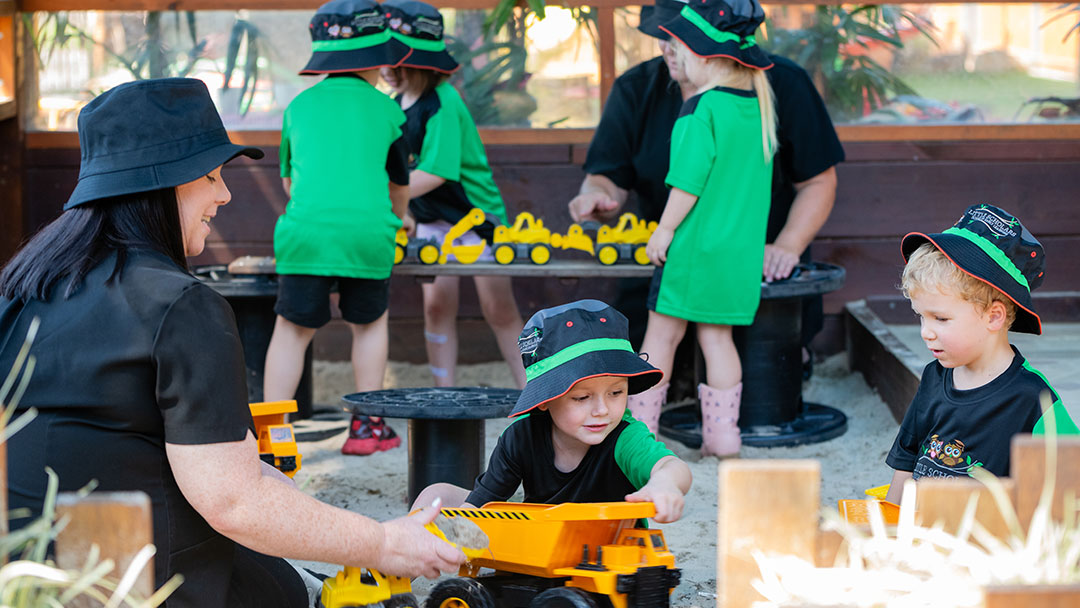
Children at Little Scholars Nerang playing and learning in the sandpit
How a rating is actually earned
A rating isn’t a paperwork exercise and cannot be fudged. It follows a genuine process:
- Self-assessment: The service completes a Quality Improvement Plan and conducts an ongoing self-review against the seven quality areas.
- On-site visit: Authorised officers observe the program in action, review documentation and speak with educators, leadership and often families.
- Rating: The service is scored against each quality area individually, then given one overall rating.
- Publication: The result goes on the national register and Starting Blocks, and must be displayed on site.
The point isn’t a pass mark; it’s a shared, government-verified language for quality. So a family comparing two services, even in different suburbs, is comparing on the same criteria, not marketing copy.
The seven quality areas behind every Meeting or Exceeding rating
Every rating is built from a result across the following criteria:
- QA1: Educational program and practice
- QA2: Children’s health and safety
- QA3: Physical environment
- QA4: Staffing arrangements
- QA5: Relationships with children
- QA6: Collaborative partnerships with families and communities
- QA7: Governance and leadership
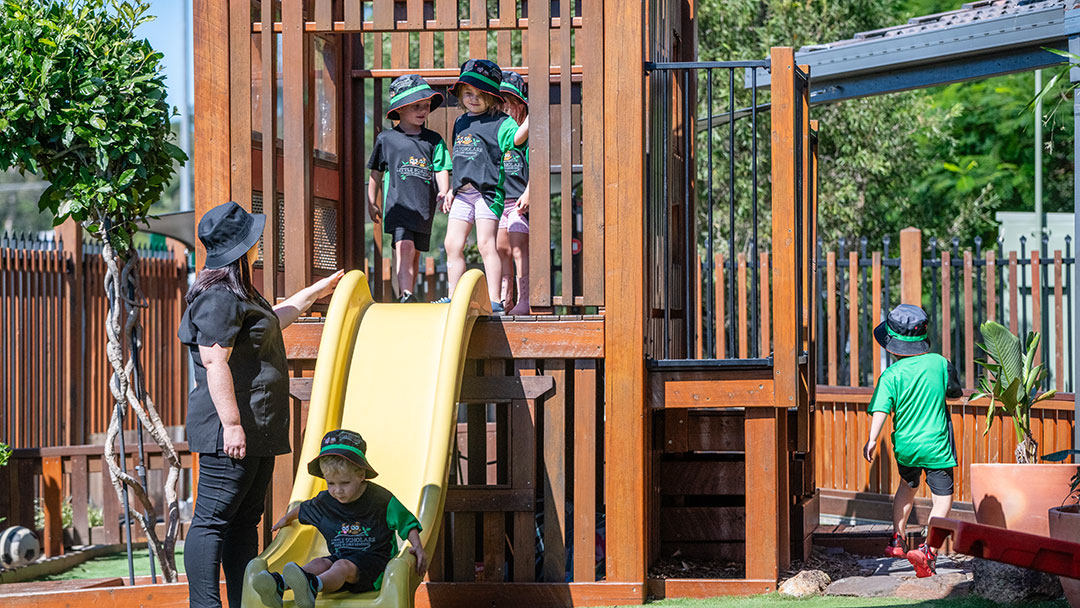
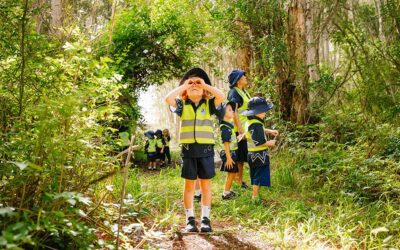
Access to quality outdoor experiences is a key component in achieving an Exceeding rating. Credit: Little Scholars Nerang
The five rating levels… and why Exceeding is different
Most services in Australia sit at ‘Meeting National Quality Standard’ — a genuinely solid result that means quality care across all seven areas. Exceeding sits above that, and it isn’t simply “a bit better.”
To earn Exceeding, a service needs assessors to sign off on more than four separate quality areas, and two of those four have to be QA1, QA5, QA6 or QA7 – the areas that most affect how a child actually experiences their day. It’s a very hard bar to clear by accident. A service can’t get there on one great feature; the strength has to show up in the program, the relationships and the leadership all at once.
There’s only one rating higher than Exceeding: ‘Excellent’. This is an ACECQA-awarded distinction open only to services already Exceeding in all seven areas, which is held by just a handful of services nationally.
Why an Exceeding rating matters for your family
An Exceeding rating is worth paying attention to for several reasons:
- It’s independently verified, not self-declared. A service can’t award itself this rating.
- It’s comparable everywhere in Australia — the same seven areas apply whether you’re comparing two campuses in the same suburb or relocating interstate.
- It signals depth, not a single strength. Because the rule requires strength across multiple areas, an Exceeding result means quality shows up in the program, the relationships, the family partnerships and the leadership — not just a nice building.
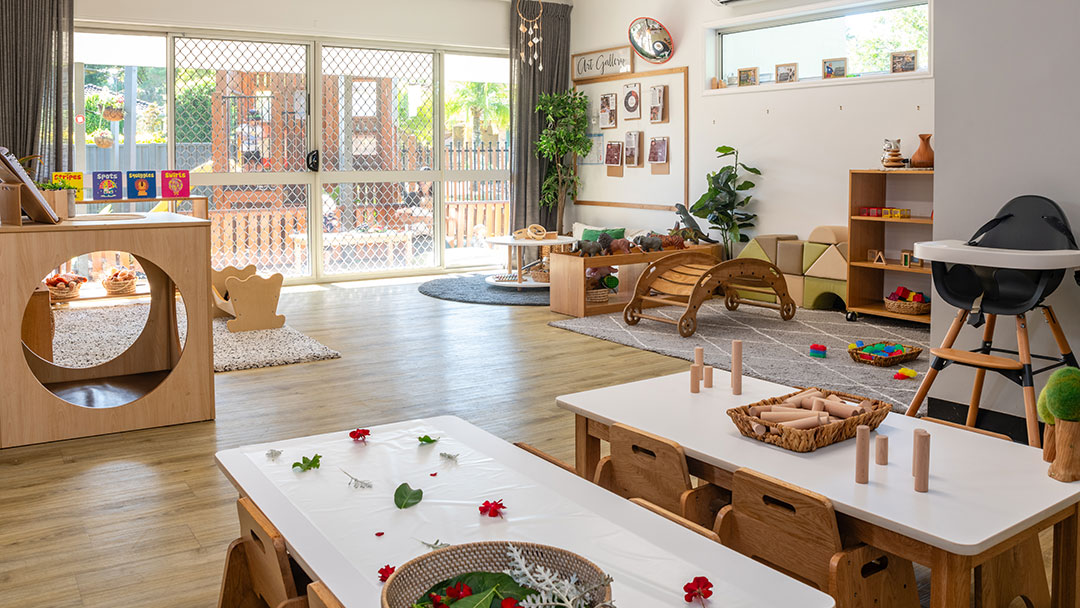
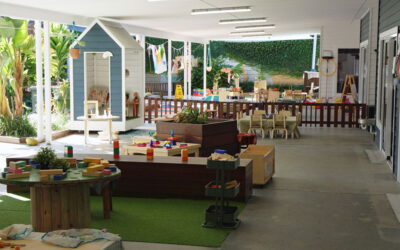
Inside the classroom at Little Scholars Nerang. Credit: Little Scholars Nerang
What to actually look for on a tour
A rating certificate confirms it on paper, but an Exceeding standard is usually visible before you ever see the paperwork:
- Ask for the certificate, and ask which quality areas the service was recognised for.
- Listen to how educators talk about the program. Can they explain why they’re doing an activity with a group of children, not just what they’re doing?
- Look for visible, current documentation — learning journals or observations that are specific to your child, not generic paperwork.
- Watch educator–child interactions. Are educators calm and attentive, and do they clearly know the children by name and their interests?
- Ask about family involvement beyond app updates — committees, input into the program, or community partnerships.
- Ask about leadership. A director who can speak knowledgeably about current improvement priorities usually points to strong governance.
- Don’t judge on the physical space alone. A polished outdoor area is the easiest thing for any service to present well on a tour — treat it as one signal, not the whole picture.
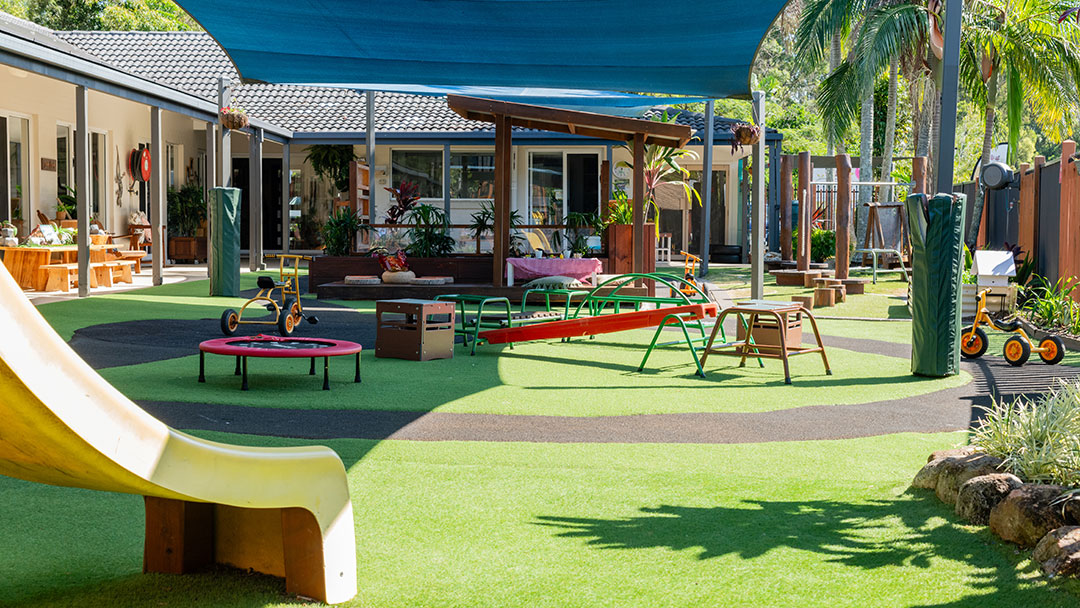
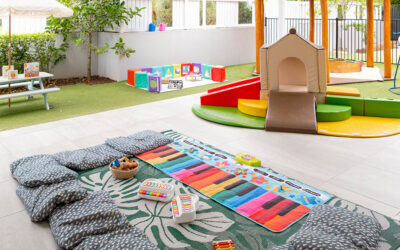
The expansive outdoor playspace at Little Scholars Nerang. Credit: Little Scholars
Exceeding campuses on the Gold Coast and in Brisbane
This is where the picture gets specific and, for South East Queensland families, genuinely useful. Little Scholars School of Early Learning operates 17 campuses across the Gold Coast, Brisbane and surrounding SE Queensland — and every one of them currently sits at Meeting or Exceeding National Quality Standard, with none below the national benchmark.
As at October 2026, eight Little Scholars campuses hold an Exceeding rating:
- Little Scholars Ashmore
- Little Scholars Burleigh
- Little Scholars Burleigh Waters
- Little Scholars Deception Bay
- Little Scholars Nerang
- Little Scholars Brisbane City
- Little Scholars Redland Bay
- Little Scholars Parkwood
Among the eight, Little Scholars Nerang shows what a full-strength result looks like, having achieved Exceeding National Quality Standard in all seven quality areas — the strongest result a service can earn, short of applying for ACECQA’s Excellent rating.
“An Exceeding rating isn’t won on the day the assessor visits. It reflects what happens every ordinary Tuesday – how educators talk with children, how we partner with families, how the whole campus runs,” said Melanie Excell, Operations Manager, Little Scholars School of Early Learning. “That’s what parents are really buying when they choose an Exceeding-rated campus like Little Scholars Nerang.”
Given how deliberately high that four-of-seven bar is set, results like these are a genuinely useful anchor point if you’re comparing early learning campuses across the region — evidence you can check yourself on the national register, rather than take on trust.
Before you tour a campus
A rating certificate is easy to walk past. But it’s one of the only tools in early childhood education that lets you compare any two services in the country on exactly the same terms — assessed by a government authority, not written by a marketing team. Next time you’re on a tour, ask to see it and ask what’s behind it.