Inline skating is one of those rare activities that mixes high-energy fun with measurable health gains. For parents in Australia looking for an outdoor, low-cost sport that builds fitness, balance and confidence, inline skating for kids ticks many boxes. This guide explains the main benefits, age-appropriate progression, a practical gear-fitting checklist, injury-prevention advice, easy drills and games to try, and how to get started locally, all aimed at helping children aged roughly 3–12 enjoy skating safely and progress well.
Why inline skating is great for kids
With inline skates combines aerobic exercise with skill-based movement. The benefits are physical, motor-skill-related and social-emotional:
Fitness and physical development
Skating is a whole-leg workout that improves cardiovascular fitness, builds calf and thigh strength, and engages the core. Because skating is low-impact compared with running, it’s kinder on growing joints while still delivering sustained, calorie-burning movement ideal for kids who need active play but are sensitive to high-impact sports.
Balance, coordination and motor skills
Learning to glide, stop and turn trains proprioception (body awareness), ankle stability and bilateral coordination. These skills transfer to other sports (soccer, cycling, dance) and everyday activities, supporting overall motor development.
Confidence, social skills and mental well-being
Mastering a new skill rolling without falling, stopping confidently, and joining a group skate boosts self-esteem. Group lessons or family skating time builds social connections, teamwork and persistence. Active play also supports mood and focus, helpful for school-aged children.
Age-appropriate progression and realistic milestones
Children develop at different rates, but these general milestones help parents set expectations and structure practice.
Early starters (ages ~3–4)
Focus: balance and familiarisation. Typical milestones:
- Standing in skates with support, taking a few forward steps while holding a hand or push toy.
- Weight shifting and simple gliding across a flat surface. Tips: Use balance skates or quad skates designed for toddlers. Short sessions (10–15 minutes) keep it fun.
Beginner skaters (ages ~5–7)
Focus: independent gliding, stopping basics and turns. Milestones:
- Pushing and gliding with one foot, alternating legs.
- Using the heel brake (if present) for controlled stops.
- Learning basic turns and safe falling techniques. Tips: Start on smooth, flat paths or indoor rinks and use lots of praise and simple games to build confidence.
Developing skaters (ages ~8–10)
Focus: refining technique, crossovers, speed control. Milestones:
- Longer glides and smoother stride rhythm.
- Controlled turns, crossovers and backward skating basics.
- Skating in small groups and following simple safety rules. Tips: Introduce short drills for agility and practice on different surfaces as skills improve.
Confident skaters (ages ~11–12)
Focus: sport-specific skills and endurance. Milestones:
- Confident group skating, navigating parks or bike paths.
- Speed work, more complex maneuvers (agility, slalom).
- Exploring hockey, artistic skating or competitive skating if interested. Tips: Consider specialised coaching or clubs to refine skills and maintain motivation.
Gear-fitting checklist for kids’ inline skates and protective equipment
Properly fitted equipment boosts safety, comfort and learning speed. Use this checklist when buying or fitting skates.
- Fit and sizing: Skates should feel snug around the heel and ankle with toes able to wiggle slightly not jammed. For adjustable kids’ skates, use the smallest comfortable size and expand as needed; avoid overly large boots that reduce control.
- Ankle support: Choose a boot with a firm, high cuff for younger skaters to stabilise the ankle.
Fastening system: Secure closures (buckles plus laces or Velcro) keep the foot locked in place. Check these every session. - Wheels and frame: For beginners, medium-size wheels (around 72–80mm) give balance between speed and control. Softer wheels (lower durometer) grip outdoor surfaces better; harder wheels suit indoor rinks.
- Brake: Most kids’ skates have a heel brake on the right skate check orientation before skating and teach braking technique early.
- Helmet: Always use a helmet that fits well and is certified to Australian/New Zealand standards (look for AS/NZS compliance). The helmet should sit level on the head and not rock.
- Protective pads: Wrist guards, elbow pads and knee pads are essential for beginners; ensure pads are the right size and stay in place when moving.
- Clothing: Comfortable, layered clothing that allows free movement; avoid long laces or loose items that can tangle.
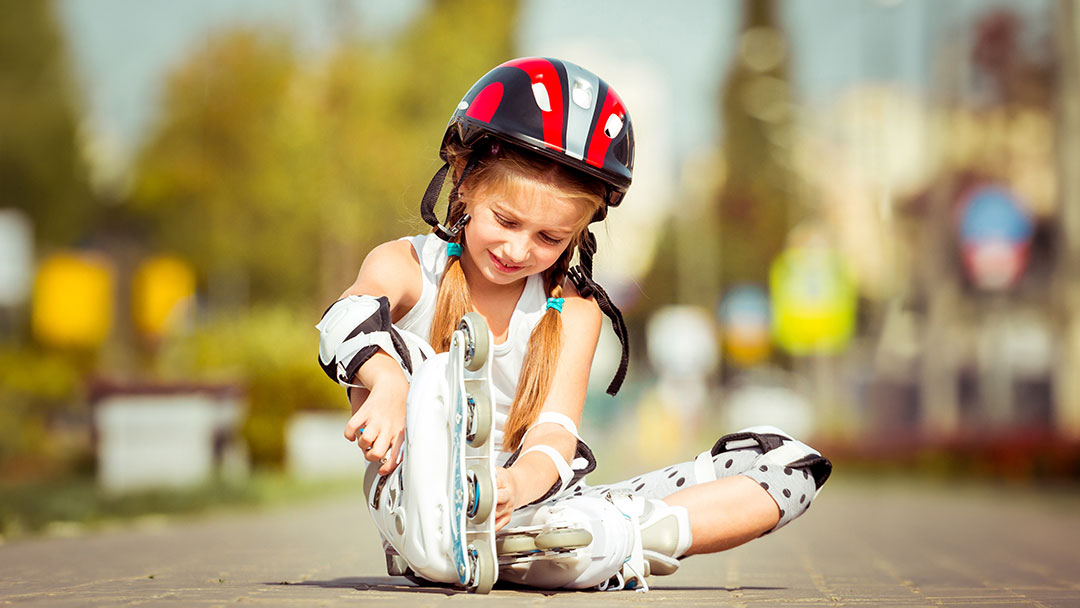
A girl putting on inline skates
Common injuries and prevention strategies
Skating injuries in kids are usually minor scrapes, bruises, wrist sprains and occasional ankle twists. Serious injuries are less common when helmets and protective gear are used and when children learn safe techniques.
Key prevention tips:
- Helmet and pads every session head protection dramatically reduces risk of injury from falls.
- Teach falling safely: encourage children to bend elbows slightly and try to land on padded areas (not outstretched hands), and roll if possible.
- Start on smooth, traffic-free surfaces and progress to busier or uneven areas only when skills are solid.
- Supervise young beginners and keep sessions short and focused to avoid fatigue-related falls.
- Regularly check equipment for wear worn wheels, loose frames or damaged pads, as they increase the risk.
If you want local statistics or medical advice about injuries, speak with your GP or the nearest community health service; local councils and skate clubs also often have safety resources.
Protecting your active family
Skating is a great way to get youngsters moving and outside. But high-energy activities like skating, mountain biking and gymnastics carry a small risk of minor bumps, sprains or other unforeseen injuries. Give your family the protection of comprehensive private health insurance and the peace of mind to let your children try new sports. Taking the time to find the best health cover ensures your household is fully protected for ambulance services, physiotherapy, and emergency medical care, allowing your family to enjoy every holiday adventure with total confidence.
Easy drills and fun games to build skills
These activities keep kids engaged while targeting core skating skills.
- Red Light / Green Light: Practice starting, gliding and controlled stopping.
- Cone slalom: Set up a line of cones (or soft markers) and have kids weave through to improve edge control.
- Follow-the-leader: Leader sets pace and basic moves (turns, tap-step), others mimic to practice balance and group spacing.
- Treasure hunt: Scatter safe objects to collect while skating slowly to build steering and low-speed control.
- Keep sessions playful and praise progress frequent short practice beats long, tiring sessions.
Getting started locally and next steps
Look for beginner lessons through community recreation centres, local skate clubs, or private coaches. Many Australian councils run school-holiday programs and family-friendly skating meetups. When choosing a coach or program, look for instructors who emphasise safety, progression and fun.
Next steps for parents:
- Book a short lesson or join a “learn to skate” session to see how your child responds.
- Get a professional fitting at a retailer or specialist shop before buying.
- Join local community groups or social media pages to find playdates and practice partners.
FAQs
At what age should my child start inline skating?
Many children can begin basic balance and rolling activities from about age 3–4 with appropriate skates and supervision. Structured lessons are often most effective from age 5 when balance and listening skills are more developed.
Should I buy adjustable skates or a precise fit?
Adjustable skates are practical for quickly growing feet if they still offer a snug fit. For committed skaters, a properly fitted non-adjustable boot delivers better support and control.
How often should my child practice?
Aim for short, regular sessions: two to three times a week for 20–40 minutes keeps skills developing without fatigue. Mix structured drills with free play.
Conclusion
Inline skating for kids blends fitness, coordination and social fun in a family-friendly package. With the right progression, properly fitted gear and consistent safety practices, children can make fast gains in skill and confidence while enjoying an active outdoor pastime. Start small, prioritise protective equipment, and build up through playful drills and local lessons it’s a sport that grows with your child and rewards persistence with joy, fitness and friendships.
Related Reads
The Sunshine Coast soccer program that means big fun for little feet
Call for more indoor sports courts on the Sunshine Coast as demand grows
New smart lockers bring free sports gear to Queensland kids