From first words to funny little phrases, toddlers’ developing language skills are often a source of delight. Now, an exciting nationwide study can use these early words to help others – and it all happens from the comfort of home.
Run by the National Acoustic Laboratories, The Chatterbugs Study (officially titled “Enabling Remote Screening of Childhood Hearing Loss Using Artificial Intelligence”) is calling on parents of children aged 2.5 to 3.5 years to get involved. Not only will you be contributing to world-first research, but participating families will also receive a $30 gift voucher as a thank you.
Why early hearing detection matters
Hearing plays a critical role in how children learn to speak, communicate and connect with the world around them. While Australia has excellent newborn hearing screening programs, many hearing issues can develop later — often during the toddler and preschool years.
Conditions like “glue ear” (otitis media with effusion) are surprisingly common and can quietly impact a child’s speech, language development and even their social confidence if left undetected. The challenge? These issues can be difficult to spot without specialised testing, meaning some children miss out on early support.
That’s where this innovative study comes in.
A simple app with powerful potential
The Chatterbugs Study is exploring a new way to identify hearing concerns earlier, using artificial intelligence and something most families already have … a smartphone.
Parents simply download an easy-to-use app and complete a series of short, play-based activities with their child at home. These activities are designed to capture speech samples in a natural, relaxed environment — no clinic visits required.
Behind the scenes, these recordings are helping researchers build a large, nationally representative database of children’s speech. This includes children with typical hearing, as well as those with diagnosed hearing loss or glue ear.
Using this data, the research team is training advanced AI models to detect subtle patterns in speech that may indicate hearing difficulties — patterns that might otherwise go unnoticed.
It’s cutting-edge science, but for families, it feels like play.
A world-first approach to children’s hearing
This is the first study of its kind globally, and its potential impact is huge. By developing a reliable, at-home screening tool, researchers hope to make early hearing checks more accessible for families everywhere, especially those who may face barriers to traditional testing.
The goal is simple but powerful: earlier detection, earlier support, and better outcomes for children.
As a global leader in hearing research, the National Acoustic Laboratories is at the forefront of this work, combining decades of expertise with innovative technology to improve hearing health across Australia and beyond.
Who can take part in the hearing study?
Families across Australia are encouraged to participate if they have a child who:
- Is aged between 2.5 and 3.5 years
- Does not have a hearing implant
- Speaks and hears English at least three days per week
- Lives in Australia
Taking part is easy, flexible and completely home-based, making it perfect for busy families.
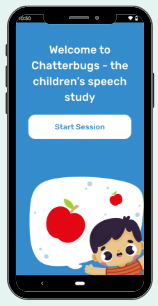
Chatterbox Study app screen
What’s in it for you?
Alongside the $30 gift voucher, families have the opportunity to:
- Contribute to meaningful, real-world research
- Support advancements in early childhood health
- Gain insight into their child’s speech and development
And perhaps most importantly, you’ll be helping shape a future where hearing challenges are identified earlier, giving more children the best possible start.
How to get involved
If you have a toddler in the eligible age range, joining the Chatterbugs Study is simple by signing up here. Download the app, follow the guided activities, and let your child’s chatter help power important research.

Chatterbox Study app icon
For more information, families can email chatterbugs@nal.gov.au or visit nal.gov.au.
This study has been approved by the Hearing Australia Human Research Ethics Committee, ensuring it meets strict ethical and safety standards.
Related Reads
Construction has begun on charity house for SunnyKids
Balancing the busyness – parenting support from Parentline