You pick up your child from daycare, and everything seems normal. Then, later that evening, a message arrives from the centre. There’s been a case of hand, foot and mouth disease.
If you’ve received one of these messages before, you’ll know how quickly the questions start. Is your child going to catch it? Should you keep them home? And what is the centre doing to stop it spreading?
Hand, foot and mouth disease is common among young children, particularly those attending childcare. Although most children recover without serious problems, the infection can spread easily when little ones spend their days playing, eating and sharing toys.
The good news is that simple hygiene habits, sensible illness policies and regular childcare cleaning can all help reduce the risk.
Why Hand Foot and Mouth Spreads So Easily at Childcare
Spend five minutes watching a group of toddlers play, and you’ll understand why germs move around so quickly.
One child picks up a toy. Another wants the same one. Someone rubs their nose, and a little later, those same hands reach for a snack.
Children are still learning basic hygiene, and sharing is a normal part of their day.
Hand, foot and mouth disease is caused by viruses that can spread through saliva, mucus, fluid from blisters and contact with infected poo. The virus can also pass between children through contaminated hands, toys and surfaces.
Symptoms may include fever, a sore throat, mouth ulcers and small blisters on the hands, feet or around the nappy area.
One tricky part is that the virus may spread before anyone realises a child is unwell. It can also remain in poo for several weeks after recovery.
That’s why waiting until someone becomes sick isn’t enough. Good hygiene needs to be part of the everyday routine.
Make Handwashing Part of the Day
Ask any parent who’s tried teaching a toddler to wash their hands, and they’ll tell you it takes practice.
Some children love playing with the water. Others are ready to leave before the soap even comes out.
But handwashing is one of the most useful habits for reducing the spread of infections at childcare.
Queensland Health recommends washing hands thoroughly with soap and water for at least 20 seconds.
For childcare centres, the important moments include:
- Before preparing or eating food.
- After using the toilet or changing nappies.
- After wiping noses or handling used tissues.
- After contact with bodily fluids or dirty items.
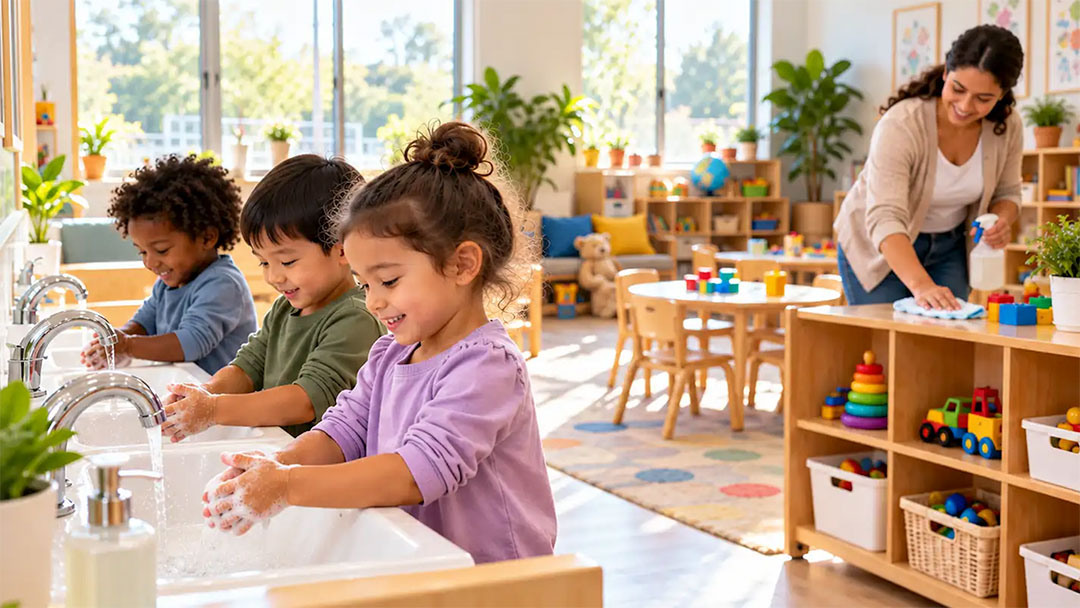
Children washing hands at daycare
Educators can make handwashing easier by using simple instructions, songs and regular reminders.
Parents can help too. Practising at home means children are more familiar with the routine when they’re at daycare.
Hand sanitiser may be useful in some situations, but it shouldn’t replace thorough handwashing with soap and water when hands are dirty or after toileting.
Pay Attention to Shared Toys and Play Areas
Think about the toys children use most during the day. Building blocks, pretend kitchen utensils, toy cars and puzzles are passed between little hands again and again.
For babies and younger toddlers, some of those toys also end up in their mouths.
A toy that looks clean isn’t necessarily free from germs.
Under Australia’s Staying Healthy guidelines, toys that children have put in their mouths should be removed from use until they’re cleaned appropriately.
Other shared toys and frequently touched surfaces also need regular attention.
The same goes for play tables, chairs, door handles and other areas children touch throughout the day. Of course, this doesn’t mean every toy needs to be disinfected after every touch. Cleaning should follow the centre’s hygiene procedures, the type of item and the level of contamination.
What matters is having a consistent routine rather than leaving all the cleaning until the end of the day.
Don’t Forget Bathrooms and Nappy Changing Areas
For younger children, nappy changing is a normal part of the childcare day. It’s also one of the places where careful hygiene really matters.
The viruses responsible for hand, foot and mouth disease can remain in poo after a child appears to have recovered.
That makes proper handwashing and safe nappy-changing procedures important, even when there are no known cases at the centre.
Educators should follow their service’s infection-control procedures, including using appropriate protective equipment, cleaning change surfaces and washing their hands.
Bathrooms also need regular cleaning, particularly around toilets, taps, flush buttons and other frequently touched areas.
If a child has an accident, the affected area shouldn’t simply be left for the evening cleaner.
Australia’s Staying Healthy guidelines recommend that spills involving bodily fluids be cleaned promptly, with appropriate cleaning and disinfection.
These everyday tasks can make a real difference when children are sharing the same spaces.
Why Regular Childcare Cleaning Still Matters
Handwashing helps stop germs moving between people, but it doesn’t replace cleaning the environment around them.
Throughout the day, children touch furniture, play on floors, use bathrooms and share learning materials. Even a well-run centre can become messy quickly.
That’s why cleaning works best as an ongoing routine rather than a single job completed after everyone has gone home.
Some childcare centres manage most cleaning themselves, while others arrange support through providers offering professional cleaning services across Australia.
Whichever approach a centre uses, the responsibilities need to be clear.
Educators still need to deal with spills, contaminated toys and nappy-changing areas as they arise. A scheduled cleaning team may handle other agreed tasks, including floors, bathrooms and shared spaces.
Routine cleaning is important, but it isn’t a guarantee that children won’t catch an infection. Close contact, hand hygiene and keeping unwell children at home matter too.
What Changes When a Centre Has a Confirmed Case
Imagine a childcare centre receives a call from a parent whose child has just been diagnosed with hand, foot and mouth disease.
The response shouldn’t begin and end with sending a message to families.
Staff need to review the areas and activities involved, continue their usual infection-control practices and follow any additional advice from relevant health authorities.
Depending on the situation, this may mean paying closer attention to shared toys, frequently touched surfaces and cleaning procedures.
It also means making sure the cleaning team understands its responsibilities.
For example, centres arranging Childcare center cleaning in Sydney should confirm that playrooms, bathrooms, nappy-changing areas and high-touch surfaces are covered by the agreed cleaning plan.
The same questions are useful for childcare services anywhere in Australia.
However, professional cleaning doesn’t replace advice from healthcare professionals or public health authorities. During an outbreak, centres should follow the relevant official guidance rather than relying on extra cleaning alone.
Know When Your Child Should Stay Home
This is often the hardest part for working parents. Your child may seem much better after a few days, but the blisters haven’t completely dried.
Can they return to childcare?
According to the National Health and Medical Research Council, children with hand, foot and mouth disease should stay away from childcare until all blisters have dried.
Parents should also wait until their child’s fever has stopped and they’re eating and drinking normally.
If you’re unsure, speak with your GP and check the centre’s illness policy.
It’s worth remembering that mouth sores can make eating and drinking uncomfortable. Offer fluids regularly and watch for signs of dehydration, such as fewer wet nappies or reduced urination.
Seek medical advice promptly if your child is struggling to drink, seems unusually drowsy, has worsening symptoms or a fever that persists.
Keeping a sick child home can be inconvenient, but it helps protect the other children and educators sharing the space.
What Parents Can Ask Their Childcare Centre
You don’t need to inspect every cleaning cupboard or expect a completely germ-free environment.
But it’s reasonable to ask a few practical questions, especially if the centre has recently reported an infection.
You might want to know how mouthed toys are handled, how often shared surfaces are cleaned, what happens after a nappy-changing accident and how families are informed about confirmed illnesses.
Pay attention to whether the centre can explain its routines clearly.
A good hygiene plan isn’t simply about using stronger products or cleaning more often. It’s about knowing what needs attention, using suitable methods and making sure everyone understands their role.
Parents and educators are working towards the same goal: keeping children as healthy and comfortable as possible.
Small Habits Make a Difference
Hand, foot and mouth disease can be frustrating for families, especially when it means another unexpected week at home.
No childcare centre can prevent every infection. Young children play closely together, and some illnesses spread before symptoms appear.
Still, everyday habits matter.
Regular handwashing, careful nappy changing, appropriate cleaning of shared toys and surfaces, and keeping unwell children at home can all help reduce the spread.
When parents and childcare centres work together, managing these common childhood infections becomes a little easier for everyone.