
Some kids are never happier than when they’re in water. Lessons, swim club, holidays, three hours at the local pool that you only meant to be one. Good swimwear is what keeps them in there longer and happier. Bad swimwear is what ends the afternoon early, with a child tugging at a strap and asking to go home.
Choosing it well has less to do with how it looks than most parents assume, and a lot to do with a handful of practical things that only show up once a child is actually swimming.
Get the fit right first
A suit that pinches, rides up or shifts around becomes a distraction within minutes. Kids’ swimwear wants to be snug enough to stay put without cutting in, with seams that lie flat against the skin.
Children’s skin is thinner and more easily irritated than ours, so soft, chafe-free construction matters more here than it does in adult swimwear — especially for the ones clocking up hours in the pool every week.
Chlorine and saltwater are the real enemies
Pools and the sea are brutal on fabric. Cheaper swimwear loses its colour and its stretch fast, and you end up with something baggy and faded halfway through summer. Suits made with chlorine-resistant fabric hold their shape and colour far longer. For a family whose kids swim regularly, that durability is often the whole game — one suit that lasts the season instead of three that don’t.
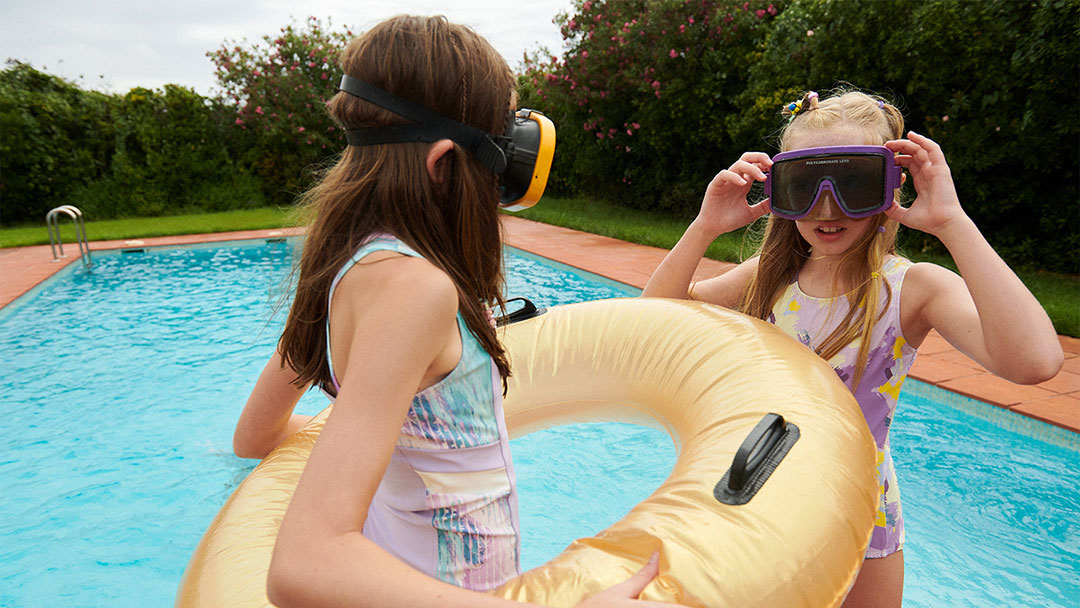
Two girls by a pool wearing goggles, one holding a large yellow inflatable ring between them.
Don’t skip the sun protection
Sun near water is worse than it feels, because the surface bounces it straight back up, and children burn more easily than adults. Swimwear and rash guards with a UPF rating give you cover that doesn’t rinse off or need reapplying mid-swim. A good UPF rash guard is one of the most useful things you can own: it buys more time outside and takes some of the pressure off the sunscreen routine.
Quick-dry makes life easier
Kids rarely hold still long enough to dry off properly. Quick-drying fabric keeps them comfortable between dips, cuts the post-swim shivering, and makes the boring logistics — changing, packing the bag, getting everyone to the car — noticeably less painful.
Match the suit to the swimmer
A toddler splashing on holiday, a child in weekly lessons and a young competitor training four times a week don’t need the same thing. For learning and play, comfort, coverage and sun protection come first. For serious or frequent swimming, fabric performance and durability move up the list.
The better children’s brands now design swimwear around those differences instead of lumping it into one category. moodytiger, for instance, runs dedicated water-sport ranges alongside girls’ and boys’ swimwear made with chlorine-resistant fabric, stretch recovery and rated UPF protection. The brand’s select fabrics are bluesign® approved, which restricts the use of hazardous chemicals in the manufacturing process, not just a test on the finished garment. With a growing global retail footprint, it’s one of the few kids’ activewear specialists that brings the same movement-first thinking to water as it does to everything else.
A quick checklist
- Snug but comfortable, with flat, non-chafing seams.
- Chlorine- and saltwater-resistant fabric that holds its shape.
- A UPF rating, especially on rash guards.
- Quick-dry material for the gaps between swims.
- Construction that matches how often and how seriously your child swims.
Get those right and the swimwear disappears, which is exactly what you want. The child stops thinking about it and stays in the water until you make them get out.
Rash guards: more useful than most parents realise
The rash guard has moved from niche to mainstream in children’s swimwear, and for good reason. At its most basic, it’s a lightweight, stretch top worn in the water — and it does several things at once that are otherwise difficult to manage.
The sun protection case is obvious. A UPF 50+ rash guard gives consistent coverage that doesn’t wash off, doesn’t need reapplying mid-swim, and covers the areas — shoulders, back, upper arms — where children burn most readily when they’re in and out of the water all afternoon. For families spending long days at the beach or outdoor pool, it quietly removes a significant chunk of the sunscreen logistics.
Warmth is the less obvious one. Water pulls heat from a child’s body faster than air does, and children get cold more quickly than adults. A rash guard adds enough insulation to extend comfortable swim time, especially in cooler conditions or towards the end of the day when the sun is lower. Children who are warm stay in; children who are cold come out.
Look for one that combines UPF protection with quick-dry fabric and enough stretch to move freely — a rash guard that bunches under the arms or restricts the shoulder during a freestyle stroke defeats its own purpose.
How to make swimwear last longer
Even good swimwear degrades faster than it should when it’s not cared for. Chlorine and salt are corrosive, and the heat of a tumble dryer accelerates the breakdown of elastic fibres. A few habits extend the life of swim kit considerably.
Rinse in cold fresh water immediately after swimming — pool chlorine and seawater both continue damaging fabric while they sit in it. Hand wash or machine wash on a gentle, cool cycle rather than hot. Lay flat to dry rather than wringing or hanging by a strap, which stretches the fabric unevenly. And skip the tumble dryer entirely: the heat breaks down elastane far faster than air drying does.
For families whose children swim regularly, having two or three suits in rotation rather than one also helps. Elastane recovers better when it has time to rest between sessions. The cost of a second suit is typically far less than replacing a single suit that’s worn out ahead of time.
FAQs
What should I look for in kids’ swimwear?
A snug, comfortable fit with smooth seams, chlorine-resistant fabric that keeps its shape, a UPF rating for sun protection, and quick-drying material. Then match the build to how much your child actually swims.
Does my child really need a rash guard?
It’s one of the most practical things you can buy. A UPF rash guard gives consistent sun cover that doesn’t wash off, plus a bit of warmth, which is handy for long stretches in and around water.
Why do swimsuits wear out so fast?
Chlorine and saltwater do most of the damage. Choosing chlorine-resistant fabric, rinsing suits in fresh water after use, and skipping the wringing and tumble dryer will all stretch their life out considerably.
Related Reads
Where to learn to swim on the Sunshine Coast
The Mountain Creek Swim School ensuring kids are water safe
5 surprising benefits of swimming lessons