Imagine walking into class and, instead of opening a textbook, slipping on a virtual reality (VR) headset to find yourself face-to-face with a holographic patient in crisis.
That’s not the future. It’s happening now for TAFE Queensland nursing students on the Sunshine Coast, who are swapping theory-heavy learning for immersive, hands-on experience inside a virtual hospital.
Using cutting-edge technology, students assess what they can see, decide what to do next, ask the right questions and practise communicating with patients, all in a calm classroom environment, without the pressure of a busy hospital ward.
The program has been rolled out and managed by TAFE Queensland nursing educator Kayla McCabe, a teacher at the Sunshine Coast Health Institute, who saw an opportunity to bring learning to life.
“Students today learn best when they can interact, problem-solve, and get immediate feedback,” she said.
“We’re in a once-in-a-lifetime technology boom, and to be able to introduce this kind of change into teaching is incredibly exciting.”
“I took on this immersive learning project because I’m passionate about technology in education,” Kayla said.
Kayla has seen firsthand how students respond when learning moves beyond textbooks.
“When you put a holographic patient in front of them and ask them to work out what’s wrong, they light up. The energy in the room is completely different to working through a scenario on a worksheet.”
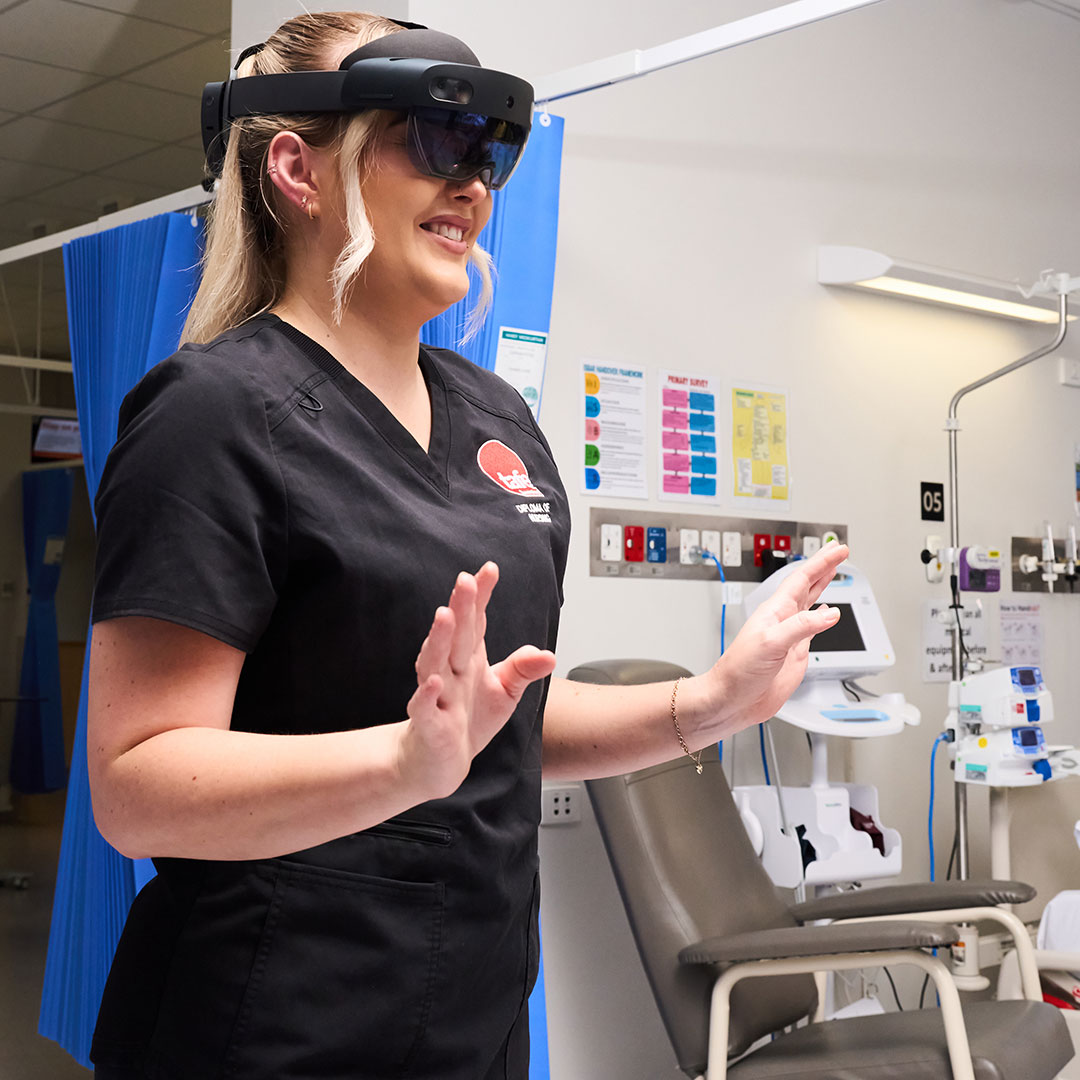
TAFE Queensland student nurse in VR headset learning patient care through virtual reality
A safe place to build confidence
The technology, known as HoloPatient, gives nursing students something every future nurse needs: the chance to practise realistic scenarios before it really counts.
Rather than learning solely from paper-based case studies, students can see a lifelike 3D patient, hear changes in breathing, observe vital signs and respond in real time. Just as importantly, it helps build the human side of nursing, staying calm, communicating clearly and supporting someone who is unwell.
“That kind of practice means students can head into placement more prepared and confident,” Kayla said.
“They’re ready to learn and already one step closer to their career.”
Scenarios are carefully selected to align with the Diploma of Nursing curriculum and progress across the course, covering conditions such as asthma, allergic reactions, diabetes, falls and pregnancy-related complications.
Because the same scenarios can be reused, every class receives a consistent learning experience while teachers spend less time setting up roleplays and more time coaching and supporting their students.
“The goal is simple,” Kayla said. “Help more students practise safely, grow in confidence and step into their nursing pathway with real momentum.”
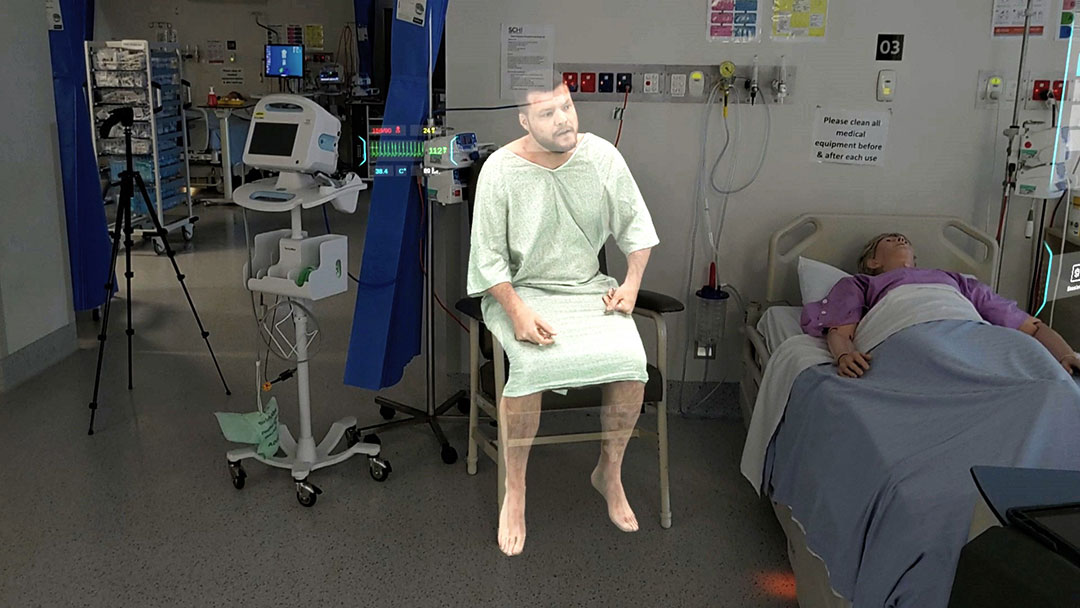
Students learn to diagnose and care for holographic patients
Learning that sticks – with a bit of fun
To keep lessons engaging, Kayla also designed creative classroom activities, including a nursing-themed version of Bingo.
Students observe simulated patient scenarios, identify symptoms and discuss possible causes before crossing ailments off their Code Blue Bingo cards. The result is a lively, supportive environment that strengthens diagnostic thinking while keeping learning fun.
“I love creating things and thinking about how we can maximise technology in the easiest possible way for educators to pick up and use,” Kayla said. “The challenge was making sure the resources were simple enough so any teacher could walk in and deliver a lesson without needing to be a tech expert.”
While introducing new technology always comes with challenges, Kayla sees this as a natural next step in education.
“It’s like when classrooms moved from chalkboards and whiteboards to PowerPoint,” she said. “This is just the next evolution. We’re letting students step into reality rather than just read about it.”
Kayla trained her fellow teachers on the program with strong feedback.
“Teachers walked away saying they could genuinely see themselves using this in their classrooms, which was exactly the goal.”
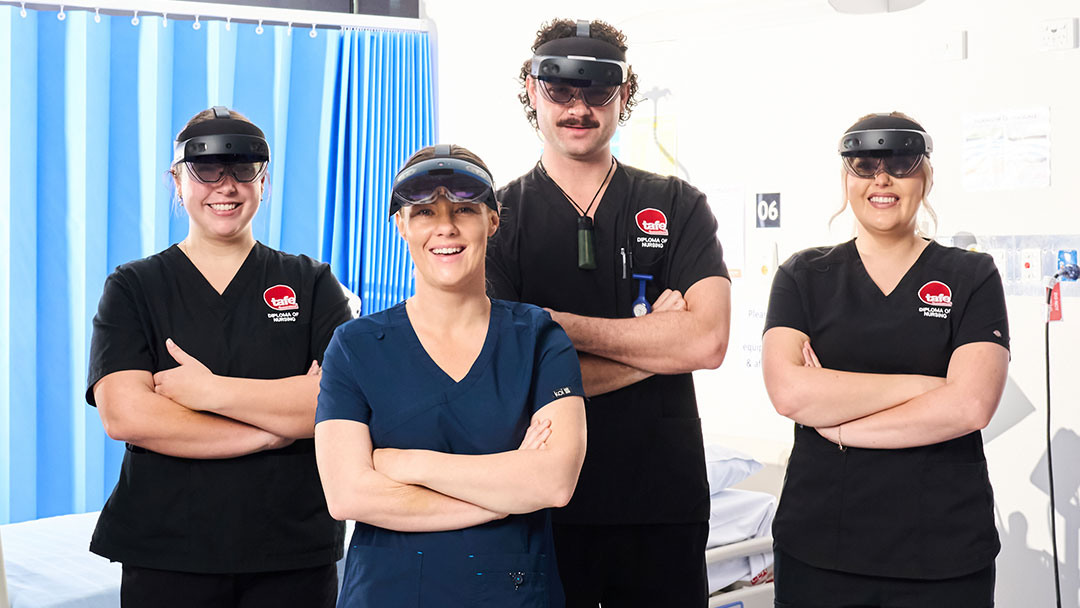
TAFE Queensland students standing with VR headsets on
What the students say
It’s not just teachers who are seeing the benefits. Diploma of Nursing student Blaise, who is nearing the end of his course, said he wishes the technology had been introduced earlier.
“They’re really cool, it is not what I expected at all,” he said. “Seeing a holographic patient in a bed feels far more realistic than roleplaying with classmates. You take it more seriously.”
For Simon, who spent 18 years in pharmaceuticals quality assurance and is now ten weeks into the Diploma of Nursing, the experience has been eye-opening.
“When I first put on the headset, it was surprisingly good,” he said. “It was relatively easy to work out. Especially at my age, where we didn’t grow up with this kind of technology. You can see and hear the patient, read vital signs like blood pressure and heart rate and hear hospital sounds around you. Previously, it was all on paper, and you had to imagine it in your head.”
International student Tanur said the experience changed the way she approaches learning.
“You can still see the real classroom around you, but the hologram patient is there to observe and care for,” she said. “It feels real, and the headset is comfortable to use.”
For final-year student Caitlin, the technology has helped bring theory together before exams.
“It lets you run through real-life scenarios and understand what your patient is experiencing,” she said. “There’s a lot more going on than just looking at vital signs; it shows you what a sick patient really looks like in real time.”
A career with flexibility and purpose
Kayla knows firsthand the impact nursing can have, not just as a career, but as a lifestyle. A Registered Nurse with more than 13 years’ experience across Australia, she’s spent the past five years teaching at TAFE Queensland on the Sunshine Coast.
“I always loved educating students while working on the ward,” she said. “In the end, I realised I could combine both passions, and I haven’t looked back.”
Now a mum of two, Kayla values nursing’s flexibility.
“Nursing is such a great career. It can take you anywhere, and it can adapt to different stages of life.”
That flexibility is a big drawcard for many students. Nursing careers can include hospital work, aged care, general practice, community health, rehabilitation, mental health, schools, disability services, telehealth and education. Some nurses build portfolio careers, mixing ward shifts with clinics, teaching or community roles.
With nursing skills in demand across Australia, opportunities exist in metropolitan hospitals, regional centres, rural or remote communities and even short-term contracts for those who love to travel.
A practical pathway into nursing
The TAFE Queensland Diploma of Nursing offers a practical, job-focused pathway into the profession, combining online learning with hands-on training at purpose-built facilities like the Sunshine Coast Health Institute, located in the Coast’s largest health precinct.
It’s a popular option for school leavers seeking a direct pathway into healthcare, as well as career changers looking to move into a profession built on teamwork, communication and problem-solving.
According to the Graduate Outcomes Survey, four out of five nursing graduates find employment within three months of graduating, reflecting strong demand across the health sector.
About the technology
TAFE Queensland is introducing immersive learning tools across a range of disciplines to give students the best possible start.
The technology allows skills to be practised repeatedly and consistently, freeing teachers to focus on coaching, feedback and reflection. It’s part of a broader commitment to industry-style simulation across training programs.
“Rolling this interactive program into the Diploma of Nursing gives us a chance to see where else it can be used across community and health programs,” Kayla said.
“The real measure of success will be when students head out into the real world. When they walk onto a ward and see a patient, they will have the confidence and skills to support them because they’ve already experienced it, safely, in the classroom.”
If you’re a school leaver or considering a career change, explore TAFE Queensland’s nursing and community health programs at tafeqld.edu.au