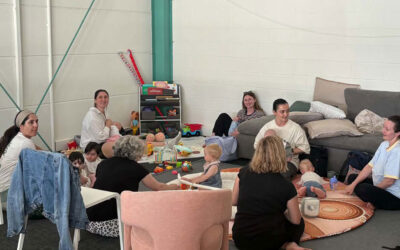
New data reveals that one in four Australian parents have experienced perinatal mental health symptoms yet have not sought help, with one third believing their symptoms are not serious enough.
For many Australians, early parenthood is a swirl of love, sleeplessness and enormous adjustment. But new national data released for Perinatal Mental Health Week 2025 reveals a deeper, often invisible reality: one in four parents who experience perinatal mental health symptoms have not sought help.
The research, conducted by Gidget Foundation Australia, highlights a troubling combination of stigma, confusion, affordability barriers and lack of awareness — all of which are preventing parents from accessing timely support. With more than 100,000 parents affected by perinatal depression and anxiety (PNDA) every year, the findings point to a critical need for earlier recognition and easier pathways to care.
‘I didn’t think it was serious enough’
Among the most concerning insights is that one third (33%) of parents believed their symptoms were not serious enough to warrant professional help. A further 27% said they couldn’t afford it.
This hesitation, experts say, is having significant consequences.
Dr Erin Seeto, Director of Clinical Services at Gidget Foundation Australia, says many parents struggle to recognise what is “normal exhaustion” and what might be a sign of mental health decline.
“The symptoms of perinatal depression and anxiety are varied and can happen to anyone at any point of their conception, pregnancy or postnatal journey,” Dr Seeto explains. “It can be difficult for parents to identify the symptoms of adjusting to their new context and what is mental health decline. These conditions can affect emotional, physical and social wellbeing, often leaving parents feeling overwhelmed.”
The data backs this up: nearly two in five parents (38%) searched online to check whether their feelings were ‘normal’, and one in five (21%) felt isolated from friends or family during the perinatal period.
Isolation itself is a major risk factor, Dr Seeto says.
“We know that isolation is a significant risk factor for perinatal mental health, so it’s vital that parents not only feel connected but also know how to access the right support when they need it.”
Demand for support continues to climb
The new data aligns with what services have been seeing for years. Gidget Foundation Australia has recorded a 27% year-on-year increase in demand since FY21. In FY25 alone, the organisation supported 4,270 families, providing 24,000 free GP-referred psychological counselling sessions through its clinicians and Gidget Village programs.
CEO Arabella Gibson says the findings reveal both knowledge gaps and access barriers – but also an opportunity to better support parents nationwide.
“With over a quarter (28%) of expectant and new parents unsure of what mental health support is available to them during the perinatal period, increasing awareness of our services must be at the forefront of what we do,” she says.
“There is no shortage of support available in Australia, so our challenge lies in ensuring parents first understand the signs and symptoms of PNDA and second know where and how to access the right services.”
Gibson says this year’s Perinatal Mental Health Week theme — ‘What you need, when you need it’ — captures the essence of the organisation’s mission to deliver flexible, accessible support.
“It’s a privilege to support families during such a vulnerable time, but more must be done to ensure no parent is left to struggle alone.”
The ripple effect on families
PNDA affects parents of all backgrounds — from first-timers to those with multiple children, from regional families to expats, young parents and parents living with disability. The impact extends far beyond the individual, influencing relationships, family functioning and even infant development.
Yet early intervention works. When parents are supported, the benefits flow through the whole household.
As Gidget Foundation Australia rolls out its latest awareness campaign, the message is clear: if you’re struggling, you don’t need to wait. Support is available.
If you or someone you know is struggling with perinatal mental health concerns, contact:
Gidget Foundation Australia – Free GP-referred counselling (telehealth or face-to-face): 1300 851 758
PANDA (Perinatal Anxiety & Depression Australia) – 1300 726 306
Lifeline – 13 11 14
Beyond Blue – 1300 22 4636
Visit your GP, midwife, obstetrician or child health nurse for assessment and personalised support options.
Related Stories
Confession: I’m not enjoying being a new mum
Recognising the signs of post-natal depression