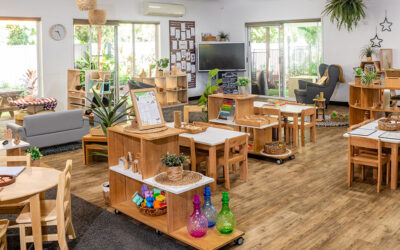
No one warns you that the toughest part of childcare isn’t finding the right centre. It’s standing at the door with your child on the first day, watching their face contort in despair, and leaving anyway.
Some kids walk in like they own the place. Others cling to your leg like it’s the only lifeline they have. And both are completely normal. What isn’t normal are the factors that determine how easy this transition will be for your child. It isn’t the centre’s ratings or the size of their sandpit.
Start the Conversation Early
Forcing childcare on a toddler the morning it starts will be a recipe for disaster. Weeks before, start incorporating it into conversations. Not as a big announcement, just as part of everyday conversation. “Soon you’ll get to go to a special place while I’m at work.” Keep your tone the same as if you’re talking about the shops.
Things worth doing before day one:
- Visit the centre so the rooms and faces aren’t completely foreign.
- Let your child pick something small to bring with them.
- Read a book together about starting somewhere new; there are plenty written for this exact moment.
Families researching options like childcare Altona are often looking specifically for centres that take orientation seriously, not ones that hand you a welcome pack and leave you to figure the rest out.
Separation Anxiety Isn’t a Red Flag
Separation anxiety can be a common part of childhood, often peaking between 10 and 18 months, but it can show up at many stages — especially during times of change or new routines. Even children who usually separate with ease can find certain days or transitions more challenging.
It can be difficult for both children and parents, and those goodbyes don’t always feel easy. Keeping your farewell short and consistent can help provide a sense of predictability. Whether it’s a few kisses, a wave at the gate, or a simple routine, find what works for your family and stick with it.
While it might be tempting to slip away unnoticed, it’s generally more reassuring for children to experience a clear and consistent goodbye, helping them understand that you will return.
Routine is quietly doing a lot of work
Children feel secure when their world is predictable. In the midst of a childcare transition, a morning routine is not only helpful but also eases anxiety. A routine is familiar and secure.
Make dropping off your child part of the routine rather than the focal point. Breakfast, dress, bag, go. Every time.
Comfort items should not be dismissed. A favourite toy, a family photo inserted into the bag, or something that smells familiar. Educators understand this and do not bat an eye.
It Really Does Come Down to the Educator
Ask anyone who has worked in early childhood for more than five minutes what actually determines how fast a child settles, and they’ll say the same thing – it’s the relationship with their educator.
You can support that from your side by:
- Giving the educator real information about your child, sleep habits, favourite things, and what sets them off
- Leaving a few extra minutes for drop-off in week one so it doesn’t feel rushed
- Checking in briefly at pick-up instead of immediately heading for the car
When your child sees you relaxed and friendly with their educator, they draw their own conclusion. This place must be okay. That’s not a small thing.
Expect a Bumpy Few Weeks, and That’s Fine
The first week, sometimes the first two, can be genuinely hard. Tears at drop-off, clingy evenings, sleep that suddenly goes sideways. This is not a sign you’ve made a mistake. It’s just the adjustment doing what adjustments do.
Most children settle noticeably within two to four weeks. The signs tend to sneak up rather than arrive all at once:
- Drop-off stops being a battle.
- They mention a friend’s name at dinner.
- They’re actually disappointed when the weekend means no childcare.
If real distress is still happening past the four- to six-week mark, have an honest conversation with the centre. A good team will take that seriously.
What They’re Actually Getting Out of It
Once the hard part passes, something shifts. Children who barely tolerated sharing started negotiating. Kids who hide behind your legs in groups start seeking other kids out. This isn’t accidental. Quality early childhood programs are designed specifically to build the social and emotional skills that kids need.
Research from the Australian Institute of Health and Welfare consistently links quality early education with stronger school readiness. The educators driving that are doing deliberate, skilled work every single day.
For the Parents Still in the Thick of It
There’s no set timeline, and comparing your child’s experience to anyone else’s is genuinely pointless. Every kid is different. What tends to matter most isn’t how fast they settle but whether the environment is warm, the educators are consistent, and you feel like a partner in the process rather than someone just dropping off and hoping.
Ask questions. Stay in contact. Give it time. Most children come out the other side of this transition more confident than they went in. So do most parents, honestly.