In contemporary early childhood education, the outdoor play area has traditionally been viewed as a space to burn off energy — a backyard to the real learning happening inside four walls. But at Sanctuary Early Learning Adventure Buderim, this hierarchy is being turned on its head. Here, nature is not merely a scenic backdrop; it is an active educator, co-designing the curriculum alongside teachers and children.
This philosophy was given a chance to shine during the service’s Nature Week. Far from a token environmental celebration, the week demonstrated how a natural environment can organically lead learning, shape daily rituals, and spark sophisticated scientific inquiry.
The early learning classroom without walls
When nature leads the learning, the traditional boundaries of the school day dissolve. At Sanctuary Buderim, this means everyday routines — often treated by adults as tasks to tick off — are reframed as rich, sensory experiences.
A prime example was the decision to move the nursery and toddler rest times outdoors. Sleeping outside might sound simple, but from a developmental perspective, it is a masterclass in environmental connection. Surrounded by natural light, moving air, and the gentle acoustics of the trees, the children were invited to regulate their nervous systems in tandem with the earth.
“Routines like rest, meals, and transitions are opportunities to support belonging and emotional security,” explains Cody, Centre Director at Sanctuary Buderim. “Taking this routine outdoors added a layer of sensory connection, allowing children to feel settled while experiencing the calm of the natural world.”
By allowing the environment to guide the rhythm of the day, educators showed that nature can heal, soothe, and anchor a child’s emotional wellbeing.
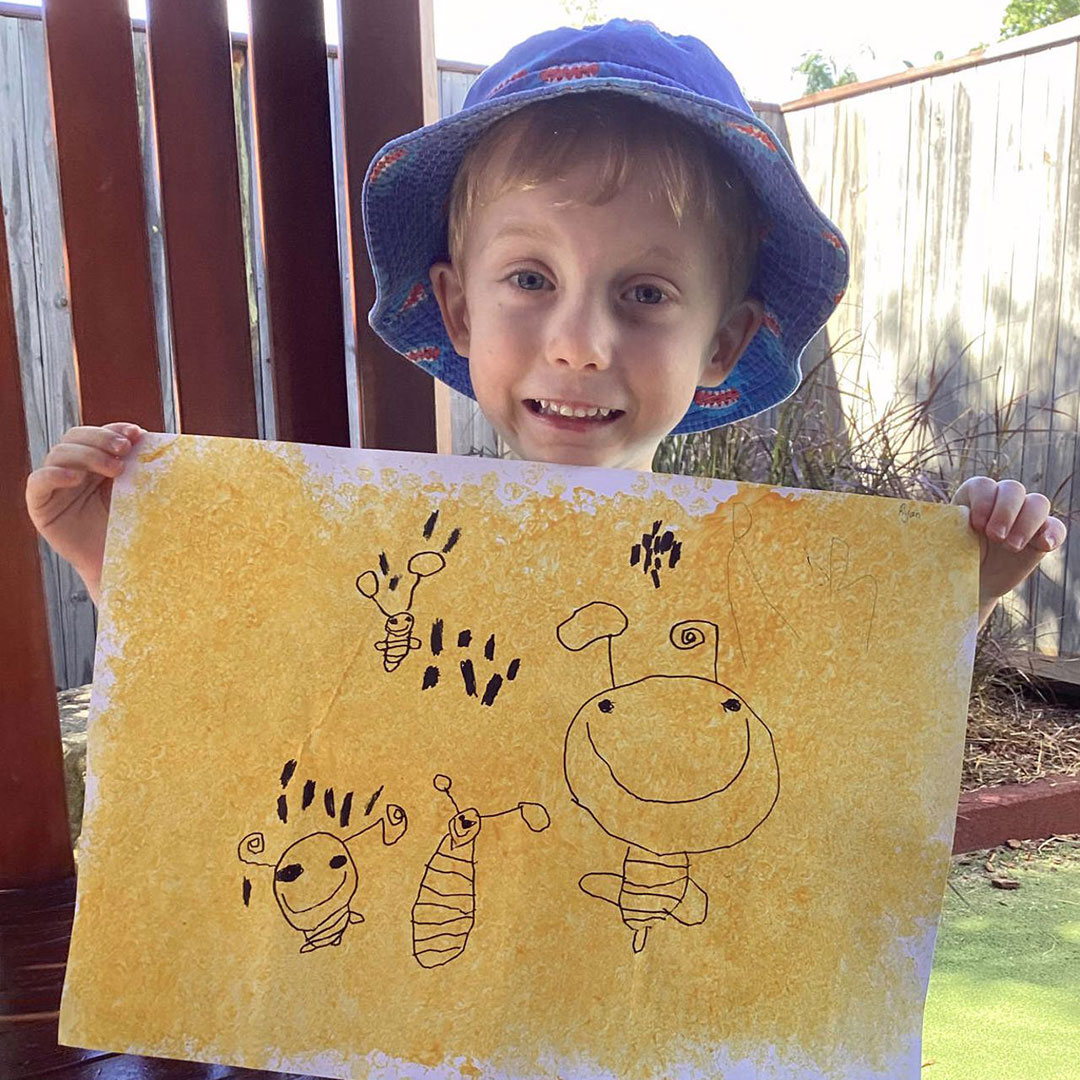
Student drawing of bees at Sanctuary Early Learning Buderim
From the hive to the studio
The most potent evidence of nature leading the curriculum emerged in the Seagulls Studio. The spark was an Indigenous book, Princess Bee and the Boy, which introduced the children to concepts of Country, biodiversity, and environmental care.
In a traditional educational setting, a book might dictate a neat, indoor lesson plan. At Sanctuary, the lesson plan was dictated by the playground itself.
Because the centre features its own active, stingless native bee hive in the senior playground, the children immediately stepped outside to cross-reference literature with reality. The bees weren’t characters on a page; they were active participants in the children’s world.
This living resource triggered a deep, multi-week inquiry led entirely by the children’s questions: Where do the bees go? How do they support our local plants? Why must we protect them?
To process their findings, the children engaged in a collaborative STEM project to construct a large-scale replica of the hive from recycled materials. This single, nature-led spark organically unlocked a huge web of developmental learning:
- Applied ecology: Understanding complex, age-appropriate concepts of ecosystems and environmental responsibility.
- Structural engineering: Problem-solving spatial design, shape, and balance using cardboard and tubes.
- Upcycling dynamics: Visually understanding sustainability by transforming everyday waste into purposeful art.
The beehive project also supported social learning. Children shared ideas, negotiated roles and contributed in different ways. Some focused on construction, others on design, storytelling or detail. Each child was able to bring their own strengths and interests to the experience.
This is one of the strengths of inquiry-based learning. It allows children to enter the learning from different points and follow their curiosity in meaningful ways. The value lies not only in the finished creation but also in the process of thinking, testing, collaborating and wondering together.
Across Nature Week, these kinds of experiences were evident throughout the service. Children were given opportunities to observe closely, use their senses, move their bodies, listen to stories, create with purpose and engage in conversations about the environment.
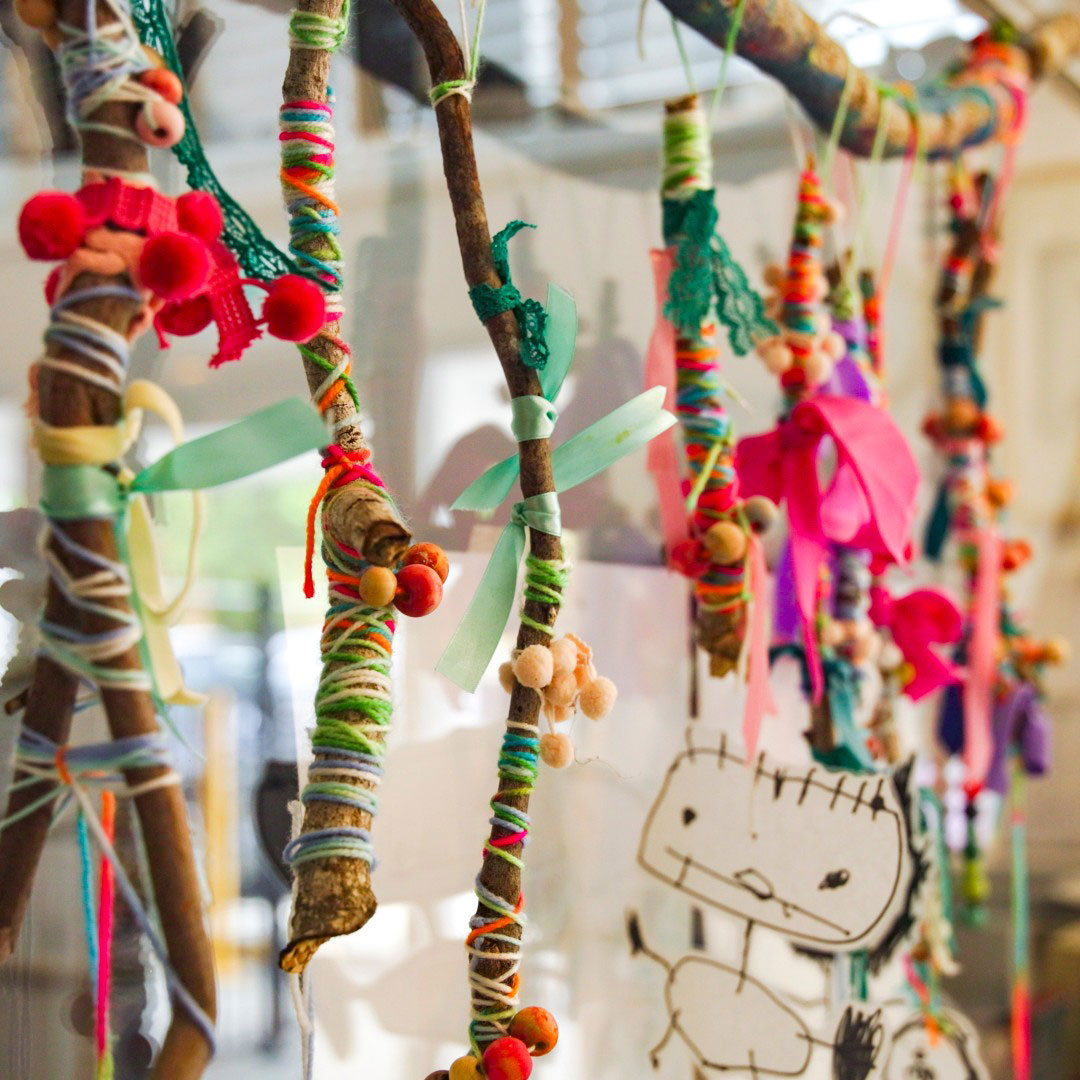
Nature craft at Sanctuary Buderim Early Learning Centre
A connected community
When nature leads, it also connects. The spirit of the week extended to the wider community, highlighted by a visit from Sanctuary founder Lauren and a Hush Little Baby music morning for the nursery infants and their families.
Music, much like nature, relies on rhythm and organic connection. By bringing families into the space to share in these gentle musical experiences, the centre reinforced the idea that learning is an ecosystem in its own right. For a child to confidently venture out and investigate a living beehive, they must first feel securely rooted in their community and environment.
Rethinking play in early learning
These nature-connected experiences help children build more than knowledge. They support confidence, patience, resilience and independence. They also encourage children to develop a sense of responsibility for the world around them, beginning with the spaces they use every day.
At Sanctuary Buderim, this understanding sits at the heart of the program. Educators recognise learning in ordinary moments and use them to support each child’s development. The everyday becomes meaningful when approached with care, intention and respect.
Nature Week may have been a special highlight, but its spirit reflects something much deeper within the service. At Sanctuary Buderim, children are given time to wonder, space to explore and meaningful opportunities to connect with people, place and nature.
In a world that often moves quickly, these experiences are incredibly valuable. They remind us that early learning need not be rushed to be rich. Sometimes, the most powerful learning begins with a story, a song, a patch of shade, a recycled box, or a tiny native bee moving through the garden.
By letting nature take the lead, Sanctuary Buderim is shifting the focus away from desk-bound school preparation. Instead, they are fostering something far more enduring: a generation of capable, independent thinkers who view themselves not just as visitors to the world, but as its caretakers.
Read More
Building a village around every child at Sanctuary Early Learning Adventure Ashmore
Sanctuary Early Learning Buderim achieves Exceeding
Creating a Sanctuary in Gold Coast child care and early learning