For many Australian families, swimming lessons begin with a practical goal: safety. It’s a rite of passage woven into childhood — weekly lessons, damp towels in the car, goggles perpetually missing, and the steady progression from blowing bubbles to confident strokes. But while most parents enrol their children in swimming lessons to build water confidence and reduce the risk of drowning, the benefits often extend far beyond the pool.
For many children, swimming lessons represent one of the earliest structured learning environments outside the home — the pool becomes a place where they begin to develop resilience, emotional regulation, independence and confidence through consistent, achievable challenges. Long before children perfect freestyle or master tumble turns, they are learning something arguably more important: how to persevere when something feels difficult.
A safe place to learn resilience
Swimming lessons gently introduce children to one of life’s most valuable skills … resilience. Not resilience in the dramatic sense, but in the everyday moments that shape confidence over time. The willingness to try again after swallowing water. The courage to attempt a new skill despite feeling nervous. The patience required to practise something repeatedly before improvement comes.
Unlike environments where children may expect immediate success, swimming provides regular opportunities to struggle safely. Progress in the pool is incremental; kids quickly learn that mastering a skill takes repetition, concentration and persistence. They discover that mistakes are not failures but part of the learning process itself … a life lesson with enormous developmental value.
Children who experience manageable setbacks — and are supported through them — begin building the confidence that comes from recovery, not perfection. Over time, they internalise a powerful message: I can do hard things, even if I don’t get them right the first time.
This is a mindset that later supports them in classrooms, friendships, sports and everyday life.
Swimming provides children with consistent, achievable challenges…Each small success helps build trust in their own abilities, and that confidence often transfers into other areas of their lives.
Routine, structure and independence
The predictability of weekly classes, familiar instructors and repeated routines creates a sense of security that helps children feel safe enough to take risks and try new things.
For younger children, especially, swimming lessons often serve as an early introduction to structured learning environments. They learn to transition into class, follow instructions, wait their turn and participate independently within a group.
These experiences may seem small, and the shifts might be gradual, but they are significant developmental milestones. It could be a child who initially clings tightly to your hand, eventually walks confidently into lessons alone, or a hesitant beginner becomes comfortable participating without constant reassurance.
Those moments represent far more than swimming progress. They reflect growing independence and emotional maturity.
Michelle Scudamore, General Manager – Product & Curriculum at Rackley Swimming, says swimming lesson scan play an important role in helping children build self-confidence.
“Swimming provides children with consistent, achievable challenges,” she explains. “Each small success helps build trust in their own abilities, and that confidence often transfers into other areas of their lives.”
Sudamore says instructors frequently witness remarkable transformations in shy or anxious children.
“Some children begin lessons feeling uncertain or reluctant to participate, but over time, they develop confidence not just in the water, but socially and emotionally as well. It’s incredibly rewarding to watch.”
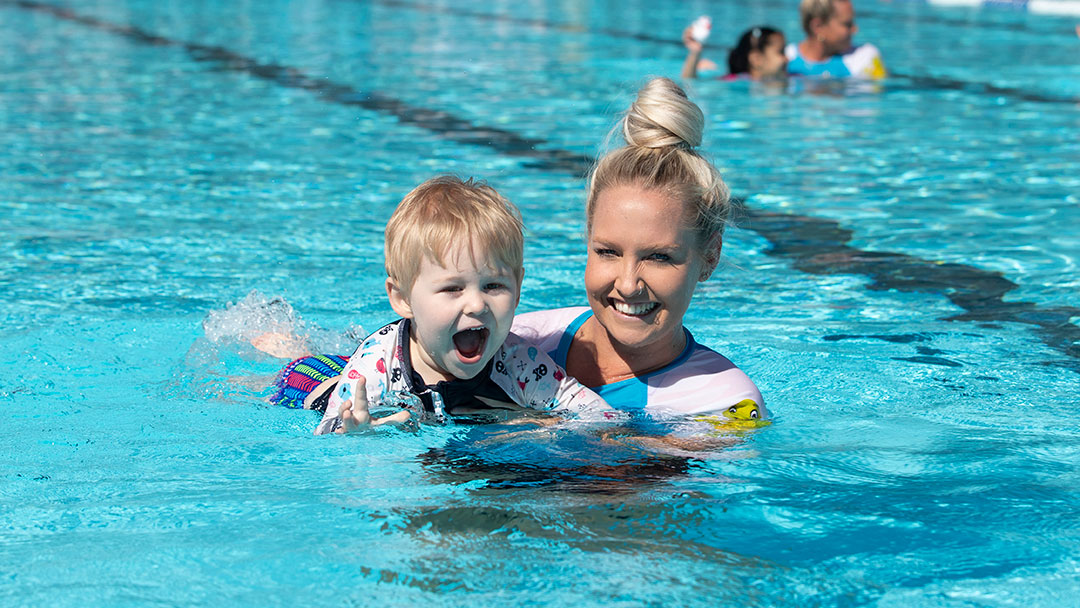
Child learning to swim at Rackley Swimming
Learning to listen and respond
Swimming lessons also strengthen another increasingly important developmental skill: the ability to focus and follow instructions.
In the pool environment, listening matters. Children must process directions clearly and respond appropriately, often while managing excitement, nerves or sensory stimulation.
“Eyes on the teacher.”
“Wait on the wall.”
“Kick, kick, kick!”
“Take a breath and try again.”
These simple instructions require children to regulate their attention, interpret information and respond safely in a small-group setting.
Because swimming combines movement with active learning, it can be especially beneficial for children who learn more effectively through physical activity than in sedentary environments.
The ability to listen, focus and follow multi-step instructions naturally supports school readiness and broader cognitive development.
Emotional regulation in practice
Swimming lessons can also become powerful opportunities for children to develop emotional regulation skills.
Pools are busy, sensory-rich environments. They can feel loud, unfamiliar and physically uncomfortable at times. For some children, water itself triggers anxiety or hesitation.
Learning to remain calm while feeling uncertain is an important developmental experience.
Supportive instructors help children work through challenges gradually — encouraging them to pause, breathe, reset and try again. Over time, children begin building tolerance for discomfort rather than immediately avoiding it, fostering emotional resilience.
In an era where many families are navigating rising anxiety levels in children, opportunities for gradual, supported exposure to manageable challenges are increasingly valuable.
Importantly, swimming lessons provide those experiences within a highly structured and supportive environment, allowing children to develop confidence progressively and safely.
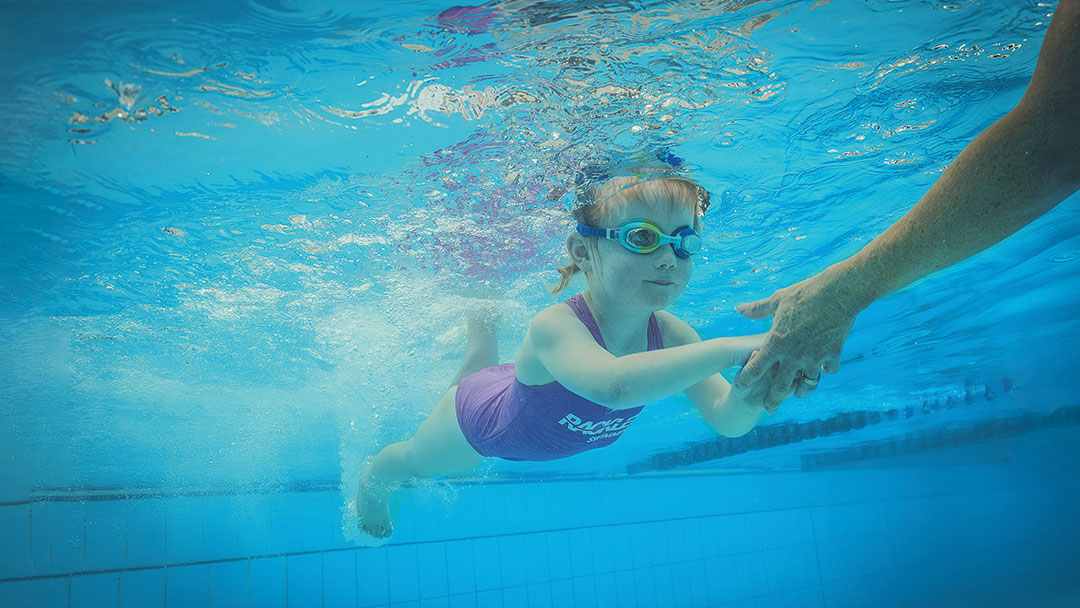
Underwater shot of a child learning to swim at Rackley Swimming. Credit: Rackley Swimming
Social skills beyond the surface
Although swimming is often viewed as an individual activity, lessons themselves are highly social experiences.
Children learn to participate within a group, take turns, share space and encourage their peers. Younger swimmers, in particular, begin to observe social cues and practise communication in a structured setting.
A child cheering for a classmate who completes a skill, listening while another child receives feedback from the instructor … these are all moments that help children develop empathy, patience and cooperative behaviour.
Unlike highly competitive sporting environments, swimming lessons also tend to emphasise individual progress over comparison. Every child advances at their own pace, reinforcing the understanding that growth looks different for everyone.
That perspective can be incredibly valuable during childhood.
7 life skills swimming builds
- Resilience: Children learn to persist through challenges and try again after setbacks.
- Independence: Participating in lessons helps children build confidence away from parents.
- Emotional regulation: Swimming teaches children to manage nerves, frustration and uncertainty.
- Listening skills: Following instructions in the pool strengthens focus and attention.
- Social development: Children practise taking turns, cooperating and encouraging peers.
- Goal setting: Progressive skill levels teach patience, persistence and achievement.
- Confidence through effort: Swimming helps children develop self-belief grounded in perseverance, not perfection.
Confidence through perseverance
One of the most meaningful outcomes of swimming lessons is the confidence children develop through perseverance. Unlike confidence built on natural talent or effortless success, confidence earned through persistence reinforces a sense of capability and self-belief.
A child who finally masters floating after weeks of trying, or a child who overcomes fear of submerging their face, both experience genuine achievement. These accomplishments may appear modest to adults, but to children they are significant.
Swimming also introduces children to goal-setting in a tangible, age-appropriate way by building skills progressively. Certificates and level advancements provide visible markers of growth. Children begin to understand the relationship between effort, practice, and improvement, and those lessons extend well beyond the pool.
A foundation for other activities
Swimming additionally supports broader physical development and athletic confidence. It strengthens coordination, balance, endurance and body awareness while building cardiovascular fitness and bilateral movement skills. These foundational physical abilities often transfer effectively into other sports and activities, including surfing, athletics, dance, football and netball.
Perhaps more importantly, swimming helps children develop trust in their physical capabilities, which becomes foundational as kids grow.
A child who learns they can overcome fear, practise consistently and improve over time carries that mindset into many aspects of life … academically, socially and emotionally.
A swim school to trust
For families choosing Rackley Swimming, it’s often the combination of experience, flexibility and genuine care that makes the difference.
Family-owned and trusted since 1998, Rackley has built a reputation for high-quality swim education focused not only on water safety and skill development but also on helping children feel confident and supported in the water. With heated pools open seven days a week, stay and play access, unlimited make-up lessons, and free Baby programs for children 3- 6 months, Rackley makes learning to swim accessible and family-friendly.
Most importantly, their passionate instructors create an environment where children feel safe to learn, grow and thrive. Because, while swimming lessons prepare children for time in the water, they also quietly help prepare them for life beyond it.
Related Reads
A lifetime in the water starts with Rackley Swimming
From infants to Olympians at Rackley Swimming