At Suncoast Christian College, Stage One (Years 1 and 2) has been developing strong early-years writing skills by stepping into worlds of pirates, dragons, superheroes, deep-sea adventures, and outer-space exploration. Through rich modelled texts, immersive classroom experiences, and carefully scaffolded recount writing lessons, students have discovered that writing is not simply about putting words on a page — it is about reliving experiences, sharing ideas, and capturing moments with detail, creativity, and confidence.
Building early years writing skills through imaginative learning
Each week, students embark on a new themed adventure designed to spark curiosity and ignite imagination. From “A Fun-Filled Day at the Park” to “My Adventure as a Space Explorer,” every experience provides authentic opportunities for oral language, sensory engagement and purposeful writing. These engaging contexts encouraged students to become active participants in their own storytelling and laid the foundations for deeper narrative writing skills that will continue next term.

Suncoast Christian College primary student dressed up as a superhero
Engaging writing activities that inspire creativity
The seven-week sequence includes:
- A Fun-Filled Day at the Park
- Hunting for Hidden Dragon Eggs
- The Great Pirate Treasure Hunt
- Journey Under the Sea
- Market Day Magic
- Superhero Training Camp
- My Adventure as a Space Explorer
The power of modelled writing instruction
At the heart of this learning journey has been the use of explicit modelled writing instruction. During whole-class lessons, teachers demonstrated how strong recounts are constructed by thinking aloud, discussing vocabulary choices and showing students how writers organise ideas into clear sections, including a sizzling start, events and an ending with impact. Students are exposed to rich mentor texts and collaborative writing experiences before independently applying these skills to their own recounts.
Acting Head of Suncoast Primary, Marion Trotter, comments, “Studies into writing pedagogy show that modelling allows teachers to make the invisible thinking processes of writing visible to students. Effective modelled writing helps children understand not only what to write, but how and why authors make particular choices.”
Recent research into primary writing instruction found that co-constructing texts and sharing modelled examples significantly improve student writing outcomes and support mastery of different writing genres.
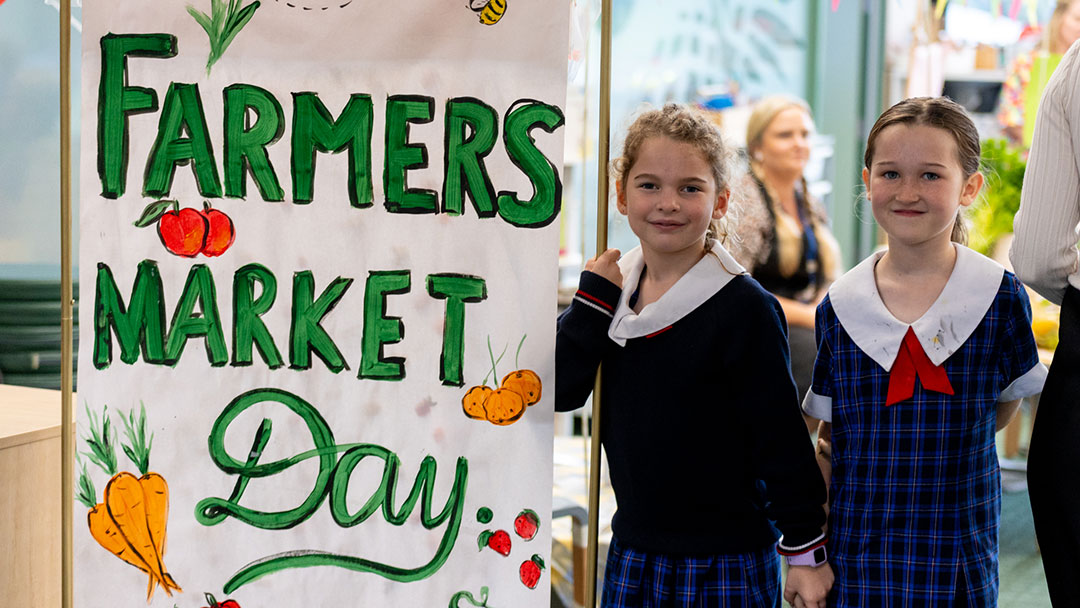
Suncoast Christian College students running a farmers’ market
Using sensory language to strengthen writing skills
Sensory language became another key focus throughout the unit. Students were encouraged to use the five senses to bring their recounts to life:
- How did the superhero obstacle course feel?
- What could they see while flying through space?
Teaching students to incorporate sensory details helps create vivid imagery and stronger reader engagement. Research on sensory writing shows that descriptive language helps children develop more detailed and meaningful written expression. By orally rehearsing ideas and discussing sensory experiences before writing, students expanded both their vocabulary and sentence complexity.
Scaffolding writing to build confidence and independence
Scaffolds also played an important role in strengthening early years writing skills and building confidence and independence. Graphic organisers, sentence starters, vocabulary banks and structured recount templates allowed students to focus on generating ideas without becoming overwhelmed by the mechanics of writing. Gradually, as confidence increased, many students began to apply these structures independently and experiment with more sophisticated descriptions and sequencing.
Importantly, this approach also nurtured student self-efficacy. Writing can often feel daunting for young learners, particularly when faced with a blank page. Research into writing pedagogy consistently emphasises the importance of explicit instruction, gradual release of responsibility and supportive classroom environments in helping children view themselves as capable writers. Through collaborative discussions, shared experiences and achievable writing goals, students developed greater confidence in expressing their ideas creatively.
Primary Teacher and Stage One Leader, Amy Horton, says, “One of the most rewarding outcomes of the unit has been the excitement students now bring to writing lessons. The classroom has become a place where imaginations flourish — where students eagerly discuss pirate maps, dragon caves and rocket launches before rushing off to capture their adventures in writing.”
Many students who were once hesitant writers are now taking risks with vocabulary, experimenting with descriptive language and proudly sharing their work with peers.
This recount unit has also provided a seamless transition into narrative writing for the next term. Through recounts, students have already developed many foundational storytelling skills, including sequencing events, describing settings, developing engaging ideas and writing with audience awareness. As students move into narrative writing, they will continue to build on these skills to create imaginative stories with characters, problems and rich settings.
From recounts to confident young writers
Most importantly, this learning journey has shown students that writing can be joyful, meaningful and creative. By combining explicit teaching with imaginative experiences and strong modelling practices, students are discovering their own voices as writers — one pirate adventure, dragon hunt and space mission at a time.
Read More
Suncoast Christian College invites local community to leave its mark on cutting-edge new building
Suncoast Christian College unveils innovative new primary school campus