
Before powered kitchen ventilation, homes relied on windows, vents and chimneys to let cooking fumes escape. By the 1920s, mechanically assisted systems were emerging. These systems used fans to pull cooking fumes away and capture grease carried in the air.
There’s a good reason we still use rangehoods today. Cooking releases smells and can also put moisture, grease, particles and gases into the air. Under the NCC 2022 Housing Provisions, a kitchen exhaust system covered by the condensation management requirements needs a minimum airflow rate of 40 L/s. Where a rangehood serves as that exhaust system, it needs to discharge the extracted air outdoors, either directly or through ducting.
A rangehood not working properly doesn’t always mean it won’t turn on. The fan and lights might still work, but the rangehood may struggle to remove steam and cooking fumes.
Why It’s Worth Checking Your Rangehood
A rangehood that stops working properly doesn’t always need to be replaced. Manufacturer troubleshooting guides show that poor performance can come from different parts of the appliance or its setup.
If you’re not familiar with the different types and how they operate, a guide to rangehoods can help you understand the basic setup before troubleshooting. Weak extraction can be linked to restricted ducting, installation issues or clogged filters, while a fan that won’t run can point to the motor, controls or power supply.
Before replacing the rangehood, check what is and isn’t working first. The four checks below can help you narrow down the problem without opening the appliance or working on electrical components.
#1 Rule Out a Power Problem
If your rangehood is completely unresponsive, check the simple things first.
- Are the lights off?
- Does the fan do nothing at every setting?
- Are the buttons or touch controls unresponsive?
If everything is dead, check the power supply where you can safely access it. Depending on how the rangehood is connected, this could mean checking the power point and plug or seeing if the circuit has tripped. If you reset a tripped circuit and it trips again, don’t keep resetting it. That can point to an electrical fault that needs to be checked.
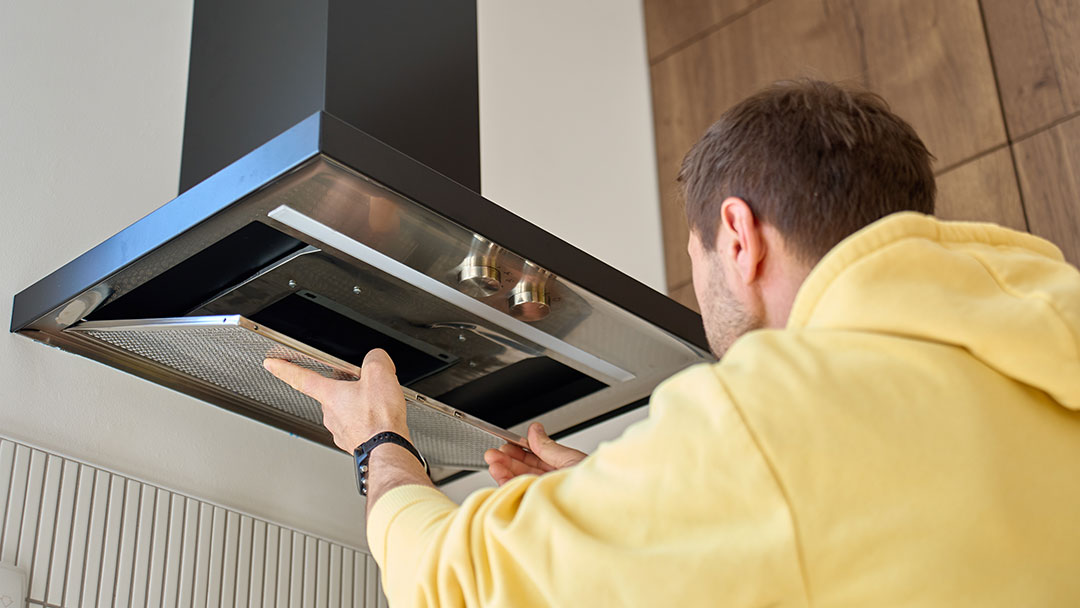
Person removes filter from kitchen rangehood
If the lights work but the fan doesn’t, the rangehood is getting power. The problem could instead involve the fan, switch, controls or another component inside the appliance.
Keep your checks to parts you can safely access. Don’t remove electrical covers, open the appliance or test internal wiring yourself.
#2 Clean or Replace the Filters
Your rangehood can switch on and sound perfectly normal while doing a poor job of extracting cooking fumes. If that’s what you’re seeing, check the filters next.
This filter catches grease carried in the cooking air before it travels further into the system. As grease builds up, it can restrict airflow and reduce how well the rangehood extracts.
- Inspect the grease filter. If it has a heavy grease build-up, clean it according to the manufacturer’s instructions.
- Check how the filter should be cleaned. Some grease filters can go in the dishwasher, while others require a different cleaning method. Check your rangehood manual first.
- Check for a carbon filter. Recirculating rangehoods may use one to remove cooking odours before returning the air to your kitchen.
- Replace the carbon filter as recommended. Many carbon filters can’t be washed and need replacing at intervals specified by the manufacturer.
Once you’ve cleaned or replaced the appropriate filter, run the rangehood again. If extraction improves, the filter is likely contributing to the problem.
#3 Test the Airflow
- Turn the rangehood on and pay attention to what happens around the cooking area.
- Does the rangehood pull steam towards it?
- Does the airflow increase when you turn up the fan speed?
If you have a ducted rangehood, check for airflow at the external outlet if you can safely access it. Don’t climb onto a roof or remove ductwork just to perform this check. What you find can help narrow down the problem.
| Observations | Indication |
| Fan runs + good airflow | The extraction path is working properly. |
| Fan runs + weak airflow | A dirty filter, blockage or ducting problem could be restricting airflow. |
| Lights work + fan doesn’t run | The problem could involve the fan, controls or another internal component. |
Pay attention to the airflow instead of the fan noise when testing your rangehood.
#4 Check the Ducting and Installation
Restricted ducting can cause poor extraction even when the fan works and the filters are clean.
First, know what type of rangehood you have. A ducted rangehood sends air outside through ducting, while a recirculating rangehood filters the air and sends it back into your kitchen. A recirculating model won’t have an external exhaust outlet. For a ducted rangehood, look for signs that airflow is being restricted:
✓ Narrow ducting can restrict the amount of air moving through the system.
✓ Long duct runs can make it harder for the fan to move air outside.
✓ Too many bends can add resistance and reduce airflow.
✓ Blocked ducting can prevent extracted air from reaching the external outlet.
If these basic checks point to a ducting or installation problem, have the rangehood and extraction system properly inspected.
Know When to Stop Troubleshooting
There’s a limit to what you should troubleshoot yourself. If you’ve cleaned the filters, checked the accessible parts and the rangehood still has weak or no suction, the problem could require a closer inspection.
Stop troubleshooting if you need to open the appliance, access internal components or dismantle ducting to find the fault. Manufacturer guidance recommends getting a licensed electrician can help when basic troubleshooting doesn’t restore proper extraction or the problem appears to be technical.
Keep Your Rangehood Working Properly
Your rangehood deals with grease and cooking residue every time you use it, so maintenance shouldn’t wait until extraction starts to drop. Clean the grease filters according to the manufacturer’s instructions, replace carbon filters when required and keep the accessible parts of the rangehood free from grease build-up.
Think about the last time you cleaned or inspected yours. Have you noticed grease building up faster, filters needing more attention or extraction starting to weaken between cleans? Paying attention to those changes can help you deal with maintenance before poor performance becomes the reason you start troubleshooting.
Related Reads
Best Cubby Houses for Small and Large Backyards in 2026
The Off-Season Advantage: Why Winter is the Best Time to Fix Your Cooling