
The gardens children stick with are the ones that feed them. A bed of flowers is nice to look at, but a strawberry you grew yourself is a reason to go outside before school. In south east Queensland, with a warm spring and a long summer, a child can have a food garden producing within a month of planting it, provided you choose plants that forgive a missed watering and give something to pick most weeks. Here is the garden we would plant with a six year old, and the rules that keep it theirs.
Start with one bed or four pots
A raised bed about a metre by two metres is enough, or four large pots on a sunny patio if the yard is small. Fill it with a good vegetable mix, not soil from the garden, and put it where it gets morning sun and some shade from the hottest part of the afternoon in January. Mulch the top with sugar cane so the surface does not bake. A child can manage one bed. Three beds become a chore for the adult.
The plants that earn their place
Cherry tomatoes come first, because the first red one is picked and eaten on the spot. Plant them in October, stake them, and water at the base rather than over the leaves. Strawberries go along the front edge or in a hanging basket where the fruit hangs clear of the soil, and they fruit through spring before the heat slows them. Snow peas and lettuce are the winter and early spring crops, picked a leaf at a time. Mint goes in its own pot, because it will take the whole bed, and it is the first thing a child learns to pick for a jug of water. Basil goes beside the tomatoes in summer. Nasturtiums fill the gaps with flowers you can eat, and a sunflower in the corner is the one plant a child will measure against themselves every week until it wins.
For something bigger, a dwarf Meyer lemon in a large pot fruits in its second year and lives for decades, and a passionfruit on the back fence turns a wall into a pantry by its second summer. The edible plants range at nurserynearme.com.au covers all of these for the Queensland climate, from herbs to fruit trees.
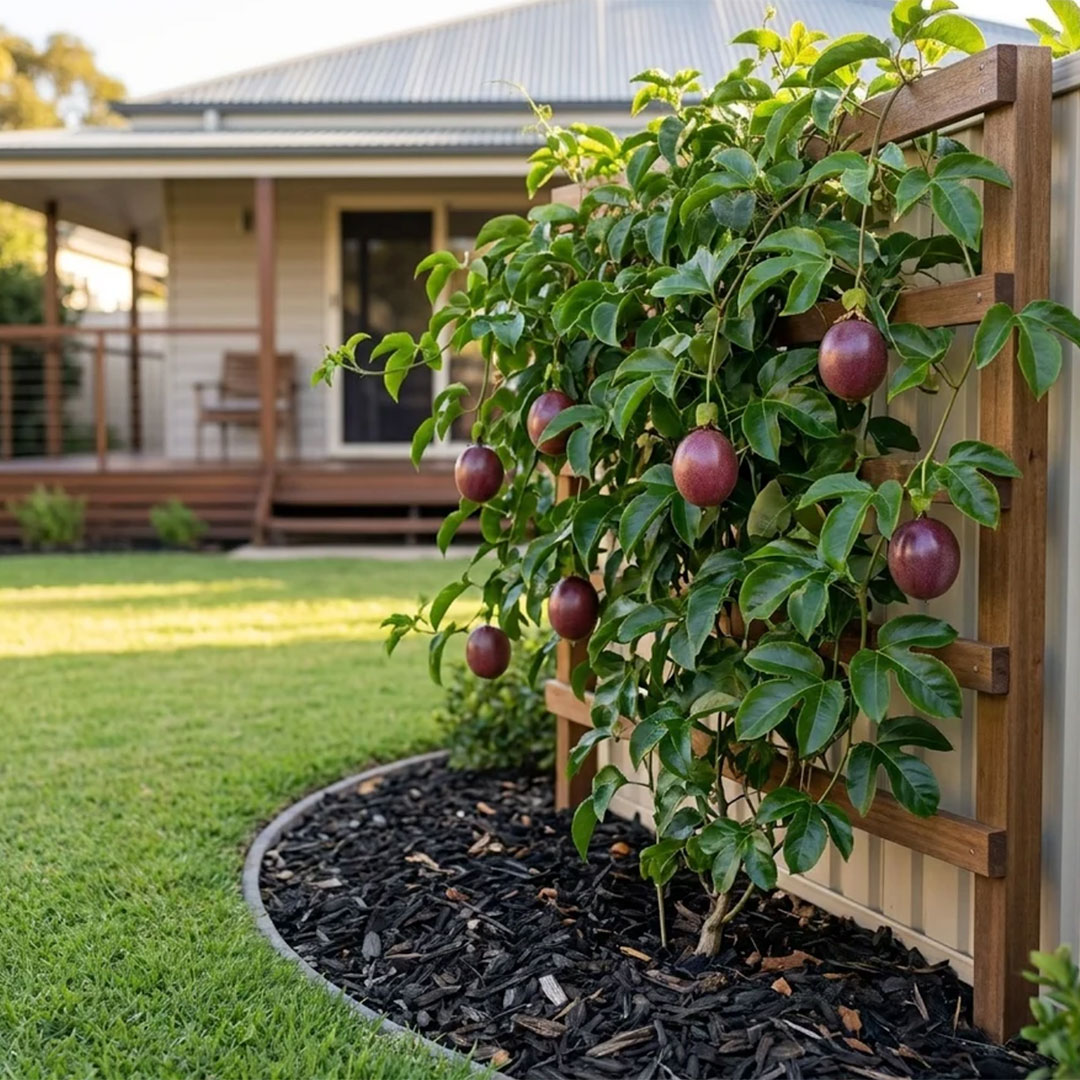
Passionfruit growing on fence
The summer problem
The season that ends most children’s gardens here is January: a week of forty-degree days and a holiday away. Two things fix it. A drip line on a cheap tap timer, set for early morning, waters the bed whether anyone remembers or not. And a shade cloth over the bed from December to February keeps the lettuce from bolting and the tomatoes from scorching. Ask the neighbour’s child to pick while you are away; nothing wastes a garden faster than fruit left to rot.
The rules that keep it theirs
Let the child own the bed, including the mistakes. If the lettuce bolts because nobody picked it, that is a lesson about picking, not a reason to take over. Water together in the evening, because that is when the day’s news comes out and the plants are checked without anyone calling it a job. Keep a jar of seeds and a notebook of what went in when; by the second year the child will know more about their bed than you do. And grow something to eat alongside anything to look at, because a cherry tomato warm from the vine is the only vegetable some children will ever be proud of.
By Isaac Olson, Nursery Near Me
Isaac Olson is a director of Nursery Near Me, an Australian online nursery that delivers plants, trees and edibles from grower to door across Queensland and the mainland states, and grows tomatoes, mint and a great many weeds with his own family.
Related Reads
Growing green thumbs: Why the Queensland Garden Show is the ultimate family day out
Mount Alvernia College garden cultivates wellbeing and learning