By Emma Meyer (@play_at_home_mummy), early childhood and primary teacher, homeschooling mum and co-founder of the Play All Day app
“Will you play with me?” If those five little words sometimes fill you with a bit of dread, you are definitely not alone! So many parents tell me they want to play more with their kids, but they run out of ideas, run out of time or feel like they need a cupboard full of fancy resources to do it properly.
Here’s the good news: you don’t! Some of the very best play experiences I’ve set up for my own children started with a muffin tray, a handful of pegs or an old cardboard box. Play is really about noticing what your child is interested in, giving them something to explore and then stepping back to watch the magic happen.
My top tips for getting started
1. Observe first. Before you set anything up, spend a few minutes simply watching your child. What are they drawn to? Are they posting things into gaps, tipping everything out, climbing on everything, lining up their cars? These little patterns tell you so much about what they need right now, and they’re the best starting point for any play idea.
2. Follow their lead. This is the heart of how I play with my own kids, and it comes straight from my years as an early childhood teacher. When my children were around 10 months old I noticed them trying to pick tiny bits of fluff off the floor. That was their pincer grip developing, so I gave them something to practise it with (more on that below!). Meet them where they’re at and the play almost runs itself.
3. Keep it simple. One tray, one or two materials and a little invitation is plenty. Too many options can actually be overwhelming for little ones. Less really is more!
4. Set it up and step back. You don’t need to direct every moment. Put the activity out, sit nearby and let them explore in their own way. Some of the best learning happens when we resist the urge to show them the “right” way to do it.
5. Don’t worry about the mess. Messy play is some of the most valuable play there is for little hands and growing brains. Pop down a mat or a towel, set up outside or plan it right before bath time and you’ll worry a whole lot less.
6. Short and sweet counts. Ten minutes of connected, engaged play is wonderful! It doesn’t need to fill the whole afternoon to make a difference.
Five simple play ideas using what you already have
Cheerio pluck (babies and young toddlers)
This is the one I created when my babies were working on that pincer grip! Pop a few Cheerios (or any small, soft cereal) into the cups of a muffin tray, or sit them on top of short pieces of pipe cleaner poked into playdough. Your little one will love plucking them off one by one, building strength and control in their fingers as they go. Always supervise closely with small pieces.
Peg it! (toddlers and preschoolers)
Grab some clothes pegs and the edge of a box, a paper plate or a plastic container. Squeezing pegs open and clipping them on is fantastic for hand strength, which is one of the building blocks for holding a pencil later on. For older kids, write numbers or letters on the pegs and match them up.
Painting with water (all ages)
A cup of water and an old paintbrush is all you need. Let your child “paint” the fence, the pavers or the outside wall and watch their masterpiece disappear in the sun. It’s calming, there’s no clean up and it’s wonderful for big arm movements.
Baking tray letter match (preschoolers)
Write letters on the back of a metal baking tray with a whiteboard marker and pop out some magnetic letters. Children place each magnet over its matching letter. Say the letter sounds as you go and you’ll be sparking lovely conversations about letters and words without any pressure at all.
Post-it note hide and seek (preschoolers and big kids)
Hide sticky notes around the house with letters, numbers or simple words on them. Once they’re found, match them up on a big sheet of paper. For early readers, write clues that lead to the next note (“look on the bed”) for a treasure hunt that has them reading without even realising!
Play All Day app
When you need a little more inspiration
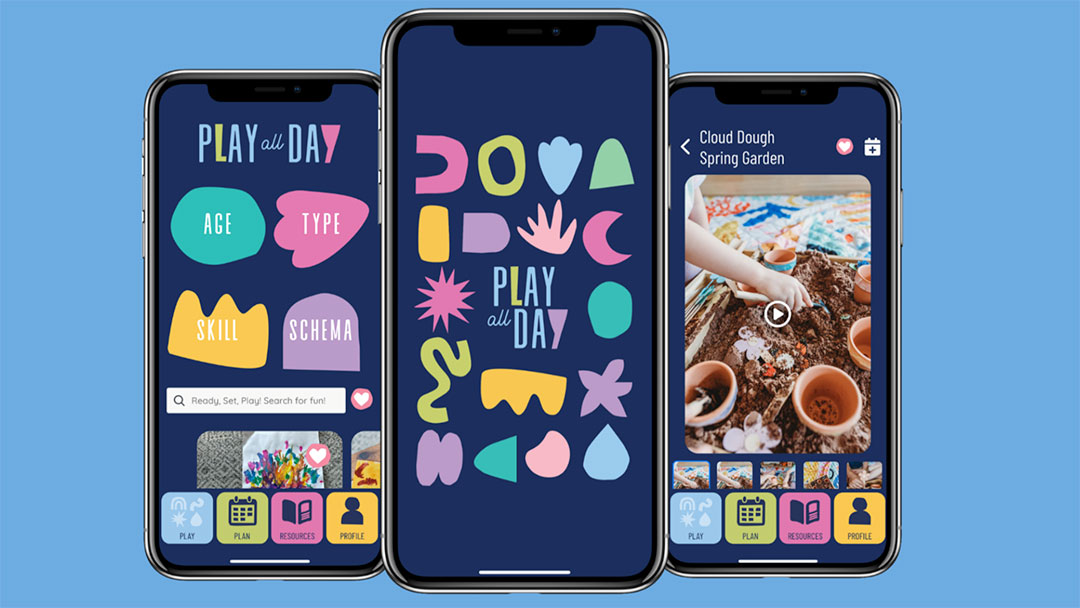
This is exactly why Gemma, Jacqui and I created the Play All Day app. I’d been sharing play ideas on Instagram for years, but I knew how easy it was to save a post and never find it again, or open your phone for an idea and end up scrolling for half an hour!
Play All Day is a tool for you, not a screen for your child. It’s a library of more than 200 simple play activities for children from birth to eight, and you can search by:
- Age, so every idea suits where your child is right now
- Type of play, from messy sensory play to crafts and early learning
- Skills you’d like to support, like fine motor, language or problem solving
- What you already have at home, so you can use up those pegs, pasta or cardboard boxes
Every activity comes with clear, simple instructions and photos or a video of the set up. There’s a planner where you can save activities for the week and tick off the items you’ll need, plus a Play Knowledge Hub if you’d love to dive a little deeper into play and development.
A final note
Play gives children the chance to explore and make sense of their world in the way that’s most meaningful to them. It builds regulation, resilience, creativity and connection, for the grown ups too! So start small, start with what’s in your kitchen cupboard and most of all, have fun with it.
Find the Play All Day app on the App Store and Google Play, or visit playalldayapp.com.au. You can find more of Emma’s play ideas on Instagram at @play_at_home_mummy.
Related Reads
What is play-based learning in preschool?
21 easy indoor games for toddlers