Starting preschool or kindergarten is an important milestone in a child’s early years. Children begin experiencing new routines, meeting different people, and participating in activities that encourage them to explore, communicate, and learn. Childcare can provide opportunities to practise some of the everyday skills that help children become familiar with a more structured learning environment.
School readiness does not mean that children need to know how to read, write or complete formal schoolwork before they begin. It also involves developing independence, learning to interact with others, expressing needs and becoming comfortable with new experiences. Every child develops at their own pace, and preparation looks different for each family.
Understanding how everyday childcare experiences support these skills can help parents recognise the value of early learning as their child approaches the next stage of education.
1. Developing social skills through everyday interactions
Preschool and kindergarten introduce children to new social situations, where they may be expected to participate in group activities, communicate with educators and interact with other children.
Childcare provides opportunities to practise these skills in everyday settings. Through shared play, group activities and conversations, children can begin learning how to take turns, listen to others, share resources and express their ideas.
These experiences also give children opportunities to navigate disagreements. With guidance from educators, they can learn to communicate their feelings, recognise different perspectives and explore ways to resolve simple conflicts.
Social development takes time, and children do not all interact in the same way. Some readily join group activities, while others prefer to observe before participating. Having opportunities to practise social interaction can help children become more familiar with these experiences before starting school.
2. Building independence in daily routines
Many everyday tasks become part of a child’s school experience. Depending on their age and the school’s routines, children may need to manage their belongings, follow instructions, wash their hands, use the toilet independently, or ask for help when necessary.
Childcare can provide opportunities to practise these skills gradually. For example, children may be encouraged to put away toys, carry their bags, participate in mealtimes and follow familiar routines with age-appropriate support.
These tasks may appear simple, but they allow children to practise making decisions and taking responsibility for small parts of their day.
Parents can reinforce similar skills at home by allowing children time to attempt suitable tasks themselves. The goal is not to expect complete independence before school begins, but to help children develop confidence in doing what they can while understanding when to ask for assistance.
3. Encouraging communication and language development
Being able to communicate needs, understand instructions, and participate in conversations can help children navigate the preschool and kindergarten environment.
In childcare, children encounter opportunities to develop communication skills through storytelling, songs, conversations, imaginative play and interactions with educators and other children.
For example, a child may practise asking to join an activity, explaining what they are building, answering questions about a story or telling an educator when they need help. These everyday exchanges allow children to use language in different situations.
Listening is also an important part of communication. Group stories, simple discussions and activities with instructions can give children opportunities to listen, respond and follow along.
Parents can support this development by reading together, talking about everyday experiences and giving children time to express themselves. Children develop language at different rates, so expectations should reflect their individual development rather than a fixed checklist.
4. Introducing children to play-based learning
Play is an important part of early childhood learning. Through activities such as building, drawing, pretend play, puzzles, and outdoor exploration, children can investigate ideas and learn through hands-on experiences.
These activities can also introduce skills that are useful in preschool and kindergarten. Building with blocks, for instance, offers opportunities to explore shapes, sizes, and balance. Sorting objects can introduce early mathematical concepts, while imaginative play can encourage storytelling, creativity and cooperation.
Educators can extend these experiences by asking questions, introducing new materials or encouraging children to explore different ways of approaching a task.
Rather than focusing only on whether a child can produce a particular result, play-based learning allows children to experiment, make choices, and learn through the process.
These experiences can help children become familiar with exploring ideas and participating in learning activities before entering a school environment.
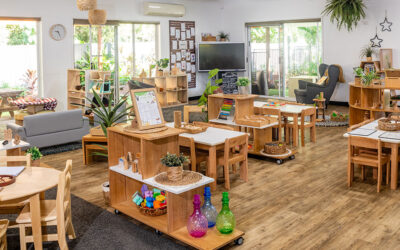
For families exploring preschool and kindergarten Manly options, understanding how play-based learning supports communication, creativity, and problem-solving can help when comparing early learning programs.
5. Helping children become comfortable with routines
Preschool and kindergarten generally involve a sequence of daily activities, such as arrival, group time, learning experiences, meals, and outdoor play. Understanding how routines work can help children know what to expect throughout the day.
Childcare introduces children to familiar patterns, including putting away belongings, moving between activities, sitting together for meals and following simple instructions.
Over time, these experiences can help children become more familiar with transitions and expectations. They also provide opportunities to practise listening to educators and adjusting from one activity to another.
It is important to remember that routines vary between services and schools. Children may still need support when they encounter a different timetable or environment, even if they are comfortable with their childcare routine.
Parents can help by talking about what a school day might involve and maintaining reasonably consistent routines at home, including mealtimes, bedtime and getting ready in the morning.
6. Supporting emotional awareness and confidence
Starting school can bring a mixture of excitement, curiosity and uncertainty. Children may feel comfortable exploring a new environment but still need reassurance when separating from family members or encountering unfamiliar situations.
Childcare can give children opportunities to recognise and express their emotions with support from educators. Everyday experiences, such as waiting for a turn, trying a challenging activity or resolving a disagreement, can provide opportunities to practise managing feelings.
Educators may help children name their emotions, communicate what they need, and explore appropriate ways to respond when something does not go as expected.
Parents can reinforce these skills at home by acknowledging their child’s feelings, listening without rushing to solve every problem, and encouraging them to try manageable challenges.
Confidence does not mean that a child will never feel nervous. It involves gradually becoming more familiar with new experiences and learning that support is available when needed.
7. Encouraging curiosity and problem-solving
Children entering preschool and kindergarten benefit from opportunities to ask questions, explore their surroundings, and experiment with ideas.
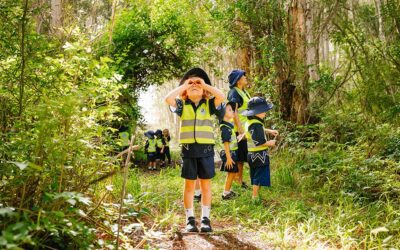
Childcare activities can encourage this curiosity in different ways. A child might investigate what happens when water is poured between containers, work out how to build a taller block tower, or find different ways to complete a puzzle.
These experiences encourage children to observe, make decisions, and try different approaches. They can also help children become comfortable with the idea that mistakes are part of learning.
Parents can encourage similar experiences at home through simple activities such as cooking together, sorting household objects, exploring nature, or reading books and discussing the pictures.
The aim is not to teach every school concept in advance. Giving children opportunities to explore, ask questions, and work through simple challenges can help them develop a positive approach to learning.
8. Learning to participate in group activities
In preschool and kindergarten, children may be invited to join group discussions, listen to stories, participate in games or work alongside classmates on shared activities.
Childcare can provide opportunities to become familiar with these experiences before starting school. Group songs, shared reading, collaborative play and simple activities with instructions can help children practise participating with others.
They may gradually learn to listen while someone else is speaking, wait for a turn, follow simple directions and contribute their own ideas.
Not every child will feel comfortable participating straight away. Some may need time to observe before joining in, while others may prefer smaller groups. Recognising these differences is important when considering how children approach group learning.
Parents can ask educators about their child’s participation and whether there are particular situations in which additional encouragement may be useful.
9. How parents can support the transition to school
Childcare is one part of preparing a child for preschool and kindergarten. Experiences at home, relationships with family members and opportunities to explore the wider world also contribute to a child’s development.
Parents can support the transition by encouraging age-appropriate independence, reading together, talking about feelings and allowing children to practise familiar routines.
It can also help to discuss the upcoming change in simple, reassuring terms. If possible, visit the school before the first day, talk about who may be there and explain what the morning routine might look like.
If you have questions about your child’s readiness, speak with their educators. They can share observations about communication, social interactions, independence and participation in everyday activities. If you have developmental concerns, consider discussing them with an appropriate health professional.
For families exploring preschool and kindergarten in Manly, understanding how a childcare program approaches early learning, daily routines and school readiness can help when comparing local options. Parents considering kindergarten in Mount Lawley can ask similar questions to understand how a centre supports children’s development before they move into the next stage of education.
Preparing for the next stage of learning
Preparing for preschool and kindergarten is about more than academic skills. Communication, independence, social interaction, emotional awareness, curiosity and familiarity with everyday routines all contribute to a child’s experience of starting school.
Childcare can provide opportunities to practise these skills through play, relationships and everyday activities. However, children develop at different rates, and there is no single checklist that every child must complete before starting school.
Parents can make the transition more manageable by working with educators, encouraging learning through everyday experiences and allowing children time to develop confidence in their own way.
Leaps & Bounds Preschool allows families to explore its early learning environments and learn more about its programs. Speaking with the team at your preferred centre can help you understand its approach to children’s learning, development, and preparation for the transition to school.