Is imagination in kids fading in a screen-filled world? Books, storytime and singing may be the simple ways families can protect this essential part of childhood.
In a world where children’s lives are increasingly scheduled, supervised and screen-filled, imagination can start to feel like a luxury. It’s something we’ll get to later, once the swim lessons are done, kindy is finished, and the routine is ticked off.
But imagination isn’t an “extra”. It’s not a bonus activity or a nice-to-have.
It’s how children make sense of their world.
Imagination is what helps a child turn a couch into a cubby, a cardboard box into a rocket, or a picture book into a world they want to return to again and again. It’s how they practise bravery, kindness, independence and problem-solving — self-directed, playfully, and often unnoticed.
For children under five, this fun, imaginative space is where learning happens. Where their creativity is used to process their experiences and lay the foundations for critical early literacy skills.
And the good news? Supporting imagination doesn’t require special skills, expensive toys or elaborate setups. In fact, it’s often the simplest things — books, open-ended play, and shared community spaces like libraries — that nurture it best.
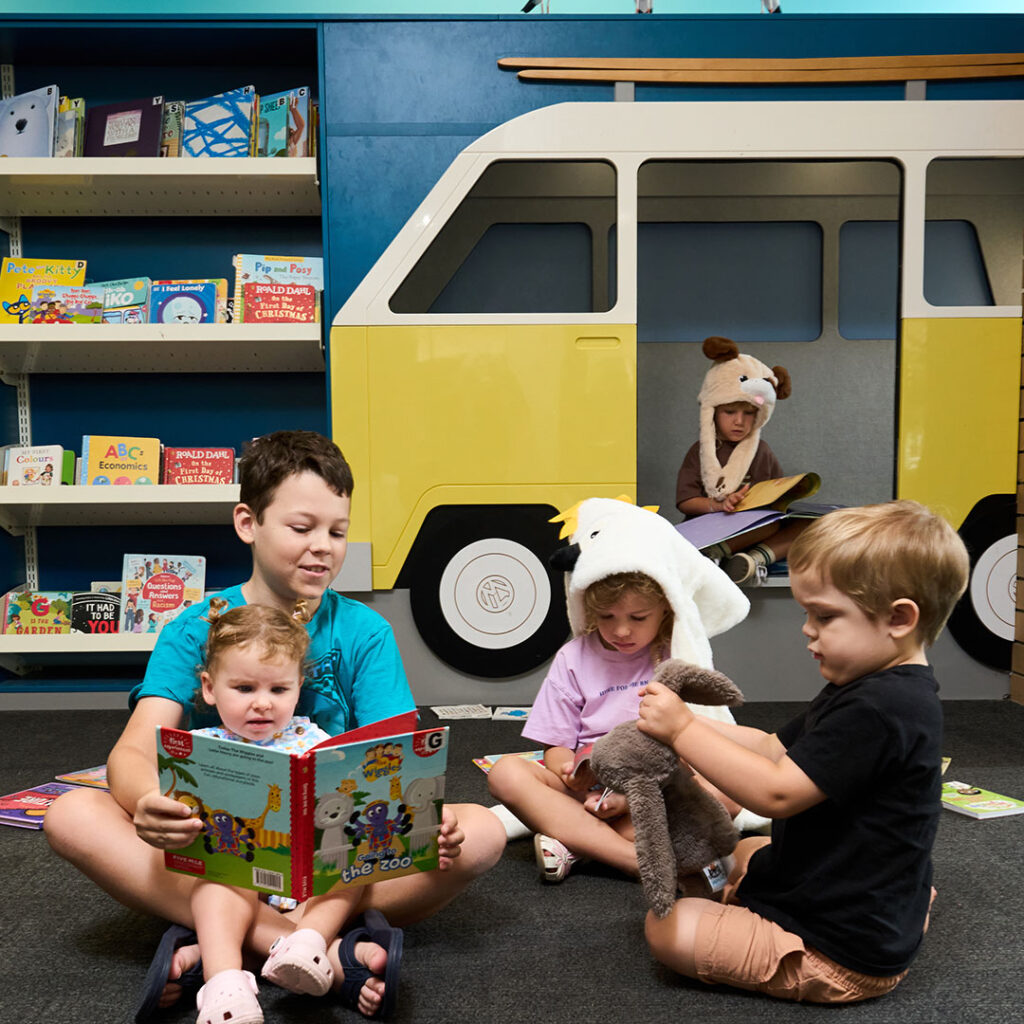
Kids reading books together at Maroochydore Library
What we really mean by imagination in kids
When we talk about imagination, we’re not simply talking about pretend play or creative activities.
“Imagination allows children to picture things beyond the here and now. It’s how they play with ideas, language and emotions, explore ‘what if?’ without fear, and safely rehearse real-life situations,” says Karen Gawen, Sunshine Coast Council Young People’s Services Supervisor.
Therefore, imagination is deeply connected to emotional development, language, creativity and resilience. “Through imagination, children explore the world and their place in it,” Karen adds.
“As children grow, imagination becomes the foundation for flexible thinking, empathy, storytelling and innovation — skills they’ll rely on long after childhood.”
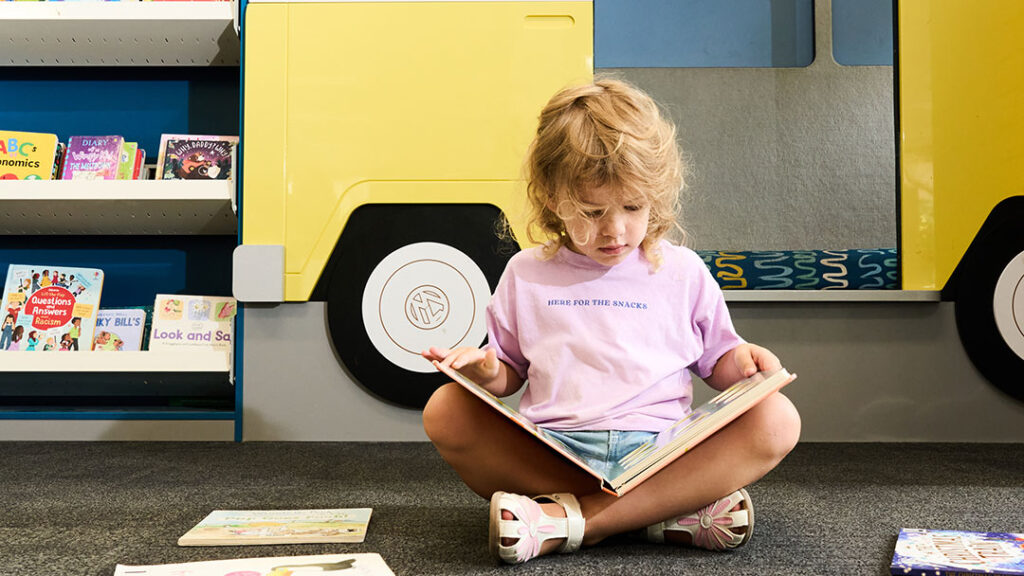
Books are the perfect platform for fostering imagination in kids
Books are the first portal to imagined worlds
For many children, books are where imagination begins.
Before children can read words, they read pictures. They notice details, predict outcomes, invent voices and fill in gaps with their own ideas. Each story becomes a collaboration between the book and the child reading it.
“Books play a powerful role in helping children build inner worlds,” says Karen. “Stories allow children to explore emotions, relationships and experiences beyond their own lives.”
When children engage with stories, they’re practising empathy, language and creative thinking … all at once.
Importantly, children don’t need constant novelty. Re-reading favourite books actually strengthens imagination, as children deepen their understanding each time and begin to anticipate, reinterpret and retell the story in their own way.
How parents can support imagination through books:
- Let children choose what they read (even if it’s the same book on repeat).
- Read together: sharing a book isn’t about performance, it’s about connection.
- Pause and wonder together: What might happen next? How do you think they feel?
- Invite children to ‘read’ pictures in their own words.
- Slow down — it’s not about finishing the book!
Toys that leave room for children’s ideas
In an age of light-up, noise-making, single-purpose toys, it’s easy to forget that the best imagination tools are often the simplest.
Open-ended toys — blocks, figurines, dress-ups, art materials, loose parts — don’t tell children what to do. They ask children to decide.
A wooden block can be a phone one day and a bridge the next. A piece of fabric might become a cape, a blanket or a river. These toys grow with children, adapting to their ideas and interests over time.
“Children need space to lead their own play,” says Karen. “When toys are too prescriptive, they limit creativity. Open-ended play allows children to explore their own ideas, stories and solutions. Imagination thrives when children feel trusted to explore.”
Repetition is part of the process. Children may play out the same scenario again and again — not because they’re stuck, but because they’re learning.
How parents can support imaginative play at home:
- Choose fewer toys with more possibilities.
- Resist the urge to demonstrate how a toy ‘should’ be used.
- Allow play to run long without interruption.
- Join in only when invited, following your child’s lead.
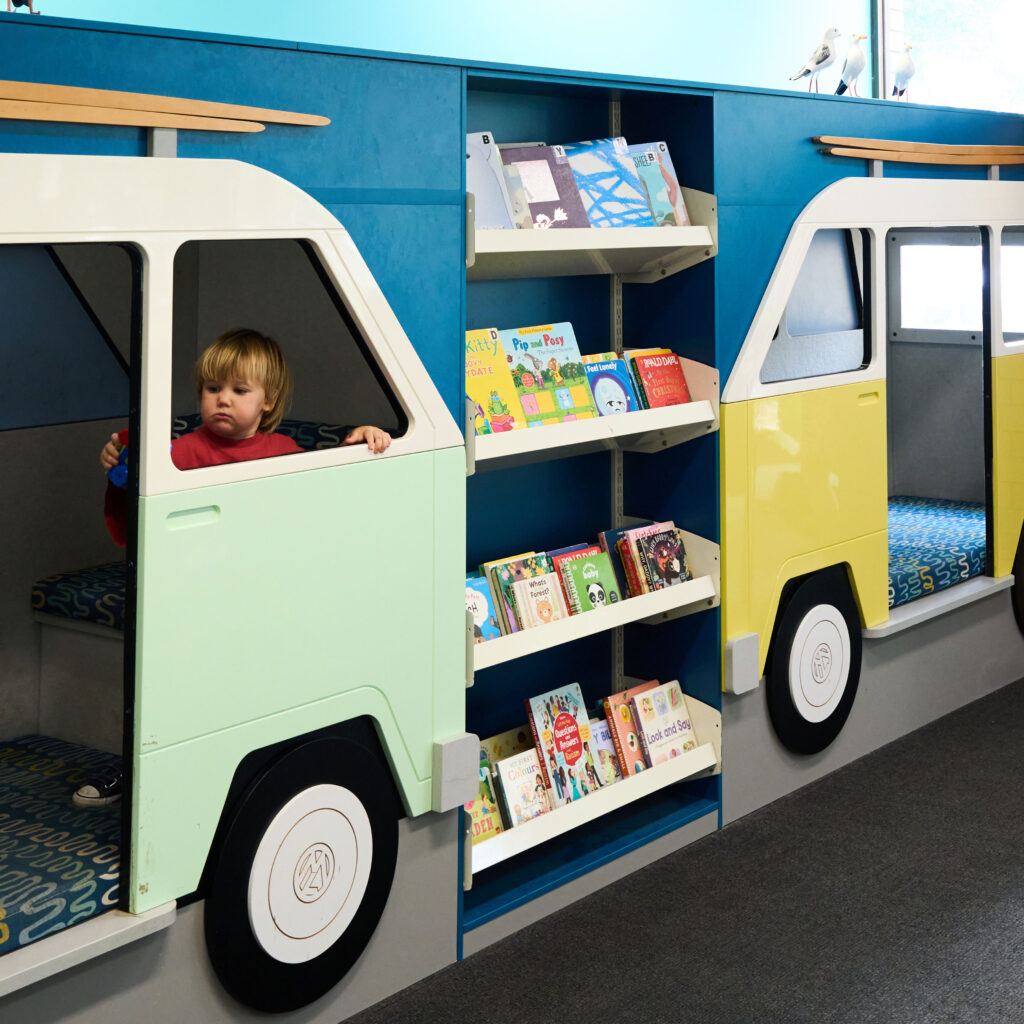
The library is the perfect environment to support imagination in kids
Your free passport to imagination
Libraries are among the most powerful and accessible spaces for imagination available to families.
As well as shelves of books and a fabulous toy library, libraries offer Storytime, Rhymetime and early literacy programs designed to support children’s language development, confidence and love of stories in a welcoming, low-pressure environment.
“Storytime and Rhymetime introduce children to rhythm, repetition and language play,” explains Karen. “They’re not about listening perfectly — they’re about joy, participation and shared experience.”
These programs also show children that stories are communal. They belong to everyone. Singing and listening together builds social confidence and a sense of belonging.
For parents, libraries offer something equally valuable: reassurance and community. They are one of the few no-cost spaces designed for families, with no pressure to perform, purchase, or participate in any particular way. For new parents, recent arrivals to the area, or those simply finding their feet, library programs can become a gentle point of connection — a familiar place to return to each week, where faces start to feel known and routines begin to form.
“If you are new to the area or need information, the library is still one of the best places to connect families to services, and you will always find a welcoming space that fosters a sense of belonging to the new community,” says Karen.
Storytime and Rhymetime often become a child’s first experience of community beyond their immediate family.
“Long before childcare or school, libraries provide a safe, welcoming environment where little ones learn to sit alongside others, share space, sing together and begin forming early friendships. These moments may seem small, but they are often the first steps in learning how to belong.”
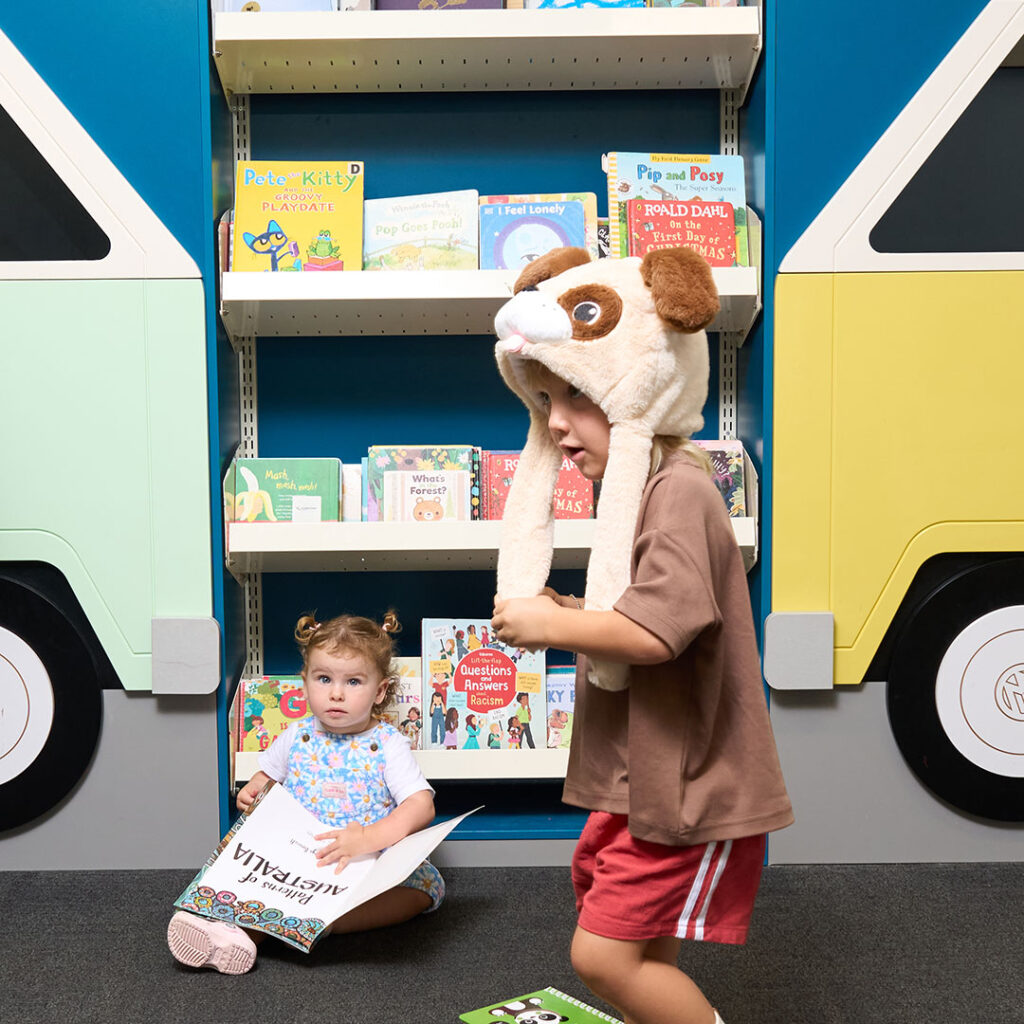
Dress-ups and storytime at Sunshine Coast Libraries
Simple ways to make libraries part of family life:
- Build library visits into your routine.
- Attend programs regularly for familiarity and comfort.
- Ask librarians for recommendations — they’re experts in early literacy and matching books to children’s interests.
The quiet power of doing less
Many parents worry they’re not doing enough — not playing enough, reading enough, providing enough. But imagination doesn’t need more stimulation. It needs space.
In busy households, that might look like:
- Leaving unplanned gaps in the afternoon.
- Choosing one book instead of five.
- Letting play unfold without rushing to the next thing.
As Karen reminds us, “Children don’t need parents to lead their imagination. They need adults who protect the time and space for it to grow.”
Why imagination in kids matters more than ever
And while childhood looks different now than it did when we were kids, the need for imagination hasn’t changed. If anything, it’s more important than ever.
“Supporting imagination doesn’t require grand gestures. It happens in the everyday moments — a shared story, a quiet afternoon, a trip to the library, a child lost in play,” says Karen.
When we slow down and make room for imagination, we’re giving children something lasting: the ability to think, feel and dream for themselves. And that might be one of the greatest gifts of all.
Related Reads
Book an Adventure: The power of children’s books
Library+ Caloundra is a new chapter for families
The benefits of reading out loud