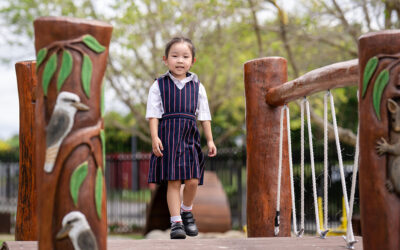
More Australian parents are giving their kid a smartwatch before they ever hand over a smartphone. It sounds like a small decision, but it changes how a family stays in touch day to day.
Spacetalk Kids Smartwatches are one of the clearest examples of this shift, giving a kid the freedom to walk to school or catch the bus while parents keep a line of communication open, without opening the door to everything else a smartphone brings with it.
A Quiet Shift Is Happening in Australian Parenting
Australian parents aren’t ditching phones altogether. They’re delaying them, and filling the gap with a purpose-built watch instead. It’s less about restriction and more about sequencing: give a kid the tools to reach out for help or say goodnight, without the pressure of a full smartphone before they’re ready for it.
Growth in smartwatch adoption
Kids’ smartwatches have moved from a niche safety gadget to one of the default choices for a first connected device. A decade ago, most of what sat on a kid’s wrist was a basic step counter.
Now, watches with 4G data, calling, messaging, a camera, and video calling have become standard.
Major electronics and department store retailers stock them alongside phones and tablets rather than in the toy aisle, and the conversation at the school gate has shifted from “does your kid have a phone yet” to “which watch did you go with?”
Why now
The timing lines up with the national ban on social media accounts for under-16s, which took effect in December 2025 and restricts young people from holding accounts on platforms such as Instagram, TikTok, Snapchat, and YouTube.
That pushed a lot of parents to rethink what a kid’s first connected device should look like. Instead of relying on parental controls that a determined tween can often work around, more families are choosing a device that simply doesn’t include the risky features in the first place. A kid’s smartwatch typically leaves out:
- Social media apps of any kind
- An open internet browser
- An app store for downloading random apps
Why the Shift From Apps to Smartwatches
Many parents are moving away from a location-sharing app running on a spare phone and towards a dedicated smartwatch. This is largely because of too many apps to manage, unclear costs, phones that aren’t built for small hands, and connections that depend on staying near a paired device.
App fatigue and decision fatigue
Juggling a family locator app, a separate messaging app, a school app, and a photo-sharing app all on a hand-me-down phone gets old fast.
Each one needs its own account, its own notifications, and its own battery drain, and none of them talk to each other.
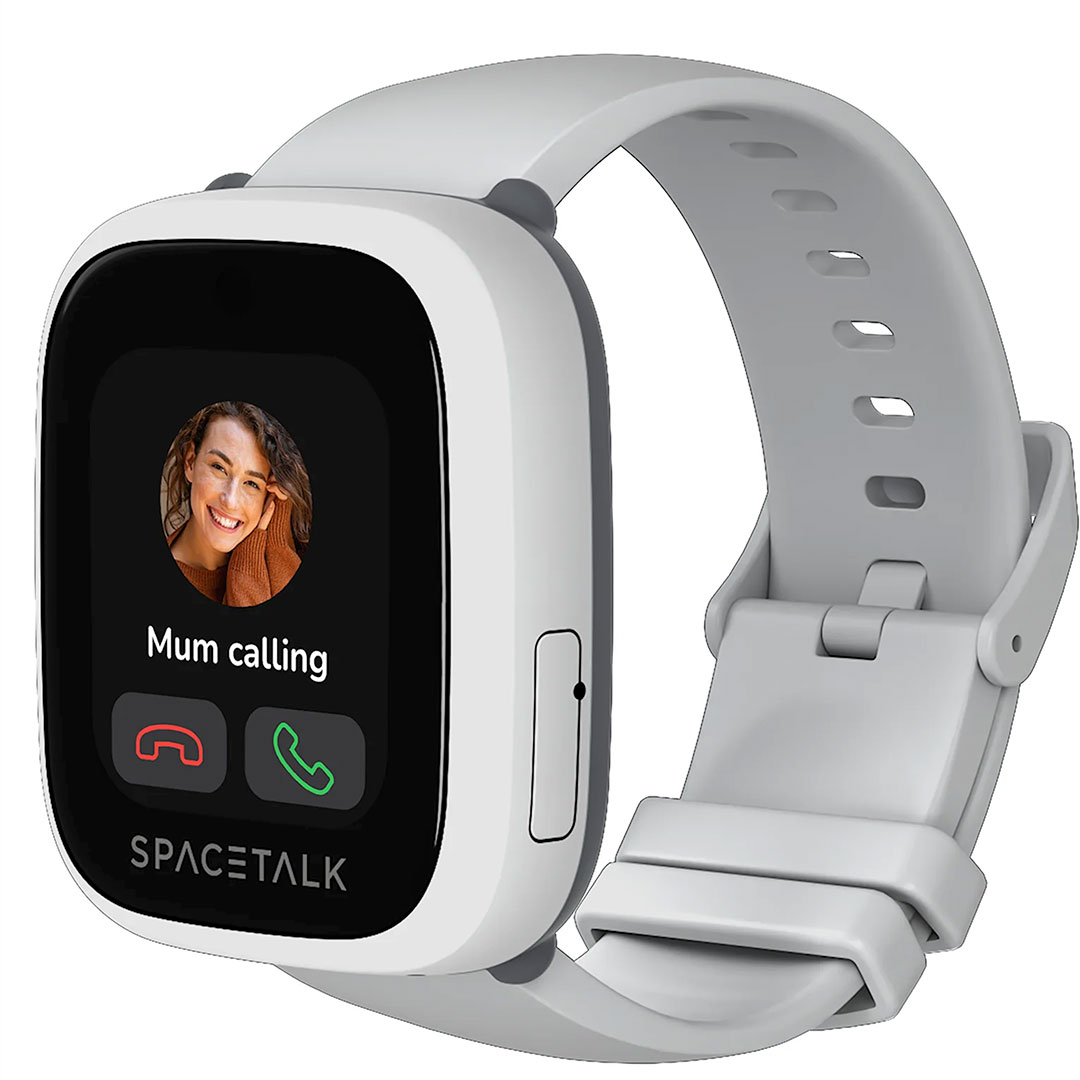
White spacewatch with call on screen
A watch built specifically for kids consolidates location, calling, messaging, and emergency alerts into one place instead of scattering them across a handful of separate downloads.
For a parent already managing school runs, activities, and everyone’s schedules, one app to check beats four.
Cost differences
A hand-me-down phone isn’t free to run. It usually means keeping an old SIM active, paying for a tracking app subscription, and replacing a screen that wasn’t built to survive a school bag.
A dedicated watch plan bundles calling, messaging, and location updates into one cost instead, and it typically comes in a few commitment lengths rather than a long phone contract:
- A shorter 30-day plan for trying things out
- A 180-day plan for better ongoing value
- A 365-day plan, usually the most popular, with the biggest savings for committing for the year
Device design for kids
A phone designed for an adult’s hand and an adult’s attention span was never really built for a seven-year-old. A watch made specifically for kids solves that with details like:
- A smaller, lighter build (around 60 grams) that sits comfortably on a kid’s wrist.
- A touchscreen tough enough for a school bag, with Gorilla Glass protection.
- Splashproof design rated IP67, fine for rain and hand washing, though not for swimming or showering.
- Up to roughly 36 hours of active battery life, or about three days on standby.
- Magnetic USB-C charging that clicks into place without a finicky cable.
- Built-in heart rate and step tracking, so a kid can see their own activity, not just be tracked.
Australian network reliability
The other big difference is how the connection actually works. A tracking app on a spare phone usually depends on that phone being switched on, charged, and paired nearby.
A watch that runs its own SIM connects directly over 4G, which means location updates keep coming through in real time over one of Australia’s biggest networks, rather than relying on an occasional GPS ping from a device sitting forgotten in a school bag.
The Parenting Shift (From Surveillance to Communication)
The way Australian parents think about staying connected to their kids has changed too, and it’s arguably the bigger shift behind all of this.
Old model vs new model
The old model was built around asking where a kid was, a call to confirm they’d arrived, a tracking app opened quietly just to see a dot on a map.
It worked, but it often felt one-sided, more like keeping watch than actually talking. The new model builds communication into the kid’s own device from the start.
A kid can message back, send a location update on request, use an SOS button in an emergency, and even send a quick “how I’m feeling” check-in, so the connection runs both ways instead of one parent watching a screen.
Why transparency works better
Two-way visibility tends to land better with kids than one-way tracking does. When a parent can set up safe zones for home, school, or a grandparent’s place and get an automatic alert when their kid arrives or leaves, there’s no need for a “did you get there yet” text every single time.
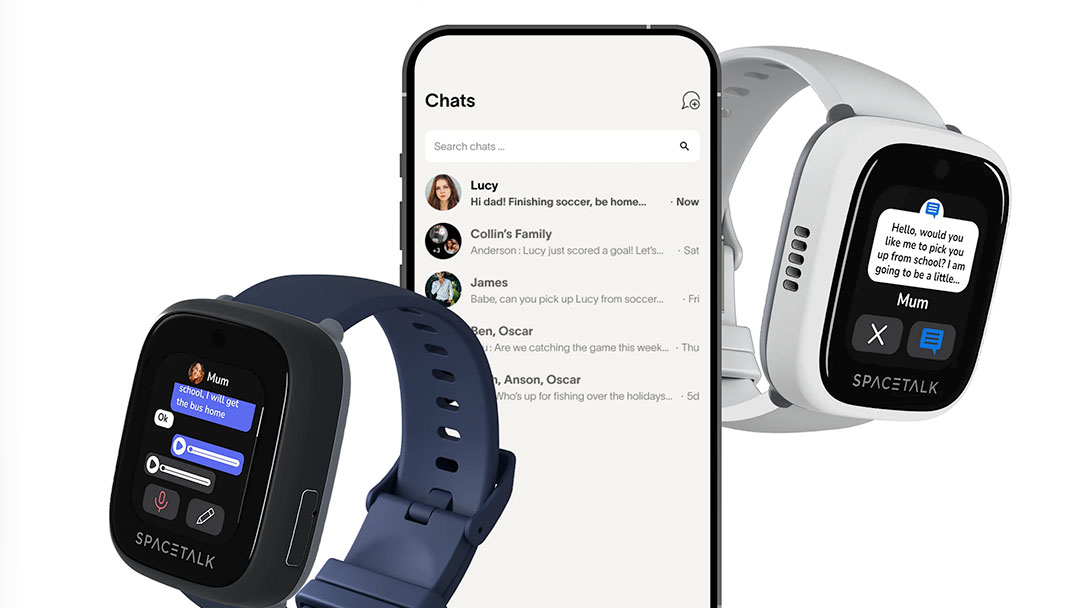
Kids spacewatch with messages on phone screen
The kid knows exactly what’s shared, with whom, and why, which tends to build trust rather than eat into it. That shift, from checking up on a kid to simply staying in touch, is a big part of why families are moving away from repurposed tracking apps.
Market Leadership (Why Australia Matters)
Spacetalk pioneered this category
Spacetalk Kids Smartwatches didn’t appear out of nowhere. The company behind them started life more than 20 years ago as MGM Wireless, a school messaging service, before growing into the family safety platform it is today.
It’s Australian-owned and listed on the ASX, and it now counts more than 500,000 app downloads with an average app rating of 4.4 out of 5 across more than 3,200 reviews.
Independent GFK retail data for the 12 months to January 2026 also puts Spacetalk as the highest-selling kids smartwatch brand in Australia, which says a fair bit about how many local families have already made the switch.
Local understanding and design
Being built by an Australian company shows up in the details.
School Mode, for instance, lets parents silence the watch during class hours on the days they choose, while keeping SOS and location live in the background, so the watch never becomes a distraction in the classroom but still works in an emergency.
The watches are sold through major national retailers, including JB Hi-Fi, Officeworks, Big W, Optus, and The Good Guys. The splashproof design suits an outdoor, school-holiday, backyard-cricket kind of childhood rather than a desk-bound one.
What’s Next for Australian Families
One of the more practical advantages is that the setup grows with a kid rather than getting replaced every year or two.
Younger kids around five to ten years old typically start on an entry-level watch built for first freedoms. Tweens between about eight and fourteen usually move onto the flagship model with fuller features like video calling.
Teens up to around nineteen eventually transition to a mobile plan on their own smartphone, while still staying visible to parents through the same family app.
The SIM itself can carry across from the watch to that first smartphone later on, so the switch doesn’t mean starting from scratch.
Flexibility in options
Families aren’t locked into one setup either.
A parent can pick a simpler, better-value watch for a younger child or the full-featured flagship for a tween who wants video calling, add a family mobile plan later without losing any of the safety features already in place, and adjust the watch plan length as their needs change.
Bundles combining the watch, SIM plan, and app are usually on sale, with current options on the Adventurer 2 bundle page and the Loop page for a lower-cost first watch.
Conclusion: It’s Not a Trend. It’s Better Parenting
None of this is really about a gadget going viral. It’s Australian parents quietly adjusting to less app juggling, clearer costs, hardware built for actual kids, and a model based on staying in touch rather than watching from a distance.
Spacetalk Kids Smartwatches happen to sit at the centre of that shift, largely because the category itself grew up in Australia.
For a parent weighing up a kid’s first device, it’s worth a look at the Family Safety page to see how the pieces fit together before deciding.
Related Reads
5 Questions you should ask before getting your child a mobile phone
Can you use technology to connect with kids?